Moldova is accelerating reforms and establishing itself as a leader in the EU accession process.
2eu.brussels


Republic of Moldova
Foto: 2eu.brussels

Always see our news on Google
The European Commission has granted the Republic of Moldova an additional 189 million EUR under the Reform and Growth Mechanism, after Chișinău successfully completed 24 reforms, and the European executive presented the country as the best-performing state in delivering reforms from the Growth Plan, at a time when the enlargement process is increasingly linked to the security and strategic resilience of the European Union.
In short
The European Commission has granted the Republic of Moldova 189 million EUR following a positive assessment of 24 reforms carried out under the Reform and Growth Mechanism. Of this amount, 173 million EUR will go directly into the state budget, while 16 million EUR will support projects through the Neighborhood Investment Platform. The new payment adds to the 289 million EUR granted to the Republic of Moldova in 2025. The Commission has presented the Republic of Moldova as a "top performer" in delivering reforms, stating that it has completed 24 out of 26 measures from the Growth Plan. The political message from Brussels and the member states is that Moldova's progress on the path to accession is real, rapid, and sustained, but the process remains merit-based and contingent on the continuation of reforms.
The new tranche is divided into two distinct components. According to the European Commission, 173 million EUR will be paid directly into the state budget of the Republic of Moldova, while another 16 million EUR will support projects in the country through the Neighborhood Investment Platform. From a journalistic perspective, this is the first important angle of the news. The funds are presented not only as budget support but also as an investment and structural transformation tool.
The payment comes after a positive assessment of 24 steps completed by the Republic of Moldova under the Reform and Growth Mechanism. The Commission explicitly links this tranche to the implementation of reforms and progress on the European path. This is the second major angle of the news. The relationship between reforms and funding is presented unequivocally; delivering reforms unlocks European financial support.
The Commissioner for Enlargement, Marta Kos, articulated this logic in direct political terms. She stated that "Moldova has once again fulfilled its commitments to the EU. The implemented reforms bring real benefits, from less bureaucracy to better online services and a cleaner environment. When our partners deliver, the EU must deliver too. Our funds will directly support Moldovans and help the country continue its European path."
The same intervention added an additional political assessment, raising the stakes of the news beyond merely announcing a payment. Marta Kos said that "Moldova is the top performer, not one of the top performers, but the top performer when it comes to delivering reforms." This formulation clearly changes the political register of the file. The Republic of Moldova is no longer presented merely as a beneficiary of European support but as an example of performance in the enlargement and conditionality mechanism.
The list of validated reforms covers several key areas of institutional and economic modernization. The Commission mentions reducing the administrative burden on companies, strengthening cybersecurity and emergency response capacity, advancing the digitalization of government services, improving budget transparency, and strengthening anti-fraud, asset recovery, and justice systems. This is the third substantive angle of the news. The package does not target a single emblematic reform but rather a broader administrative restructuring with direct effects on the economy, governance, and the rule of law.
The Commission also points out that the Republic of Moldova has launched national electricity and balancing markets and expanded the adoption of renewable energy. This component also introduces an energy and strategic angle. Market integration, energy resilience, and infrastructure modernization are treated as parts of the rapprochement with the European Union, not as separate files.
The new payment comes on top of the 289 million EUR already granted to the Republic of Moldova in 2025. This timeline also provides an angle of continuity. European support does not appear as a one-off gesture but as part of a phased, conditional, and monitored process. From this perspective, the Reform and Growth Mechanism functions as a tool to accompany European integration, not just as momentary financial aid.
Another important element is the emphasis on private investments. As part of the Growth Plan, the Commission states that the Republic of Moldova is implementing reforms aimed at making the country more attractive for foreign investments. To this end, in September 2025, the European executive launched a call for interest aimed at the private sector to stimulate investments in the Republic of Moldova, open for applications until June 2026. The initiative aims to build a series of transformative private investments in the Republic of Moldova, eligible for support from the Commission and partner financial institutions.
This point adds a fourth journalistic angle. Brussels is not only seeking to stabilize the budgetary and institutional situation of the Republic of Moldova but also to transform the country into a more attractive destination for private capital. In this sense, European funds are presented both as direct support for citizens and administration and as a signal to investors.
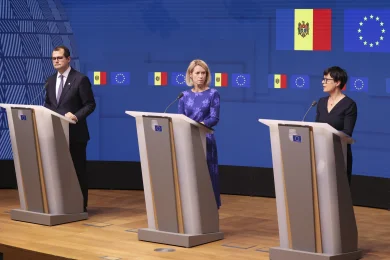
The new information presented after the informal ministerial meeting dedicated to the Republic of Moldova reinforces the political dimension of this message. EU ministers and the Commission spoke about a "sustained, continuous, impressive" progress of the Republic of Moldova in the field of reforms and reaffirmed political support for the country's European future. It was emphasized that technical work at the Council level has advanced and that the Republic of Moldova is not standing still; on the contrary, it is accelerating alignment and reforms ahead of the opening of all six clusters.
In this logic, the term used by the European side was "front loading," meaning advancing reforms ahead of the complete formal stages of negotiations. Marilena Raouna stated that this process "is not just a technical exercise" and that it means accelerating essential reforms that bring the Republic of Moldova closer to the European Union, strengthen democratic institutions, modernize the economy, and align the country's policies with European ones.
The political message was further reinforced by the explicit reference to external pressures and the security dimension. The Cypriot side spoke about solidarity and support following developments at the Dniester and emphasized that, in the face of external pressure, hybrid threats, and attempts to undermine democratic institutions, the Republic of Moldova has demonstrated resilience and maturity. The formulation used was that Moldova's European choice is "sovereign, legitimate, and irreversible."
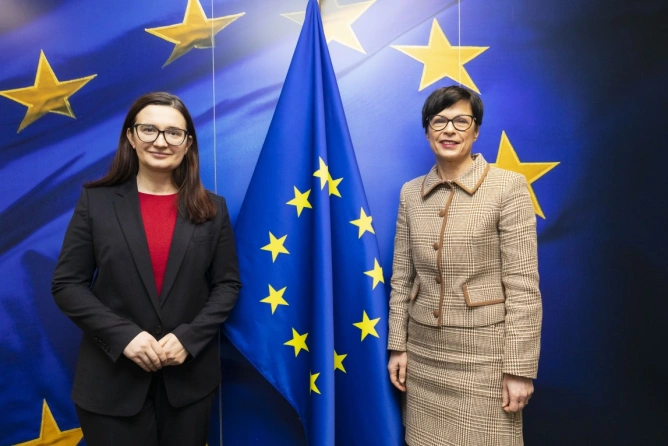
Chișinău has also framed accession in strategic terms. Deputy Prime Minister Cristina Gherasimov stated that accession to the European Union is "the only viable path to ensure our future as a democratic, resilient, and prosperous state" and emphasized that the Republic of Moldova is reforming, negotiating accession, and transforming its economy while simultaneously managing the consequences of a volatile regional security environment and sustained hybrid pressure.
Marta Kos went further and linked Moldova's file to the broader debate about enlargement and methodology. She stated that the current methodology "is no longer made for the world we live in" and that the discussion about modernizing it has already begun with the member states. At the same time, she insisted that the accession process does not have fixed dates in the calendar and remains merit-based. Here lies another important angle of the news; the Republic of Moldova is treated as a success story and an urgent geopolitical file, but without Brussels officially abandoning the principle of conditionality and progress based on its own merits.
The broader context of the payment is linked to the Union's strategy to anchor reforms in candidate and partner states through conditional financial instruments. In the case of the Republic of Moldova, the Commission and member states explicitly link funding to the country's European path and the implementation of verifiable measures in administration, justice, energy, digitalization, and competitiveness. Here lies the central political angle of the news. Brussels seeks to show that proximity to the European Union produces measurable results and that financial support comes as a response to validated reforms, not as an abstract political gesture.
However, there is also a second level of context, a geopolitical one. In the new European logic, enlargement is no longer presented merely as a technical or legal process but also as a collective investment in peace, stability, and security. The formulation used by the European side was clear: a stronger Moldova also means a stronger Europe. In this sense, the payment of 189 million EUR also has a strategic signaling value, to the citizens of the Republic of Moldova, to investors, and to actors trying to slow down or destabilize the country's European path.
In short
The European Commission has granted the Republic of Moldova 189 million EUR following a positive assessment of 24 reforms carried out under the Reform and Growth Mechanism. Of this amount, 173 million EUR will go directly into the state budget, while 16 million EUR will support projects through the Neighborhood Investment Platform. The new payment adds to the 289 million EUR granted to the Republic of Moldova in 2025. The Commission has presented the Republic of Moldova as a "top performer" in delivering reforms, stating that it has completed 24 out of 26 measures from the Growth Plan. The political message from Brussels and the member states is that Moldova's progress on the path to accession is real, rapid, and sustained, but the process remains merit-based and contingent on the continuation of reforms.
The new tranche is divided into two distinct components. According to the European Commission, 173 million EUR will be paid directly into the state budget of the Republic of Moldova, while another 16 million EUR will support projects in the country through the Neighborhood Investment Platform. From a journalistic perspective, this is the first important angle of the news. The funds are presented not only as budget support but also as an investment and structural transformation tool.
The payment comes after a positive assessment of 24 steps completed by the Republic of Moldova under the Reform and Growth Mechanism. The Commission explicitly links this tranche to the implementation of reforms and progress on the European path. This is the second major angle of the news. The relationship between reforms and funding is presented unequivocally; delivering reforms unlocks European financial support.
The Commissioner for Enlargement, Marta Kos, articulated this logic in direct political terms. She stated that "Moldova has once again fulfilled its commitments to the EU. The implemented reforms bring real benefits, from less bureaucracy to better online services and a cleaner environment. When our partners deliver, the EU must deliver too. Our funds will directly support Moldovans and help the country continue its European path."
The same intervention added an additional political assessment, raising the stakes of the news beyond merely announcing a payment. Marta Kos said that "Moldova is the top performer, not one of the top performers, but the top performer when it comes to delivering reforms." This formulation clearly changes the political register of the file. The Republic of Moldova is no longer presented merely as a beneficiary of European support but as an example of performance in the enlargement and conditionality mechanism.
The list of validated reforms covers several key areas of institutional and economic modernization. The Commission mentions reducing the administrative burden on companies, strengthening cybersecurity and emergency response capacity, advancing the digitalization of government services, improving budget transparency, and strengthening anti-fraud, asset recovery, and justice systems. This is the third substantive angle of the news. The package does not target a single emblematic reform but rather a broader administrative restructuring with direct effects on the economy, governance, and the rule of law.
The Commission also points out that the Republic of Moldova has launched national electricity and balancing markets and expanded the adoption of renewable energy. This component also introduces an energy and strategic angle. Market integration, energy resilience, and infrastructure modernization are treated as parts of the rapprochement with the European Union, not as separate files.
The new payment comes on top of the 289 million EUR already granted to the Republic of Moldova in 2025. This timeline also provides an angle of continuity. European support does not appear as a one-off gesture but as part of a phased, conditional, and monitored process. From this perspective, the Reform and Growth Mechanism functions as a tool to accompany European integration, not just as momentary financial aid.
Another important element is the emphasis on private investments. As part of the Growth Plan, the Commission states that the Republic of Moldova is implementing reforms aimed at making the country more attractive for foreign investments. To this end, in September 2025, the European executive launched a call for interest aimed at the private sector to stimulate investments in the Republic of Moldova, open for applications until June 2026. The initiative aims to build a series of transformative private investments in the Republic of Moldova, eligible for support from the Commission and partner financial institutions.
This point adds a fourth journalistic angle. Brussels is not only seeking to stabilize the budgetary and institutional situation of the Republic of Moldova but also to transform the country into a more attractive destination for private capital. In this sense, European funds are presented both as direct support for citizens and administration and as a signal to investors.
The new information presented after the informal ministerial meeting dedicated to the Republic of Moldova reinforces the political dimension of this message. EU ministers and the Commission spoke about a "sustained, continuous, impressive" progress of the Republic of Moldova in the field of reforms and reaffirmed political support for the country's European future. It was emphasized that technical work at the Council level has advanced and that the Republic of Moldova is not standing still; on the contrary, it is accelerating alignment and reforms ahead of the opening of all six clusters.
In this logic, the term used by the European side was "front loading," meaning advancing reforms ahead of the complete formal stages of negotiations. Marilena Raouna stated that this process "is not just a technical exercise" and that it means accelerating essential reforms that bring the Republic of Moldova closer to the European Union, strengthen democratic institutions, modernize the economy, and align the country's policies with European ones.
The political message was further reinforced by the explicit reference to external pressures and the security dimension. The Cypriot side spoke about solidarity and support following developments at the Dniester and emphasized that, in the face of external pressure, hybrid threats, and attempts to undermine democratic institutions, the Republic of Moldova has demonstrated resilience and maturity. The formulation used was that Moldova's European choice is "sovereign, legitimate, and irreversible."
Chișinău has also framed accession in strategic terms. Deputy Prime Minister Cristina Gherasimov stated that accession to the European Union is "the only viable path to ensure our future as a democratic, resilient, and prosperous state" and emphasized that the Republic of Moldova is reforming, negotiating accession, and transforming its economy while simultaneously managing the consequences of a volatile regional security environment and sustained hybrid pressure.
Marta Kos went further and linked Moldova's file to the broader debate about enlargement and methodology. She stated that the current methodology "is no longer made for the world we live in" and that the discussion about modernizing it has already begun with the member states. At the same time, she insisted that the accession process does not have fixed dates in the calendar and remains merit-based. Here lies another important angle of the news; the Republic of Moldova is treated as a success story and an urgent geopolitical file, but without Brussels officially abandoning the principle of conditionality and progress based on its own merits.
The broader context of the payment is linked to the Union's strategy to anchor reforms in candidate and partner states through conditional financial instruments. In the case of the Republic of Moldova, the Commission and member states explicitly link funding to the country's European path and the implementation of verifiable measures in administration, justice, energy, digitalization, and competitiveness. Here lies the central political angle of the news. Brussels seeks to show that proximity to the European Union produces measurable results and that financial support comes as a response to validated reforms, not as an abstract political gesture.
However, there is also a second level of context, a geopolitical one. In the new European logic, enlargement is no longer presented merely as a technical or legal process but also as a collective investment in peace, stability, and security. The formulation used by the European side was clear: a stronger Moldova also means a stronger Europe. In this sense, the payment of 189 million EUR also has a strategic signaling value, to the citizens of the Republic of Moldova, to investors, and to actors trying to slow down or destabilize the country's European path.
Sources

Latest News
07:45
Toxic smog in Southeast Asia: Schools closed in Malaysia, record pollution in Singapore, and special measures for the Formula 1 race
07:41
Donald Trump honored Elon Musk at the White House and called him a “national treasure”
07:36
Superliga | Victory for Universitatea Cluj in Gruia, 3-1 against CFR Cluj
07:23
Sorin Grindeanu returns Ilie Bolojan’s offer / PSD votes for a minority PNL-UDMR government. Come on!
07:16
Kelemen Hunor estimates that Luca Niculescu has an 80% chance of securing the government’s investiture in Parliament
See more news
NEWS ON THE SAME TOPICS



Personalized news feed, AI-powered search, and notifications in a more interactive experience.