SPECIAL Informat.ro / Who is Siegfried Mureșan, the EU budget negotiator caught in the political battle for Victoria Palace


Always see our news on Google
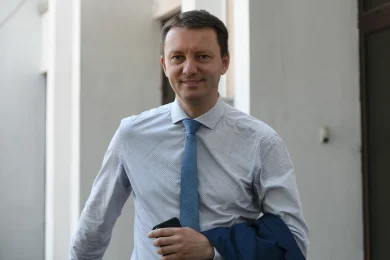
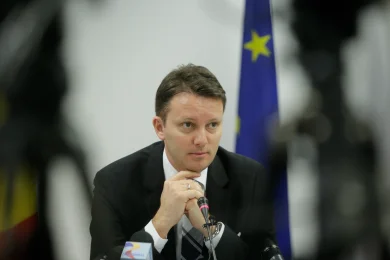
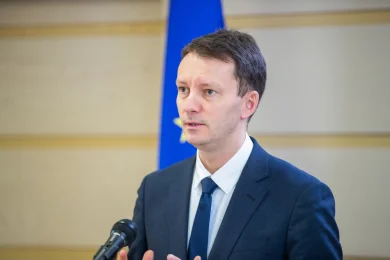
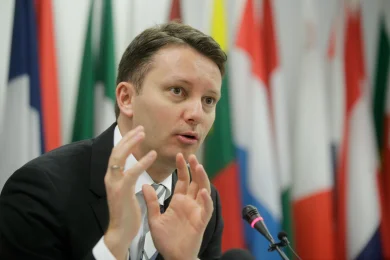
Siegfried Mureșan, currently serving his third term as a Member of the European Parliament and considered one of the most influential Romanians in the European Parliament, with a profile focused on budgetary issues, is being mentioned by several publications as a possible prime ministerial candidate supported by PNL, with the backing of USR and, likely, UDMR, based on his image as a negotiator of the EU budget and a moderate, pro-Western politician.
Biographical data and education
Siegfried Vasile Mureșan was born on September 20, 1981, in Hunedoara, into a mixed family, with a German mother and a Romanian father. He graduated from the Academy of Economic Studies in Bucharest in 2004, specializing in economics, and later pursued a master's degree in economics and management science at Humboldt University in Berlin, one of the most prestigious German universities.
In 2006, he benefited from a scholarship offered by the Bundestag, as part of the international internship program of the German Parliament, an experience that later facilitated his entry into the circuit of European institutions. After this period, for about three years, he served as an advisor to the chairman of the Committee on European Affairs in the Bundestag, Gunther Krichbaum, strengthening his profile as a specialist in European policies and integration.
Political career of Siegfried Mureșan up to Brussels
Before becoming a Member of the European Parliament, Mureșan entered Romanian politics through center-right parties, having a trajectory that included PDL and PMP, before joining PNL. In 2014, he was elected for his first term in the European Parliament on the list of the People's Movement Party, but in 2018 he left PMP and joined PNL, where he gradually consolidated his role in the leadership structures.
At the European level, Mureșan moved to Brussels in 2009, initially working within the European Parliament, and then, from 2011, becoming a political advisor on economic and social policy at the headquarters of the European People's Party (EPP), the largest political family in the EU. This position placed him close to the strategic decisions of the EPP and provided him visibility in the European conservative-liberal network, which was significant for his subsequent rise within the EPP and the EPP group in the European Parliament.
Member of the European Parliament since 2014: mandates and key positions
Siegfried Mureșan has been a Member of the European Parliament since 2014, currently serving his third term, elected on the PNL list and part of the EPP Group. Throughout his three mandates, he has specialized in budget files, European finances, and EU relations with Eastern neighboring countries, especially the Republic of Moldova.
In the current legislature, he holds several important positions at the European level:
Vice-President of the European People's Party (EPP) since November 2019, a top political position in the European center-right family.
Vice-President of the EPP Group in the European Parliament, a position that places him in the political leadership of the largest parliamentary group.
Vice-President of the Committee on Budgets (BUDG) or, in other terms, a leading member with a key role in budgetary files, including as a rapporteur or co-rapporteur for the EU budget.
Member of the Committee on Budgets (BUDG) and the Committee on Economic and Monetary Affairs (ECON), two central committees in the economic architecture of the EU.
Chairman of the European Parliament Delegation for Relations with the Republic of Moldova, a mandate that gives him a prominent role in Eastern neighborhood policy.
At the national level, within PNL, Mureșan is the vice-president of the party, a position confirmed by his recent public statements and communications from the liberal formation. In 2024, he also took over the interim leadership of PNL Diaspora, after the resignation of Rareș Bogdan, thus consolidating his position in the internal architecture of PNL.
Major projects and files in the European Parliament
The political profile of Siegfried Mureșan is closely linked to the EU budget files, from the annual budget to the large multiannual financial frameworks and the post-pandemic recovery instrument. One of the reference moments in his European career was his mandate as the European Parliament rapporteur for the EU budget in 2017, a file he presented as a tool for strengthening competitiveness and solidarity within the Union. Subsequently, he was co-rapporteur for the establishment of the Recovery and Resilience Facility (RRF), the central instrument of 723 billion euros of the NextGenerationEU plan, which he described as "a historic European achievement" and "a symbol of solidarity."
In the current institutional cycle, Mureșan is co-rapporteur of the European Parliament for the future multiannual budget of the EU post-2027, namely the Multiannual Financial Framework 2028–2034, which places him in the role of chief negotiator of the Parliament's position in relation to the Commission and the Council. In April 2026, the plenary of the European Parliament adopted an interim report on this budget, which supported a ceiling of 1.27% of the EU's gross national income, equivalent to 1,789 billion euros (constant prices 2025), to which 0.11% of GNI is added for the debt incurred by NextGenerationEU, outside the budgetary ceilings.
Mureșan argued, in public interventions, that the future budget must ensure significant increases for agriculture, cohesion, research, and programs for youth, such as Erasmus, and he supported that the debt related to NextGenerationEU should not be made at the expense of farmers, students, or researchers. In a presentation dedicated to the Parliament's position on the MFF 2028–2034, he pointed out, for example, the proposal that the CAP budget should reach 385 billion euros (in 2025 prices), explaining that more resources are needed to finance "old and new priorities" of the Union.
In parallel, in an interview with a publication specializing in European policies, Mureșan explicitly supported the need to introduce new "own resources" at the EU level, warning that, in their absence, member states would either have to pay more or accept cuts to the EU budget. He summarized the options in a simple formula: either higher national contributions, or budget cuts, or new own sources of income, advocating for the last option as a balancing solution between political ambitions and financial sustainability. Alongside budget files, Mureșan has also been active in discussions regarding the implementation and possible extensions of deadlines for using funds from the RRF, supporting, along with other MEPs, the need for a longer horizon for project implementation, by extending the initial deadline from 2026 to 2028.
Presence in the Romanian and international press
Siegfried Mureșan has frequently come to the attention of the Romanian press as the voice of PNL on European issues, but also as a vector of criticism against the PSD–AUR alliance and a possible anti-European drift in domestic politics.
Television stations and news sites such as Digi24, G4Media, or HotNews have consistently reported his statements regarding the political situation in Romania, especially concerning negotiations for forming governments, the budget deficit, and positioning towards Russia and the war in Ukraine. In a recent intervention on Digi24, for example, Mureșan – presented as PNL vice-president – stated that the liberals could support a government led by Sorin Grindeanu only in exchange for firm commitments regarding deficit reduction and the continuation of reforms, adding a direct warning: "We have not forgotten about the Nordis flights."
In another statement picked up by G4Media, he stated that "Romania does not need a government that starts its mandate negotiating with friends of Russia," a message interpreted as a criticism of possible parliamentary combinations that would involve parties with more ambiguous positions towards Moscow. Also in the Romanian press, Mureșan was quoted appreciating Bulgaria's accession to the eurozone, saying that, even if Romanians may be disappointed that their neighbors are moving ahead of them, if they meet the criteria, they should be congratulated, thus reaffirming his pro-European and pro-integration stance.
Mureșan has also become the subject of "profile" or "who is" materials in quality press in Romania, especially after being included by Politico in various lists of MEPs to watch. Digi24, for instance, reported in December 2025 that the PNL MEP was included by Politico in the "10 people to watch in 2026" list, highlighting his role as chief negotiator of the EU's multiannual budget and vice-president of the EPP.
In the international specialized press, Mureșan's name appears especially in the context of debates about the future EU budget and the financing of NextGenerationEU, in analysis materials published by platforms focused on European policies and think tanks. For example, in an analysis about the EU's own resources, he is quoted insisting that the Union must find new sources of income to finance its ambitions without further burdening the contributions of member states. Other publications focused on European affairs, such as euPerspectives, cite him as one of the main rapporteurs for the RRF, highlighting that he presented this instrument as a "historic achievement" and as a "symbol of European solidarity."
Also, English-language news portals that follow EU politics note that Mureșan is among the MEPs of the 2024–2029 mandate with above-average influence, especially in the budget area, with some ranking analyses placing him at the top of MEPs with impact during the 2019–2024 period.
Themes and political profile: budgets, pro-Europeanism, human rights
The themes that Siegfried Mureșan consistently returns to, based on public interventions and official positions in the European Parliament, outline a profile of a pro-European politician, focused on fiscal stability, strengthening integration, and supporting categories such as farmers, students, and beneficiaries of cohesion policy.
Regarding European budget policy, Mureșan insists that the Union needs a "significantly more ambitious" budget for the period 2028–2034, arguing for increased allocations for agriculture, cohesion policies, research, and programs for youth. He emphasized the need for the debt related to NextGenerationEU to be repaid "beyond budgetary ceilings," so that funds allocated for programs with a direct impact on citizens are not cut.
On the topic of the RRF, Mureșan has advocated for more flexibility and additional time for project implementation, alongside strengthening monitoring mechanisms to avoid reversing reforms once the money has been spent. At the same time, he has spoken about the "lessons learned" from the RRF and the need for "precise reforms" for the next generations of European financial instruments.
In political and geopolitical terms, Mureșan firmly positions himself in favor of Romania's Euro-Atlantic orientation, openly criticizing parties or alliances perceived as close to Russia. He has described the PSD–AUR alliance as an "anti-European partnership," in a statement picked up by the official channels of PNL and the Romanian press, thus framing the internal political dispute in a logic of choice between a pro-European path and one considered retrograde.
Although his profile is strongly anchored in macroeconomic themes and EU governance, his interventions also cover social and rights areas, especially when they intersect with budgetary policies or European programs dedicated to studies and mobility. In the discourse about the EU budget, Mureșan constantly mentions the need to protect programs for students (Erasmus), researchers, and disadvantaged regions, arguing that these are essential for social cohesion and for the opportunities offered to young people from countries like Romania.
In relation to the Eastern neighborhood, his role as chairman of the Delegation for Relations with the Republic of Moldova places him at the center of discussions about Chișinău's European integration and EU support for democratic reforms and strengthening the rule of law in this country. Although his statements on human rights or students appear mainly integrated into pro-European and pro-democratic discourses, there are no indications that he has adopted radical or eurosceptic positions; on the contrary, the press presents him, including through quotes from European colleagues, as a moderate and centrist politician.
Siegfried Mureșan's chances of being accepted as a prime ministerial candidate
Siegfried Mureșan is being considered as a prime ministerial candidate from PNL–USR–UDMR, but, in the current configuration, Sorin Grindeanu starts with a significant political advantage, given that PSD explicitly assumes governance and already has a party decision and a message of "responsibility" that weighs heavily for Cotroceni. Nicușor Dan's final decision will depend on three factors: who can more easily guarantee a functional majority, the political cost of appointing Grindeanu versus a liberal (including Mureșan), and public pressure to quickly clarify governance.
The political context and two axes of pressure
PSD has unanimously decided to assume governance and has proposed Sorin Grindeanu for the position of prime minister, a decision formalized in the party's forums and publicly communicated as an expression of responsibility after the social democrats contributed to the fall of the previous cabinet. Grindeanu's message, including after the consultations at Cotroceni, is that PSD is "ready to assume governance," which puts the president in front of a major party that says "yes" to power, not "no." On the other hand, PNL, USR, and UDMR have come up with a more complex political architecture: a reciprocity agreement whereby, regardless of whether Grindeanu is appointed or a prime minister from their camp, all pro-Western forces will vote for the government. In this framework, the "PNL–USR–UDMR prime minister" option appears as a second option, to the alternative in which the social democrats fully assume governance with Grindeanu, while the three center-right parties ensure the stability of a PSD executive through votes.
How Mureșan's "file" would look on Nicușor Dan's desk
In favor of Siegfried Mureșan plays his profile as an EPP leader, with three mandates as an MEP, vice-president of PNL, and a reputation as a negotiator of the EU's multiannual budget and the post-pandemic recovery instrument, thus a strongly validated figure in Brussels. For a president who has built his image on technicality and pro-Western anchoring, a prime minister with a solid European CV is an asset: Mureșan can speak directly with EPP leaders and EU institutions on PNRR, SAFE, or MFF 2028–2034, which could convince Cotroceni that Romania would have a credible interlocutor at the European level.
At the same time, Mureșan comes from outside the classic internal baronial games, which makes him a relatively "clean" name for public opinion, but potentially harder to digest for a PSD that controls territory, ministries, and parliamentary networks. On the domestic scene, he has directly criticized the "anti-European PSD–AUR partnership" and warned that Romania does not need a government that starts its mandate negotiating with "friends of Russia," messages that clearly place him in an anti-PSD zone and complicate cohabitation with a PSD that would have to vote for his government or co-govern with him.
Key factor: would PSD accept and could a majority be built?
For Mureșan not to remain just a name on paper, the central question is whether he can obtain a vote of investiture, and here PSD is the pivot. The plan discussed behind the scenes by PNL–USR–UDMR explicitly provided for two scenarios: either a PSD government with Grindeanu as prime minister, supported by the three parties, or a PNL–USR–UDMR government, also with PSD support, but with another liberal prime minister. The problem for Mureșan is that PSD has already raised the "red lines" in negotiations.
An MEP who has attacked them frontally and who does not belong to them politically is also harder to imagine as a preferred option, except in the case where Cotroceni imposes a scenario of a "political technocrat" that PSD swallows under institutional and public pressure.
What does Nicușor Dan actually want
From information reported by Euronews and Digi24, President Nicușor Dan has several scenarios on the table: appointing Sorin Grindeanu as prime minister of a PSD government that fully assumes power, appointing a technocrat prime minister, or a prime minister from the PNL–USR–UDMR area, under the conditions of a broader political agreement. Additionally, the president insists on rapid negotiations and for a stable minority government, with clear parliamentary support from pro-Western parties, not with support from sovereignist formations. In this framework, Mureșan can be attractive as a "pro-Western" and "European" option – compatible with Brussels' expectations – but has the major disadvantage of not coming with a large party to assume governance alone, but with a minority coalition dependent on PSD or another complicated parliamentary arrangement.
As long as PSD publicly states that it assumes governance and already produces a clear name, Sorin Grindeanu, Nicușor Dan would need to explain why he would choose a liberal prime minister instead of the leader of the largest party.
Summary prepared with the help of Perplexity
Latest News
13:23
13:00
12:45
12:28
12:14
See more news
NEWS ON THE SAME TOPICS