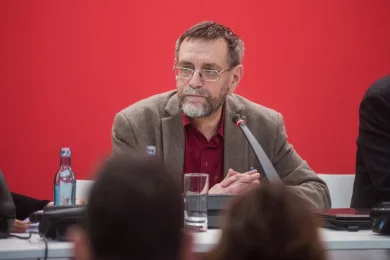
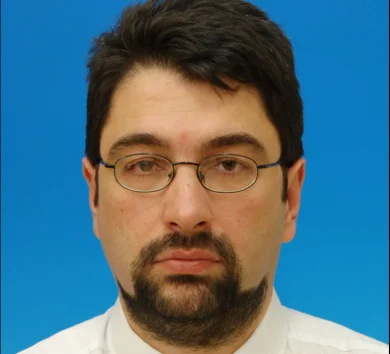
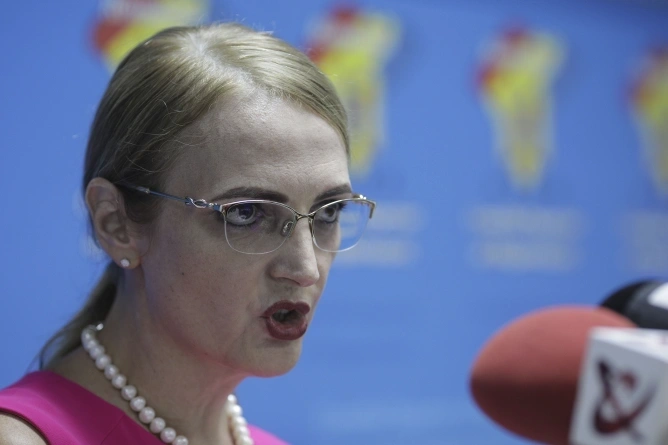
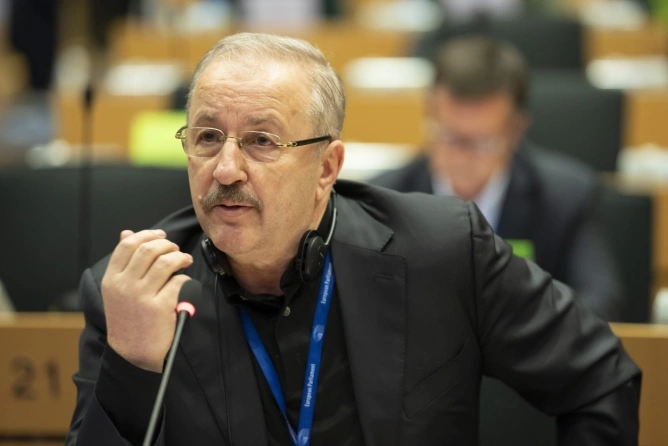
Vasile Dincu responds to Georgiana Teodorescu: "Extreme evil does not need monsters, but people who stop thinking"



Always see our news on Google
Brussels, January 27, 2026 – MEP Vasile Dîncu (PSD/S&D) provided a philosophical and political response to the speech delivered by AUR MEP Georgiana Teodorescu in the Knesset. Anchoring his argument in the work of political theorist Hannah Arendt, Dîncu warned against the temptation to suspend moral reflection in the name of security. He argued that, on Holocaust Remembrance Day, Europe is obliged to distinguish between the necessary firmness and the dangerous abandonment of nuance.
In brief
1. Dîncu invokes Hannah Arendt to argue that evil thrives when people cease to think, warning that fear must never become a principle of governance.
2. Although he acknowledges that antisemitism and integration failures are real, Dîncu rejects the concept of a "legal Iron Dome," arguing that laws that no longer distinguish individual guilt lead to alienation.
3. The MEP calls for combating terrorism through legal tools validated by courts and civic integration, not through "political automatism" or the radicalization of legal language.
Dîncu began by acknowledging that Ms. Teodorescu's speech stems from a "real unease" felt by many European citizens regarding the reality of antisemitism and integration failures. "Antisemitism is not a fiction. Radicalization is not a media construct," Dîncu admitted. However, he drew a clear line when fear transforms into a governing doctrine. Quoting Arendt, he reminded the audience that "extreme evil does not need monsters, but people who stop thinking." This, he stated, is not just a historical metaphor, but a permanent political warning: the state loses its moral compass when it replaces individual judgment with "global classifications and imposed loyalties."
Addressing AUR MEP's proposal directly, Dîncu argued that a "legal Iron Dome" offers security through rigidity, which is ultimately fragile. "European experience shows that sustainable security arises from clear rules, applied individually, publicly controlled, and correctable over time," he explained. He warned that a legal system that ceases to distinguish between individuals and relies on global measures ends up producing exactly the alienation from which extremism feeds. Referring to Arendt's concept of "the right to have rights," Dîncu argued that the post-war European project is based on defending humanity even under the pressure of fear, not on suspending rights for the sake of a "total defense."
Instead of radicalizing legal language, Dîncu sketched the vision of a "mature European policy." This would involve combating terrorism through common legal tools validated by courts – not through "political automatism." He called for strict, evidence-based control of public funding and a firm civic integration focused on education and work.
"Europe does not defend its values by radicalizing legal language," he concluded. "It defends them by remaining faithful to critical thinking precisely when public emotion demands quick solutions. On Holocaust Remembrance Day, memory does not call for harsh reactions; it demands lucidity, empathy, and a refusal to transform fear into doctrine."

Latest News
20:14
19:58
19:51
19:47
19:27
See more news
NEWS ON THE SAME TOPICS