SPECIAL Local rain does not fill the Danube: why Cernavodă remains shut down



Always see our news on Google
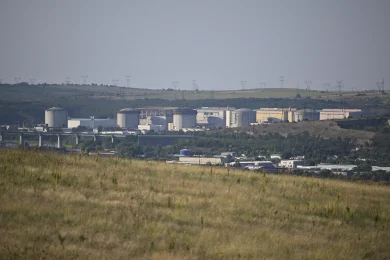
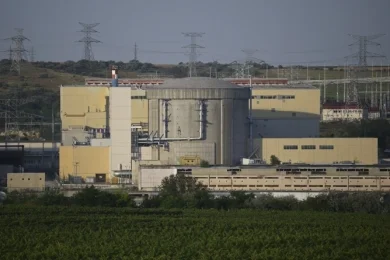
Although precipitation has returned to many areas of Romania, the Danube level at Cernavodă has not yet risen sufficiently to restart the reactors at Cernavodă. The reason is simple, but difficult for the public to perceive: the plant does not depend on the rain that has fallen in Romania in recent days, but on the water flow and level in a huge river basin, depleted by a prolonged drought. The most optimistic official scenario speaks of the possibility of restarting one reactor around mid-November, but the conditions have not yet been met.
What is actually happening at Cernavodă
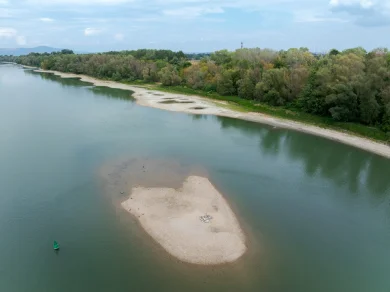
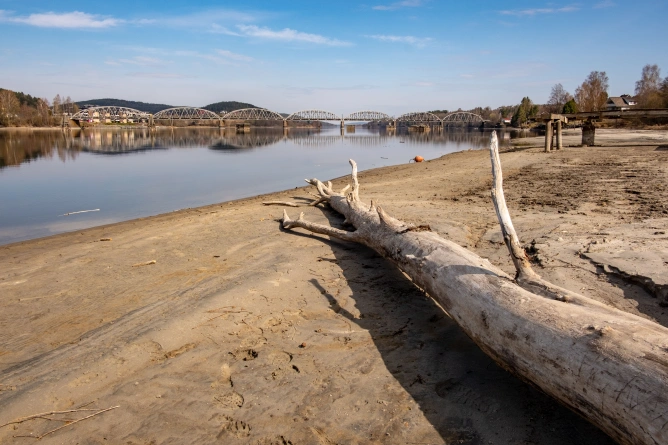
Units 1 and 2 of the Cernavodă Nuclear Power Plant were shut down in a controlled manner in July and August 2026, after the Danube level fell dangerously low and the water no longer ensured reactor cooling with a sufficient safety margin. In October, the level reached minus 259 centimeters, just three centimeters above the operational limit of minus 262 centimeters.
This is not a matter of “water for the turbines,” but one of nuclear safety: the plant needs a stable volume of water for its cooling systems, and the operator cannot accept a minimal margin. Consequently, Nuclearelectrica kept both units in a “safe shutdown state,” without generating energy.
Why the rain is not immediately visible in the Danube
A few days of rain can quickly saturate the soil, fill ditches and small streams, and produce visible rises in inland rivers. The Danube, however, integrates water from a vast basin that includes precipitation from the Alps, the Pannonian Plain, the Carpathians, and the entire upstream region. If the soils are dry after a long drought, a significant portion of the water is retained in the soil or evaporates before reaching the river network.
In addition, the level measured in the plant’s intake basin does not rise instantly when it rains in Romania. It reflects the delay with which water from upstream reaches Cernavodă, consumption along the river, retention in lakes and reservoirs, as well as the flow regime at the point where the river enters the country. Therefore, Nuclearelectrica stated that, although conditions have improved, the levels in the basin remain below the mandatory threshold for restarting.
It is not enough for the level to “rise”: it must stay high
The technical condition is not merely for the water to temporarily exceed a certain level. Minimum safety regulations require the level in the intake basin to remain above the safety threshold for several consecutive days and to show an upward trend.
The explanation is operational: a nuclear power plant cannot be started and stopped according to every wave of water. Restarting involves a period of checks, gradual heating, and connection to the grid; if the Danube level were to fall immediately after startup, the operator could once again approach the critical limit. Therefore, “volatile and unsustainable” forecasts are sufficient to postpone the decision.
When nuclear power production could restart
Energy Minister Dumitru Chisăliță spoke of the possible restart of a single reactor around November 15, if the hydrological forecasts are confirmed. The planned scenario is gradual: first one reactor, and the second only if the Danube flow allows cooling conditions to be maintained.
There is, however, a more cautious assessment: based on the forecast of the National Institute of Hydrology, the recovery would be slow and insufficient in the first part of November, which could make it impossible to restart Units 1 and 2 throughout the entire month. In other words, mid-November is a conditional hope, not a guaranteed date.
What to monitor
The level in the Cernavodă intake basin, not just images of local rainfall: the publicly mentioned critical threshold is minus 262 centimeters.
The persistence of the rise: Nuclearelectrica requires an upward trend maintained for several days, not a one-off increase.
The Danube flow at the point where it enters the country, which decisively influences the Cernavodă sector.
The Nuclearelectrica statement, because the decision to restart belongs to the operator and the nuclear safety authorities, not to the short-term weather forecast.
Until then, the rain is good news, but not yet a solution. The Danube needs sustained precipitation distributed upstream, and the plant needs hydrological certainty—not just a few cloudy days over Cernavodă.
Latest News
19:28
19:20
19:15
18:56
18:55
See more news
NEWS ON THE SAME TOPICS