The second EU-US war. Commercial




Always see our news on Google
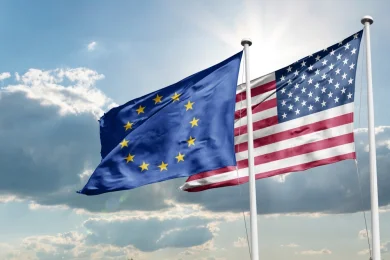
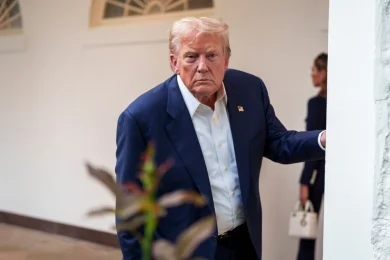
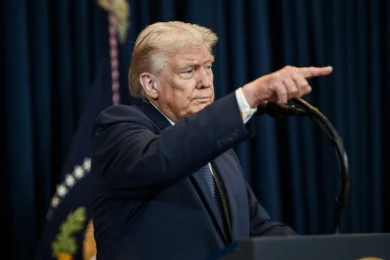
At the end of the week, the American president announced the start of the second trade war with Europe. Trump wrote on the Truth Social network that the U.S. will impose new tariffs of 10% starting next month on eight European states that support Greenland: France, Germany, the Netherlands, Denmark, Sweden, Finland, the United Kingdom, and Norway.
The increase in tariffs will rise to 25% starting June 1 of this year. The reason cited by the American president is the opposition of European states threatening to increase tariffs against the U.S. intention to take over Greenland.
Thus, the American president is once again using tariffs as a tool of coercion. Last year, at the beginning of his term, Donald Trump unilaterally announced the imposition of tariffs on all states with which the U.S. had trade relations, which disrupted markets and partially affected supply chains.
This was followed by a long series of negotiations with countries around the world in which, according to the rule of goodwill, Trump softened the tax rates, and finally, in the summer of 2025, many countries managed to halve the initial rates. The European Union also reduced the tariffs imposed by America from 30% to 15%, with several amendments, meaning that a series of products or industries were completely exempt from tariffs and commitments were made for investments or the purchase of energy raw materials by the EU.
In any case, the tariff file has established Donald Trump's negotiation style, which is considered similar to that in the business field.
That is, a negotiation that starts from the obvious advantages of the U.S., lacking logic or arguments, a proposal that is almost a threat and excludes the win-win option, but follows the model of "you accept the proposal because there is no other option."
In his "marinimia," Donald Trump agreed to a reduction in the tax rate, but the American president has established this type of commercial negotiation, taking it to a political level.
Trump's aggressiveness on trade issues has surprised especially Europeans, the traditional partners of the U.S. The approach regarding tariffs has also been accompanied by a real hostility towards the European Union. Politically, the messages from the American administration have criticized the decisions and functioning of the Union, demanded substantial allocations for the defense sector, supported openly sovereignist parties, but critical or even anti-EU, and distanced themselves from the European vision regarding Ukraine.
As usual, Trump's message regarding the increase in tariffs is not clear. That is, it is not understood whether the new tariffs of 10% will be added to the existing ones of 15% and whether they will apply to all products and services, including those exempt from tariffs under the current agreement. It is also unclear whether the rules regarding investments and those related to the purchase of energy raw materials by the EU will remain valid. However, on this issue, the member states also have a say.
Moreover, Manfred Weber, the president of the European People's Party, the political group with the most mandates in the European Parliament, announced on the X network that last year's agreement with the U.S. has been put on "hold" in the European Parliament, a move agreed upon by all major political forces represented at the European level.
In fact, Donald Trump is once again giving "check" to Europe, this time on more complicated subjects than last year. Because now the issue of tariffs is linked not only to trade problems but also to geopolitical ones, namely Greenland.
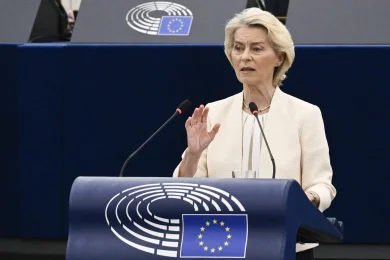
It is, of course, a "coincidence" that Trump's decision to increase tariffs for eight European states came exactly on the day of the signing of the EU-Mercosur agreement by the president of the European Commission, Ursula von der Leyen. Regarding Greenland, Donald Trump clearly states that tariffs will be increased until the issue is resolved.
What could the European Union do in the face of an always unpredictable and authoritarian Trump? The solution is one of common action. For example, the situation of the six member states targeted by the American overtaxation should not be treated separately. The EU needs to make a unified decision regarding this file. Adding that the United Kingdom (which is an excellent market for EU products) and Norway (which has become an essential supplier of energy raw materials) are important trading partners for member states. The eight states subjected to trade sanctions must not be abandoned. The EU must apply equal and common treatment to the U.S. under the conditions in which the overtaxes will come into effect from February 1 of this year.
But is the EU ready for a common response? Hard to say, because the EU-Mercosur agreement has demonstrated a rift within the Union, to which are added member states that have long had different visions from the European majority, for example, regarding aid for Ukraine.
So far, European leaders are considering using for the first time the anti-coercive instrument, the so-called European bazooka. This trade defense procedure, adopted in 2023 but not yet used, allows the 27 member states to take a series of retaliatory measures if a third country uses coercion to impose EU political decisions or on a member state. Examples include excluding American companies from European public procurement markets or blocking certain investments.
With or without good knowledge, Donald Trump is once again "putting the stick through the EU fence." The American president is putting Europe in front of difficult choices, but the solutions that will be found must start from a common European vision. As Kaja Kallas, the High Representative of the European Union for Foreign Affairs, says, it is "a time of intoxication" for Europeans. Agreed, but the important thing is to wake up the next day with a clear mind.
Latest News
23:03
22:44
22:40
22:37
22:34
See more news
NEWS ON THE SAME TOPICS