A crazy, crazy, crazy world...



Always see our news on Google
There were many memorable moments this year in Davos. So many that they could still fit into future history books. Donald Trump was equal to himself. Already from the American president, you can expect anything, and therefore whatever he says or does is no longer surprising. Not even the crude gestures, such as publishing emails from various world politicians, astonish or provoke public outrage or any response.
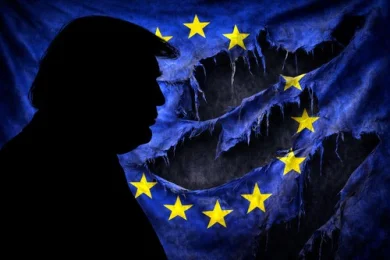
The surprises came from the Europeans. Ursula von der Leyen, the president of the European Commission, said that the world has changed and as such Europe must change along with it, while Emmanuel Macron was blunt in defining the new world: "we are moving to a lawless world, where the law is no longer what we knew, but becomes that of the strong," and German Chancellor Friedrich Merz said that "a world where only power matters is dangerous," making, at the same time, a call for simplifying European regulations and maintaining the transatlantic partnership.
Overall, Davos showed that Europeans are fed up with Trump's pretensions. At least in public discourse, the coldness is visible. Certainly, for European leaders, it is unpleasant for Trump to lecture them on morality and to keep talking about the wrong path Europe is on.
Another example is Christine Lagarde, the president of the European Central Bank, who simply left a private dinner in Davos after hearing Howard Lutnick, the American Secretary of Commerce, talk about Europe.
What started last year in Munich, when the conference organizer said in his closing speech, with tears in his eyes, that Europe and America no longer share the same values, is being completed this year in Davos. The difference in visions was even proclaimed in words. It went from "we no longer share the same values" to "the world has changed," "we are in a new, different world, to which Europe must adapt."
By far, however, the most convincing and inspired in describing the situation the world is in was Mike Carney. The economist, former governor of the Bank of Canada, then governor of the Bank of England, and now Prime Minister of Canada, was applauded to his feet in Davos and praised for his analysis. Essentially, Carney said that the rules-based order is fading, that strong states can do what they want, and the weak must endure what is imposed on them. However, middle powers are not powerless and have no choice but to ally. We will have to see if something happens in this regard. But the Canadian Prime Minister also mentioned that he has formed new partnerships with China and Qatar and signed 12 trade agreements on four continents in six months.
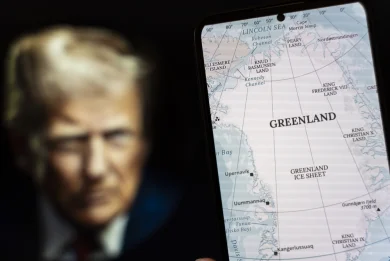
Immediately after leaving Davos, headaches began for Mark Carney. The American president declared that he would impose 100% tariffs on Canada if the Prime Minister signs an agreement with China. Moreover, the American Treasury Secretary, Scott Bessent, in an interview at Davos with an American television station, encouraged the secessionist movement in Alberta (Canada), adding that the Canadian province, with its vast oil reserves, could be a natural partner for the U.S. to become a state of the U.S. The American obsession with Greenland is not singular, and at the same time, not only Donald Trump talks about territorial expansion and absorption of territories, but also other American officials. It has been said about Trump that he has a negotiation style drawn from the business world. As for Europe, and even Canada, the model seems to be based on the old idea that says "divide and conquer."
In fact, the British magazine "The Economist" recently headlined: "Mark Carney understands the new world, but will he be able to survive?" Politically, of course. Donald Trump gives the impression that he views states as neatly packaged socks, in separate drawers. The first drawer has many pairs of small sizes, L, the second has XL sizes, and the third drawer has only a few pairs of XXL. Trump can open the drawer and take out a pair of L or XL socks when he needs them. This is how the world looks today.
The analysis of Western leaders is correct. The world has changed and something new is being born. The problem is to what extent Western leaders will be able to move from lucid analysis to concrete solutions. Ursula von der Leyen offered possible solutions even in her speech at Davos, specifically talking about strengthening European unity, about consolidating the common market, even giving the example of applying European legislation that would allow the establishment of a company anywhere in the European Union, with the same capital rules and through online means.
The idea is good, only that the European Union does not seem to be going through its most synchronized moment. On the contrary, recently, the vote by which the European Parliament asked the Court of Justice of the European Union (CJEU) to verify the compliance of the EU-Mercosur agreement with European treaties is equivalent to a vote against the European Commission, which shows a lot of political tension at the European level.
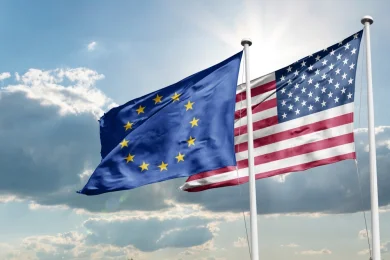
It is a somewhat unfavorable framework for European unity. It is quite clear (as stated in the American defense strategy) that the U.S. is shifting its center of interest from Europe to the western hemisphere, America, and Asia. They could have done this through a coherent and gradual understanding with old allies, the Europeans. For now, however, things look like a real chaos and raise questions such as: "What will EU-U.S. cooperation look like?" or "How will NATO still function?"
The strangest thing is that across the ocean, political opposition to Donald Trump seems anesthetized. Only after the Immigration Service troops, ICE, shot two people in Minneapolis did the Democrats announce that they would block a government spending bill.
Also in Davos, the only act of defiance from an American came from the Democratic governor of California, who came with knee pads for the leaders who "sell themselves" to Trump.
It is becoming increasingly clear that Trump is not alone. As Iulian Fota, an expert in international security, analyzes in the NewMoney podcast, there is a MAGA movement that supports the ideas and actions of the American president. Depending on the adherence to MAGA ideas among citizens as well as in the political sphere, we will be able to know whether America after Trump will change or will maintain its current coordinates. For now, things are changing on their own. For example, in France, according to a recent Ifop poll, Americans have gone from friends to enemies for 42% of the French (in April 2025, they were only 30%), and more than half (51%) of the French believe that the U.S. could become a military threat to France.
What is Romania doing? It is trying to resist all kinds of "siren songs." For example, a bizarre poll conducted by Avangarde (Marius Pieleanu) shows that 44% of respondents would like our country to join the Council for Peace, an unclear institution initiated by Donald Trump. If this is not a major error in the poll, Romanian politicians should not listen, this time, to the opinion of citizens. Romania must stand with the European Union on this issue, regardless of whether the U.S. is a strategic partner in defense matters.
In fact, the question of the poll should have been as follows: "Would you like Romania to be part of the Council for Peace, to pay a billion dollars, and for this to raise VAT from 21% to 22%?" The answers would have been interesting.
Just as interesting was the position of Sorin Grindeanu, the president of PSD, who recommended that Romania join the Council for Peace and also pay a billion dollars for an organization with unclear purposes. Now, for Grindeanu, the pensions of our grandparents, the salaries of teachers, or child allowances no longer matter.
There were many headlines I would have liked to give to this material. "The New New World" or "The Shock of the Future" or "Davos, a New Beginning" would have all been valid, as they suggest the change we are seeing. What we do not know, however, is what the new world will look like. Will middle powers (as Mark Carney calls them) be able to ally? Will the European Union manage to remain united? These are questions to which we do not have answers.
Latest News
07:20
23:12
22:53
22:53
22:25
See more news
NEWS ON THE SAME TOPICS