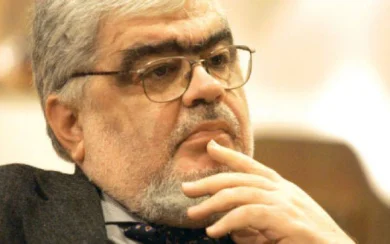
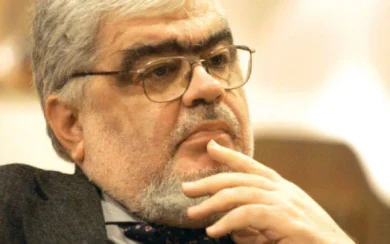
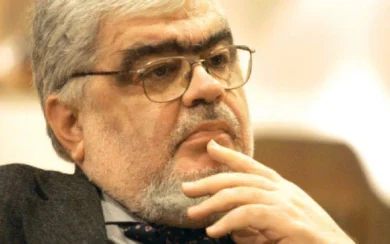
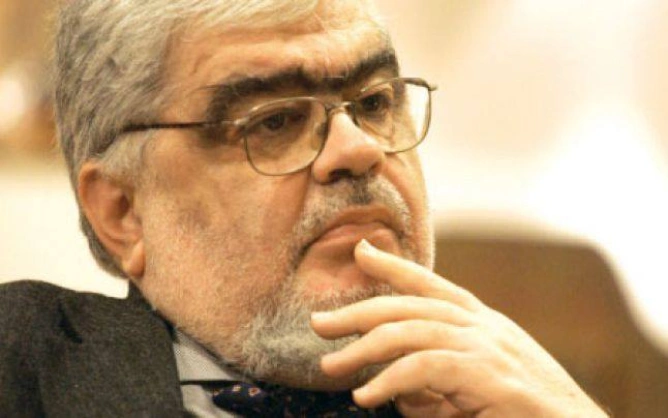
Andrei Cornea, Dilema.ro: The Vanity of the Journalist




Always see our news on Google
What drives people to express opinions in fields they do not know, resulting in nonsense? This is what Cristian Tudor Popescu recently did in a text published on republica.ro, titled "The Pride of the Gods." The idea of the text is that dogmatic spirit and the refusal to argue ideas would have a direct connection to Plato, Socrates, and Aristotle. For example, the journalist claims about Plato that "he does not bother to demonstrate any of his statements." (Aristotle is in the same situation.) As for Socrates, he "played the fool, the confused one, entangling his opponents with contradictions and negations," and this means being even "more perverse" than making simple peremptory statements. I think Mr. Popescu would have fit well in the bench of Socrates' accusers. Especially since in this attitude (the refusal to demonstrate, to justify) a "classist" attitude would manifest: "The argument, the explanation, the demonstration were considered an intellectual degradation. 'The common folk'? They should just take in what they heard; anyway, they were doing them a favor in this way."
It is hard to find a text that, although so short, is so filled with untruths, distortions, and vulgarizations! It would not even be worth discussing it if Cristian Tudor Popescu did not have enough readers and was not an "influencer" of some importance.
It is worth asking the journalist: if neither Plato nor Aristotle argues and does not seek to demonstrate their statements, where did dialectics and logic come from? What is the meaning of the Socratic-Platonic maieutics? Why does Socrates (in Plato's Apology) say that "an unexamined life is not worth living," if arguments, doubts, disputes, etc. are banished from it? Of course, the experimental method did not exist back then (and it will not exist for a long time, until Francis Bacon); but there was observation, analysis, comparison, rational argumentation, and modeling, even mathematical, as in Plato's dialogue Timaeus. It is understood that many of the arguments of the ancients do not seem valid to us today; others, although formally impeccable, start from premises that moderns no longer accept in science, such as the fact that nature has a purpose and that this is the good. But it is one thing to criticize or not accept an argument or a demonstration, entering into dialogue with them, and another to declare with sufficient confidence that there are no arguments and demonstrations, even that these were considered by those giants on whom all European culture stands as "intellectual degradation."
Let us evoke more broadly a unique example: in Plato's dialogue Meno (Plato, Works, vol. II, Humanitas, 2022), Socrates wants to answer a sophistic dilemma posed by Meno: knowledge, he says, refers either to what we know or to what we do not know; if it refers to what we know, it is useless; if it refers to what we do not know, how do we find out that we have discovered what we did not know? Therefore, knowledge is either useless or impossible.
Socrates' answer is "experimental": he engages in a dialogue with a slave boy from Meno's house, ignorant in the matter of geometry. He asks him to solve graphically (and without measuring) a simple geometry problem: duplicating the square (constructing a square with an area double that of a given square). It is found that the boy is convinced that he has the solution, but when asked to justify it, it becomes clear to him that it is wrong. (He obtains an area four times larger, not double.) He then becomes confused, but, helped by Socrates' questions, he manages to discover the correct solution (the square constructed on the diagonal of a given square) by himself, through attempts. Socrates' (Plato's) conclusion is that knowledge never starts from zero (tabula rasa): we know something, even if confused, even before we clearly know that thing, thus we can understand the questions posed to us and can thus obtain the solution. Knowledge would therefore be a kind of recollection and, Plato believes, of some knowledge received before entering the body.
What did the "experiment" with the slave in Meno yield? 1) The sophistic paradox of knowledge was rejected. 2) It was argued and demonstrated that the act of knowledge never starts from zero and that Meno's dilemma is false. 3) This fact was interpreted by Socrates (Plato) as an argument in favor of a life before birth. 4) The argumentation was done "experimentally" and practically, through dialogue. 5) The humble condition of the boy was not an obstacle to the possibility that he could learn something new through questions and answers, not through dogmatic assertion and argument of authority.
Far from it, Socrates, Plato, and Aristotle have the pride to consider themselves gods. On the contrary, modesty and the conviction that, no matter how much they know, it is still very little, characterize them. The god is the only "wise one"; man, at best, can only love wisdom. In this case, he is a "philosopher" (literally, "lover of wisdom"). Thus philosophy was born, hard to distinguish at that time – and for a long time after – from science.
All of this is, of course, banalities. But here they have come to be ignored, and in their place false, distorted statements are made, proving, it seems to me, not only simple ignorance but also a form of resentment and hatred that is hard for me to understand.
In conclusion, throwing a challenge to Mr. Cristian Tudor Popescu: he begins his article by declaring peremptorily that "Plato was a philosopher, playwright, poet, political analyst, moralist – not a scientist... etc." I challenge the author to reveal the title of even one of his dramatic works. To tell us, if he knows, when and where it was performed. Was it a comedy or a tragedy? And if he cannot give a simple answer, I kindly ask him to refrain from speaking impetuously and arrogantly about things he ignores.
Latest News
18:18
18:04
17:46
17:40
17:36
See more news
NEWS ON THE SAME TOPICS