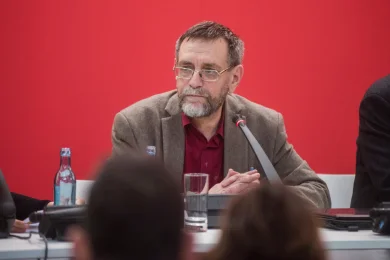
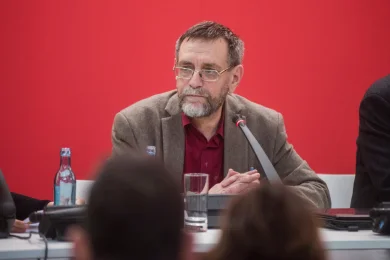
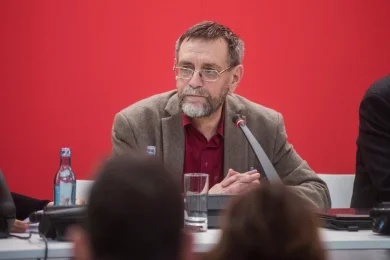
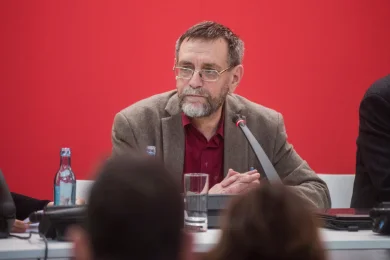
Andrei Cornea: The Demon of Confirmation



Always see our news on Google
The ancient philosophers and theologians asked: "Where malum?" "Where does evil come from?" Beyond explanations or pseudo-explanations, the question presupposed a somewhat optimistic background: evil appears as an accident, almost astonishing, against the supposed "normal" backdrop of good or at least of indifference. This is a plausible idea in the context of a world created by a good and omnipotent Creator. But perhaps the more just or at least more realistic question would be: "Where bonum?" that is, we should be more astonished by the often exceptional presence of good, especially ethical good, in an ocean of evil and indifference. Therefore, it is not evil that should be explained, but good. (This is also what those who, following Adam Smith, deduced the prosperity of societies as an effect of the competitive struggle between needs and particular egoisms have done.)
In a similar way, we should perhaps think in the field of knowledge. We tend to believe that people usually desire truth and are interested in knowledge. Aristotle began the Metaphysics with the famous proposition: "All men by nature desire to know." It is understood that they indeed want to know the truth, not falsehood. This was probably true for Aristotle himself and a few others, but it seems quite clear that the vast majority of people, in general, do not want the truth, especially if it is difficult and uncomfortable or unpleasant. What they desire, long before knowing the truth, is confirmation – of expectations, hopes, beliefs, personal or collective prejudices especially. If these are confirmed, they accept them as true, no matter how absurd they are – which is clearly seen today in the various conspiracy theories. Tertullian's famous formula "Credo quia absurdum est" is only a first stage: thus, I believe, even though I realize that what I believe is absurd. The next stage is that the thing in which I believe will be declared rational, either in a superior order, supposedly, to "banal reasoning" (or "linear" etc.), after which those who continue not to believe will be treated with contempt and hatred as some fools living in falsehood.
It is disturbing that people who refuse to see the truth are often not at all intellectually primitive or lacking in education or intelligence. Sometimes they have fallen and persisted in massive errors, brilliant minds. The great intellectuals who, over time, have supported and continue to support the communist-Maoist vision of the world despite the repeated disavowals of history were not at all ignorant or imbeciles. And now we hear and see quite often how an elite spirit nonetheless calmly supports, for example, anti-vaccination, or anti-Semitism, or especially adopts radical political views, the disastrous consequences of which they cannot fail to intuit. We always talk about disinformation and "hybrid war": but these techniques – certainly real – could not be so successful if we were not, in general, predisposed to falsehood, if we truly had in our nature the aspiration for authentic knowledge. And let it not be said to me that absurdities and stupidities are supported only by "flat" or corrupt fools. Of course, such things sometimes happen, but the more general propensity of human intelligence towards lies and self-deception is not explainable only by material corruption.
A recent proof is offered to us by Artificial Intelligence. It has become known that AI systems can lie and deceive. We all already know, from experience, how AI knows how to flatter us and encourages us to spout platitudes, satisfying us too much with what is convenient for us. It is not surprising: AI only imitates, at a high level, natural intelligence, thus our errors and defects are only augmented and expanded through these artificial devices.
Therefore, I repeat: by nature we aspire not to truth and knowledge, but to confirmation. If in this confirmation there is also a certain slice of truth, so much the better. If not, so much the worse for the truth.
Now, if this is the case, we should be astonished not so much that many spirits from the present or the past support or have supported aberrations and patent falsehoods, but that there remain always some honest and serious seekers of truth. Falsehood, lies, not truth, are the normality of humanity. Even the history of knowledge and sciences is full of stupidities, absurd claims, and especially the obstinacy with which often "great men" have supported them against evidence. And yet it is astonishing that, in this situation, sciences have managed not to die suffocated by lies, but to advance so much. The severe ethics of authentic research (about which K.R. Popper once spoke) has managed to prevail at least in some essential cases, despite the fact that often even many scientists, in particular, have succumbed at one time or another in their careers to the demon of confirmation and self-confirmation that has not spared even them.
We should therefore see the normal state of knowledge in the fact that this demon has instilled itself in so many remarkable people, not to mention countless multitudes, and has stirred heresies, fanaticisms, hatreds, and countless wars. Aristotle, it seems, was mistaken: not all men want to know truly, but only a few among them, and even these usually only sometimes, in certain cases. Generally speaking, people want to confirm themselves and their friends (in all senses of this word). But the fact that a minority in the field of knowledge (as well as, perhaps, in the moral one), a true exception in relation to what we have called "the normal state," has determined, despite all obstacles, knowledge and progress, this is what we should admire with all our might, before trying to understand.
Latest News
22:59
22:55
22:44
22:40
22:40
See more news
NEWS ON THE SAME TOPICS