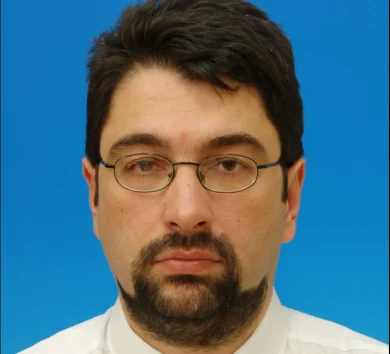
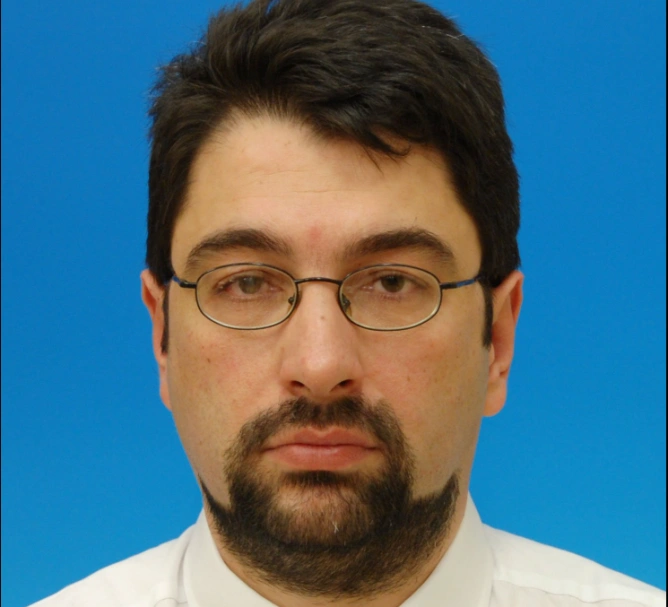
Sever Voinescu: Self-satisfaction, ignorance has prevailed!



Always see our news on Google
I'm sorry to see how the reforms of the Bolojan Government are constantly being delayed, diluted, and pushed away. We count in packages – 1, 2, 3 – and that's about it. I have the impression that the Prime Minister and his people are lost in a forest like in fairy tales, one covered with thickets, full of voices and visions, and they are increasingly tired of walking through ever-deepening mud. Perhaps they should return to a fundamental reconsideration of what reform means.
It has long been said that the essence of wisdom is to be able to make, successively, a series of distinctions: firstly, between what can be changed and what cannot be changed, then, among those that can be changed, between what you can change and what it is beyond your power to change, and finally, among those you can change, to discern between change for the better and change for the worse, in order to always implement the former. There are specific prayers in this regard, but also secular aspirations, expressed in this direction. We must recognize that, most of the time, this series of distinctions does not come easily to us – the task is difficult. I remember a famous anecdote from the beginnings of philosophy. It is said that Pythagoras amazed the tyrant Leon of Phlius so much that he asked him: "What do you consider yourself to be, with how many sciences?" to which Pythagoras replied that he is a lover of wisdom and not a wise man, for wisdom belongs only to the gods and never to humans. Therefore, the maximum aspiration of humans cannot be to be wise, but to love wisdom. Love, in this case, is a form of adherence – perhaps the deepest and most lasting.
I do not believe there is a better application of this, in itself, wisdom than in managing public affairs, that is, in politics. From the very beginning, it should be said that those who want to change everything, the radical revolutionaries, and those who do not want to change anything, the opportunistic defenders of the status quo, are equally harmful. The former always bring disaster, while the latter always bring failure.
Let us look closely at those who want to change everything. Communism and Nazism are typical products of this kind of thinking. Naturally, no one feels like a communist or a Nazi, but many are those who, if a disaster of this kind were to come upon us, would wholeheartedly support such a regime. With Nazism and communism, it is somewhat like with stupidity – no one considers themselves stupid, but the world is full of fools. Thus, it is full of revolutionaries who want to change the world. Naturally, each according to what comes to their mind, and perhaps, this often saves us from their momentum. So many heads of activists who change the world mean just as many plans to change the world, because everyone has their own plan. Thus, the proponents of changing the world somehow neutralize each other, and the world goes, along with them, according to a plan that belongs to no one.
Now, let us look at the opportunists, at those who have seized a favorable situation, a momentary arrangement that they speculate on and do not want to change anything anymore. They are the people of the conjuncture – that is, people of circumstance. Those who do not want to change anything are not passive at all. They act with just as much energy as the activists of change, but against any change. Most of them, activists of stagnation, vigorous defenders of going in circles, are today in power in Romania. People who have thrived from a poorly arranged, vicious economic-political system, and who do not want to change it for anything in the world are – what an irony! – called to reform it. They are the artists of false changes, they are the people of great nothingness, those who reap huge benefits if we all turn around in circles.
To understand exactly what you can do and what you cannot do, you need a good arrangement on at least two coordinates: one of circumstance and another of long or very long duration. On the circumstantial one, the politician perceives immediately, if they are sufficiently equipped for politics, they quickly understand where they stand. If they know well what they want to do and read the terrain correctly, that is, they correctly assess the support and opposition to what they want to do, the politician finds the perfect circumstantial coordinate. However, to find the long-term coordinate that favors them, the politician must have some culture: to know – well, not just fairly! – history, to understand the long-term dynamics of political structures, to be well-informed about national specifics and about psycho-social particularities.
By the way, I find the rise of ignorant politicians very dangerous; there are more and more of them and they are reaching increasingly influential positions. Probably the most flagrant example of a highly successful ignorant politician is Donald Trump. He is also the best example of the harmful effects that ignorance can produce in politics. The man ravages the planet with egomaniacal outbursts (this would not be disastrous, just undesirable) and ignorant ones (this has the potential to produce disasters). Trump operates in the balance of power between Europe and Russia without knowing almost anything about Europe and Russia. For him, both are just good grounds for real estate developments. Trump arrogantly refuses to learn the essential things about the long tradition of the transatlantic relationship and about Russia's geopolitical thinking. Thus, it happens that Trump, perhaps well placed on the circumstantial coordinate, is inevitably poorly placed on the long-term coordinate and cannot discern between what he can change and what he cannot change.
I return slightly to the Romanian political reality after this parenthesis, because, alas, among our politicians, Donald Trump is very successful. Many Romanian politicians admire him, some even imitate him. I overlook the bad taste of wearing a baseball cap when wearing a suit or fine wool coat. I am not just referring to this kind of imitation, but to a certain kind of political behavior. I particularly blame the parliamentary parties, PSD, PNL, USR, UDMR (I have no expectations from AUR and POT), because they have made political ignorance and empty ignorance real selection criteria. The people are not to blame for what they choose; above all, the parties are to blame for what they give them to choose from. The political failure of Romania, which is now so serious that it threatens our strange democracy, however it is, is a cultural failure. I am ashamed of what it is, ignorance has prevailed in Romania!
https://www.dilema.ro/tilc-show/mindra-de-sine-ignoranta-a-invins
Latest News
12:39
12:20
12:06
11:47
11:25
See more news
NEWS ON THE SAME TOPICS