NATO and EUROPE we are in the first row ourselves! Why does the lack of political courage leave us vulnerable and why do we need the systematic cultivation of a strategic mindset?



Always see our news on Google
We systematically measure public opinion in Romania at INSCOP Research for 12 years. In general, Romanians have a relaxed attitude towards security threats, cultivated by the discursive fairy tale of political elites represented by the magic formula "NATO protects us." An almost esoteric formula, but one that hides a huge flight from responsibility and a gigantic irresponsibility towards the first duty, that of defending the country. Because what elites of all kinds, political, academic, business, media, and even the population do not seem to realize is that NATO is, first and foremost, us. The strongest defense force of NATO on Romanian territory is and will remain the Army of the country, left without resources, capabilities, and well-trained and well-paid personnel for over three decades.
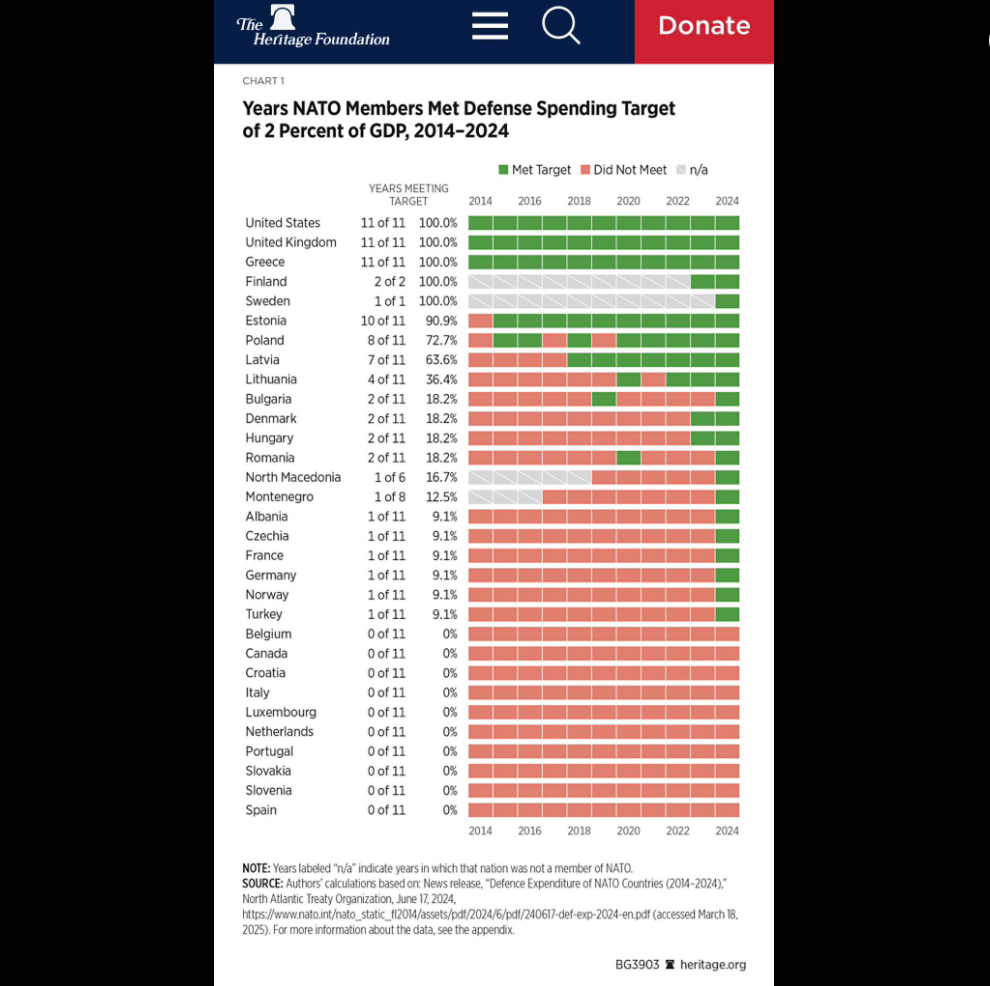
NATO's official data, synthesized by the Heritage Foundation, the American foundation that shaped the programmatic lines of the Trump administration, shows an uncomfortable reality for Romania: between 2014 and 2024, that is, after Russia took Crimea by force, Romania, a NATO and EU frontier country, has reached the threshold of 2% of GDP for Defense only twice. This means that, for over 80% of the time, the Romanian state has not consistently respected its own fundamental security commitment. That of 2%, not 4-5% as we would actually need if we seriously cared about our defense and wanted to never repeat in our history the situation in which half a million Romanians were tortured and slaughtered in prisons managed by a hostile state on our territory, as happened in the first two decades of communism installed with Soviet tanks on our lands.
The fundamental problem is the lack of courage of the political class to tell the population the strategic truth: Romania can be threatened. This reality is not speculation, but is confirmed even by the Russian Federation. In 2022, when it attacked the sovereign state of Ukraine, Vladimir Putin explicitly demanded "a return to the situation of 1997," that is, a Central and Eastern Europe without NATO — which would implicitly mean removing Romania from the Western security architecture. This is, in itself, a direct threat to the national security of our country.
In this context, the chronic underfunding of Defense becomes not just a budgetary problem, but a problem of strategic responsibility. The Romanian Army is:
• insufficiently funded in the long term,
• insufficiently equipped relative to risks,
• affected by a major personnel deficit,
• lacking a solid military reserve,
• without a coherent system for preparing the population.
We do not have mandatory military service. We have a limited and poorly promoted volunteer system. We do not have a population prepared for crisis situations. Loyalty to the country, patriotism is confiscated by the mouthpieces maintained by a hostile state. We do not have civil protection infrastructure (bunkers, shelters, real exercises) at a level that reflects the current geopolitical realities.
Worse, there is a dangerous dissonance between public discourse and reality: we say "NATO protects us," but we avoid saying the uncomfortable truth — NATO is not a passive insurance policy, but a military alliance based on each state's ability to defend itself, at least in the first phase of a conflict.
Without a credible national army, Romania is not a strong ally, but a vulnerable ally. And vulnerability invites pressure, blackmail, and testing of limits, including from a new fifth column that would sell the country's sovereignty tomorrow to quietly steal into a lawless country, led only by a nomenclature modeled after the communist one.
In this context, the Finnish model is perhaps the most important for us. It is also reflected in the recent statements of the President of Finland, from Davos:
"Can the Finnish army defend itself against a Russian attack? My answer is: yes."
"Can Europe defend itself? My answer is unequivocal: yes."
"Together with Poland, we have the largest artillery in Europe, including long-range missiles, land, naval, and air."
"We have mandatory military service. A million Finns have gone through military training. We can mobilize 280,000 soldiers in a few weeks."
"Wars are fought on the battlefield, but they are won at home. That is why we have civil shelters for 4.4 million Finns, as well as reserves for food, energy, and electricity."
The comparison between Finland and Romania highlights one of the most serious weaknesses of our security policy: the difference in strategic mindset. Finland, a country with a significantly smaller population than Romania and with a direct, constant, and historical threat from Russia, has built for decades a culture of national defense: consistent budgets, massive military reserves, population training, civil protection infrastructure, and a clear social acceptance of the idea that the country must be able to defend itself.
This approach should be a critical pillar of Romania's state project for the next decade. A decade at the end of which Romanians should say in opinion polls that "NATO or Europe is us!"
Latest News
10:38
10:12
10:01
09:52
See more news
NEWS ON THE SAME TOPICS