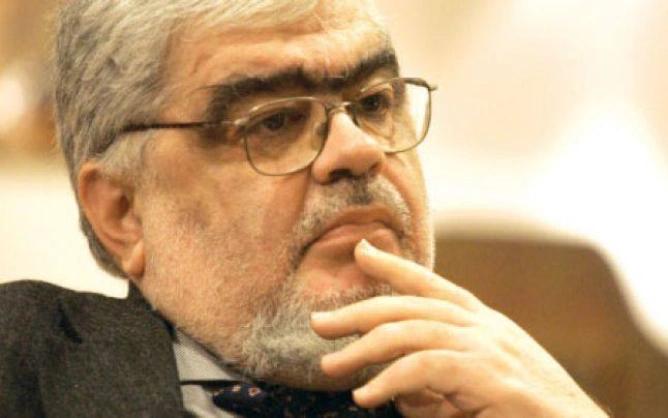
Andrei Pleșu: What our politicians were and what they have become



Always see our news on Google
I try to put myself in the shoes of the last-minute dignitaries and hope that, beyond their "service obligations", they have moments of honest self-evaluation, thinking about the tradition of the position they occupy.
I have not passed like a goose through water in the over 40 years of "popular democracy". One of the lasting legacies of the communist regime was the suspension of the connection between the concept of "dignitary" and that of "dignity" (professional, moral, political, familial). To become a minister in older Romania, before the "dictatorship of the proletariat", you had to have a certain type of prestige, earned before obtaining the portfolio: to have solid studies in one profession or another, to have played a well-defined role in one historical context or another, to not be suspected of theft ("in continuous form" – as it is said in legal language), to have proven honesty, a sense of honor, strength of character. Or, at least, to come from a good family. This was not, of course, a guarantee of political performance, but it implied, at least, a good education "from home", a knowledgeable command of one's own language, of several foreign languages, and good manners. Some culture and some good taste were also included. I do not mean to idealize the "times of yore", nor do I claim that there have never been, on our public stage, stupid or mediocre ministers, malversations, errors, accidents along the way, more or less serious. I only observe that the portraits of our political elites were more "transparent" and that the trajectory (the preconditions, the stages, the orientation) of a true political career required a certain coefficient of predictability. I do not want to treat any figure of the new governments with a malicious presumption of incompetence, semi-illiteracy, inadequacy. I do not exclude the possibility of encouraging surprises, even when the premises did not seem to anticipate them. But I also cannot ignore the difference between Spiru Haret and Ecaterina Andronescu or between Barbu Ștefănescu Delavrancea (as mayor of Bucharest) and Gabriela Vrânceanu Firea.
In fact, I try to put myself in the shoes of the last-minute dignitaries and hope that, beyond their "service obligations", they have moments of honest self-evaluation (even if embarrassing), thinking about the tradition of the position they occupy. The position in question has historically distinguished itself through imposing episodes of effective responsibility and should compel a respectful contemplation of tradition.
If, for example, you are the Minister of Justice, it would be advisable to remind yourself, timidly, of the long line of predecessors, to whose names yours will be added, someday... On the chair you occupied just yesterday, through small party maneuvers, sat, among others, the fervent unionist Ioan Al. Filipescu (law studies in Paris), Constantin Hurmuzachi (law studies in Vienna), Al. Papiu Ilarian (studies in Vienna and Padua, leader in Transylvania of the 1848 revolution), Alexandru Lahovary, Grigore Cantacuzino, Ștefan Golescu (son of Dinicu, studies in Switzerland), Gh. Costaforu (recognized as one of the founders of Criminal Law in Romania), Mihail Pherekyde, Ion Câmpineanu, Th. Rosetti (one of the co-founders of "Junimea"), Titu Maiorescu, Toma Stelian, Grigore Iunian, Istrate Micescu, etc. As a point of amusement, I also mention a Stolojan, former mayor of Craiova, liberal, Minister of Justice after 1879. Well, to be in the place of Mr. Florin Iordache, having such names in mind, would surely cause some insomnia...
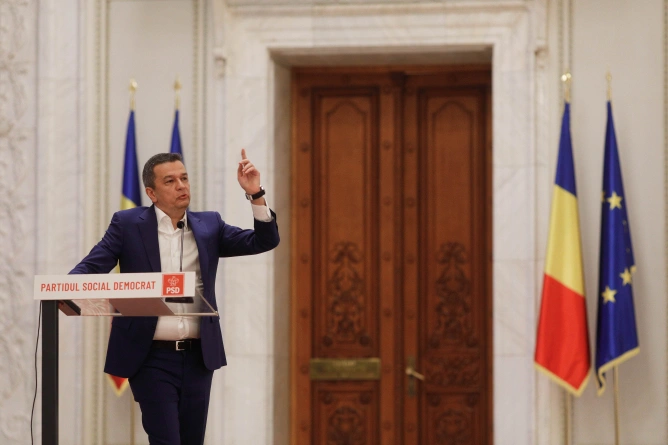
But to be in the shoes of the poor Pavel Năstase, after Spiru Haret, Titu Maiorescu, Octavian Goga, and Nicolae Iorga? But to be Grindeanu, with "ancestors" like Kogălniceanu, Ion Ghica, Ion Brătianu, P.P. Carp, Lascăr Catargiu, Take Ionescu, or I.G. Duca? As for Finance, what more can we say? You come after Grigore Balș, N. Kretzulescu, Dimitrie Sturdza, Ion C. Brătianu, Vasile Lascăr, Take Ionescu, Alexandru Marghiloman, Nicolae Titulescu (yes, even he, between 1917 and 1918), Constantin Argetoianu, Alex. Averescu, Barbu Știrbey, Iuliu Maniu, Mircea Cancicov, Virgil Madgearu. (I also have here a "familiar name": Constantin I. Iliescu, the second mayor of Bucharest, after the Union.)
And speaking of the mayors of Bucharest, what must it be like to settle in the line of Dimitrie Brătianu, C.A. Rosetti, Nicolae Fleva, Grigore Cerchez, Pache Protopopescu, Nicolae Filipescu, Barbu Ștefănescu Delavrancea, Mihai. G. Cantacuzino, and Vintilă Brătianu?
We will see why the last-minute stars of our ruling elite are in a state of being. For now, thinking about the lists above, we can say one thing: the "current ones" have good nerves! They feel on their shoulders only the burden of their own ego (doubled, obviously, by that of their "boss") and a miraculous self-confidence. What can we do but wish them success? May they transform anonymity into renown. In the rest, as the poet says, we will gladly carry all their burdens...
https://www.dilema.ro/situatiunea/ce-au-fost-si-ce-au-ajuns-politicienii-nostri
Latest News
13:15
13:02
12:54
12:51
12:45
See more news
NEWS ON THE SAME TOPICS









.webp)