"The Dragon" Mercosur and the farmer "Făt-Frumos from tears"


Always see our news on Google
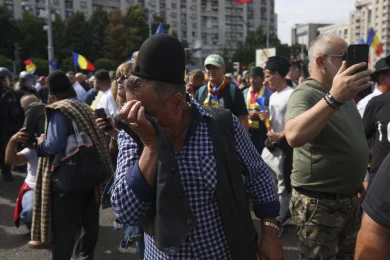
Mercosur is more than just a simple trade agreement. It is the sum of all misunderstandings, unfulfilled ambitions, well-crafted excuses, and blunt visions that traverse Europe. The most visible are the farmers. Repeating obsessively two ideas: "we produce food" and "the Mercosur agreement will bankrupt European agriculture," farmers hope to instill fear among politicians and that they will listen to them.
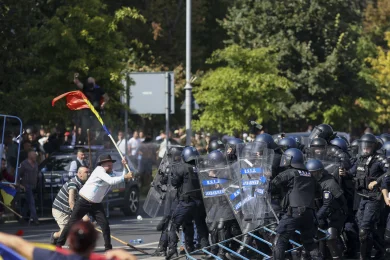
This approach worked once, in January 2024, when protests by European farmers blocked some of the changes initiated by the European Commission for agriculture to meet environmental standards. The strictest provisions were postponed or diluted.
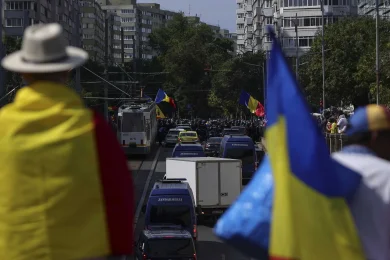
The victory in 2024 makes farmers put pressure against Mercosur at the beginning of 2026. The protesters are from France, Italy, Greece, Ireland, Romania, or Poland. They repeat the same refrain that food or agricultural products coming from Mercosur countries do not meet European quality standards, use genomic techniques, meaning genetically modified organisms, and, the ultimate sacrilege, are cheaper, which will lead to the bankruptcy of European farmers.
Three things are truly intolerable to European farmers. The first is that they have the feeling that the world begins and ends with them. The Mercosur agreement does not only concern agricultural products but also targets industrial goods or the service sector. You cannot "set fire" to the agreement just because European farmers cannot stand competition.
Moreover, the desire to block any competition is in the DNA of European farmers. They contest the common market, cannot stand products coming from Ukraine, and now want to stop goods coming from Latin America. The strangest thing is that no one tells them "to their face" that they are receiving serious subsidies from European funds precisely to cope with competition. In return, the top representatives of the European Commission have assured that farmers will have "safety nets" against imports from Mercosur countries, such as safeguard clauses for products that have a low price and a "blood" analysis of compliance with quality standards. Of course, in some cases, politicians may not inspire confidence. But a commitment is a commitment, even for politicians.
The second intolerable thing for farmers is the defiance of consumers. The "golden rule" for any consumer is that they will buy a product based on the best price-quality ratio, of course as they perceive it and informing themselves whether the goods comply with sanitary-veterinary rules.
Many European consumers have trained themselves to opt for local products. Very well. But, the choice is valid only within certain limits. It is hard to believe that for consumers the only purchasing criterion is local production, totally abstracting from price or quality. That is why it is clear that more products on store shelves (including those coming from Mercosur countries) mean more options, more competition, more diversification for European consumers.
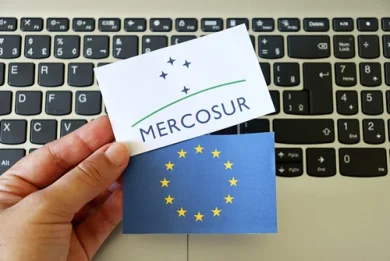
The third intolerable thing for farmers is the lack of vision. The Mercosur agreement comes at a time when international trade relations are being reshaped, often based on subjective or political criteria. The Mercosur-EU agreement creates a free market that encompasses 700 million consumers and in which Europeans have a trade surplus that they can strengthen.
So far, the European Union has approved the signing of the agreement even despite the negative vote of five states, France, Poland, Austria, Hungary, and Ireland, and the abstention of Belgium. For the first time in history, France, a founding state of the EU, has placed itself through voting in a minority zone. Italy tipped the balance, voting in favor of signing the free trade agreement, thus ensuring a qualified majority, which means support from over 65% of the population of the European Union. Moreover, the principle of qualified majority could be increasingly useful in future European decisions, under the conditions in which there are and will likely be some member states that will constantly oppose decisions that need to be made at the European level.
The Mercosur file is not, however, closed. Votes in the European Parliament and even in national parliaments are still to come, but a step has been taken. A step that shows that there are moments when politicians can do good for citizens even against what they believe.
Latest News
14:41
14:26
14:13
14:02
13:50
See more news
NEWS ON THE SAME TOPICS