Why three hours of delay have become one of the toughest political battles in Brussels



Always see our news on Google
The European Union is negotiating the most important reform of air passenger rights in the last two decades. The file is currently in conciliation after the Council rejected the Parliament's amendments on March 24, 2026, and the central dispute concerns the delay threshold that grants the right to compensation. The Parliament defends the three-hour rule, while the Council proposes four hours for flights under 3,500 km and intra-EU, and six hours for longer flights.
The European Union is renegotiating air passenger rights. The Parliament wants to maintain the three-hour threshold for compensation, the Council proposes four and six hours, and airlines are calling for a more flexible system.
Why the three hours matter
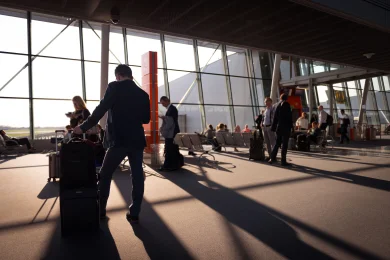
On an ordinary morning at Brussels airport, a flight delay does not necessarily cause panic. Passengers check notifications received from the airline, look at the departure board, and try to estimate how much it will affect their journey. The first few minutes are treated as a usual inconvenience. An hour of delay starts to complicate things. Two hours already change plans. After three hours, the same situation enters a legal and political zone that most travelers do not see.
For millions of Europeans, the three-hour threshold has become one of the most concrete expressions of how European legislation can protect their daily lives. Depending on the circumstances, a delay that exceeds this limit can generate the right to financial compensation of several hundred euros. For a passenger who bought a low-cost ticket, the amount can far exceed the cost of the journey. For a family, it can mean recovering a significant part of the expenses incurred by a disrupted vacation.
The reform currently under negotiation in Brussels is, therefore, more important than it seems at first glance. The discussion does not only concern administrative forms, refund procedures, or how European regulations are drafted. It concerns the fundamental question of who bears the cost of a journey that does not take place as promised by the airline.
This question has become increasingly relevant as air transport has transformed. Twenty years ago, air travel was still perceived by many Europeans as a relatively exceptional experience. Today, millions of people use air transport for work, studies, vacations, family visits, or frequent travel between member states. The single market has reduced the economic and social distances between countries, and aviation has become one of the infrastructures of this mobility.
At the same time, the relationship between passenger and airline has become more complex. Tickets are more accessible than in the past, but their structure has changed radically. The initially displayed price is often just the starting point of a list of additional services. Low-cost companies have reshaped the European market and made air travel accessible to tens of millions of people. This success has also brought new questions about responsibility, transparency, and consumer protection.
What is being negotiated now
The European Parliament wants to maintain the right to compensation after a three-hour delay, simpler refund procedures, and free cabin baggage. The EU Council proposes higher thresholds: four hours for flights under 3,500 km and intra-EU, and six hours for longer flights. The file is in conciliation, following the rejection of the Parliament's amendments by the Council on March 24, 2026.
How one of the strongest passenger protection systems emerged
In the early 2000s, European air transport was undergoing one of the most significant transformations in its history. The liberalization of the market, which began in the 1990s, fundamentally changed the rules of the game. Airlines no longer operated in a framework dominated by national monopolies and strictly controlled routes, but in a market where competition was becoming increasingly intense. New low-cost operators were gaining ground, and flying was becoming accessible to population groups that until then had traveled almost exclusively by train, bus, or personal car.
For European institutions, this transformation brought a new problem. The market was integrating faster than consumer rights. A citizen could easily buy a ticket between two member states, but if the flight was canceled, if they were denied boarding due to overbooking, or if they arrived at their destination with many hours of delay, their protection depended largely on national rules, the goodwill of the airline, and their individual ability to claim damages.
This is how Regulation 261/2004 emerged. At the time of its adoption, the regulation was considered ambitious. It introduced concrete obligations for airlines in cases of denied boarding, flight cancellations, and significant delays. Passengers were to benefit from assistance, information, refunds or rerouting, and, in certain situations, financial compensation.
In retrospect, the document seems almost modest today. Many of the rights that passengers consider normal were not explicitly formulated in the original text. In reality, the European passenger protection system was built in two stages. The first stage was legislative. The second was judicial and belongs to the Court of Justice of the European Union.
The Sturgeon ruling from 2009 is probably the most important of them. The Court concluded that a passenger who arrives at their final destination with a very significant delay can suffer harm comparable to that of a passenger whose flight was canceled. From the traveler’s perspective, the legal difference between cancellation and delay does not always change the concrete effect: time is lost, connections are missed, plans are disrupted.
The Nelson and Folkerts rulings later reinforced this approach and clarified that what matters is the arrival time at the final destination, not just the delay recorded on the first segment of the journey. Gradually, around these decisions, the threshold that dominates today’s entire European political debate was formed: three hours.
This evolution explains the intensity of the current dispute. For consumer organizations and a large part of the European Parliament, the three-hour threshold represents the result of two decades of legal and political construction. For the industry and some member states, the same evolution is seen as a gradual extension of airlines' obligations beyond what was initially imagined.
Why the Court's jurisprudence matters
Regulation 261/2004 did not create the current system alone. The Court of Justice of the European Union has reinforced the right to compensation for significant delays through rulings such as Sturgeon, Nelson, and Folkerts. These cases established that the delay must be assessed upon arrival at the final destination and that a significant delay can produce effects comparable to a cancellation.
How much are passenger rights worth and why few people use them
Behind every discussion about thresholds, jurisprudence, or competitiveness lies money. For consumers, the European system can turn a missed journey into compensation of several hundred euros. For airlines, the same rule can generate significant costs across the entire industry.
The paradox is that many passengers who could benefit from these rights never get to use them. The rights are known, there are numerous guides and websites dedicated to the subject, and the compensations can be significant. Still, between the existence of a right and its exercise, there is a much greater distance than it seems.
Let’s imagine a flight from Bucharest to Brussels that arrives at its destination with a four-hour delay. The passenger disembarks from the plane tired, misses a meeting, has to get to the hotel, and has to reorganize their schedule for the next day. The last thing they think about is checking whether the delay was caused by a technical problem, a lack of crew, or a decision by air traffic control.
For the airline, however, all these details matter. The operator knows the flight history, the reasons for the delay, the internal documents, and the legal arguments that can be used to invoke extraordinary circumstances. The passenger sees only the final result. The plane arrived late. The rest of the information is, to a large extent, in the hands of the airline.
This informational asymmetry explains why passenger rights are simultaneously strong and difficult to exercise. In theory, the regulation offers protection. In practice, the passenger must know that they have a right, understand the conditions of application, submit a claim, keep relevant documents, and sometimes insist for months to obtain a response.
A completely new industry has emerged around this difficulty. Companies like AirHelp, Flightright, Skycop, and other specialized platforms have built their business on a simple observation: very many passengers are entitled to compensation, but do not have the time, information, or patience necessary to obtain it themselves. The platforms check the eligibility of a flight, submit the claim on behalf of the passenger, negotiate with the airline, and, if necessary, go to court. In return, they retain a percentage of the recovered amount.
The success of these companies says a lot about the real functioning of the European system. If the procedure were completely automated and frictionless, such an industry would have much less room for development. The fact that it has become a significant business shows that there is still a considerable distance between theoretical rights and their practical application.
Three scenarios that explain the stakes
A flight from Brussels to Madrid arrives with a three-hour and 20-minute delay. In the current system, passengers may be eligible for compensation. In the Council's scenario, the four-hour threshold could exclude this case.
A flight from Bucharest to New York arrives with a five-hour and 30-minute delay. In the current system, compensation may be possible. In the Council's scenario, the six-hour threshold for long flights could leave the passenger below the necessary limit.
A flight from Bucharest to Paris is canceled on the day of departure. Here, the stake is not only the subsequent compensation but also the airline's obligation to provide refunds, rerouting, assistance, accommodation, and clear information.
The battle between Parliament, Council, and airlines
If a passenger were to follow only the public debate surrounding the reform, they might get the impression that the dispute boils down to a simple question: after how many hours of delay should someone receive compensation? In reality, this is just the visible part of the conflict. Beneath the thresholds of three, four, or six hours lies a broader debate about the role of the European Union in a market economy and about the relationship between consumers and the companies that provide essential services.
For the European Parliament, the three-hour threshold has become much more than a technical rule. It represents proof that passenger rights work in practice. Unlike many European policies that are hard to observe in daily life, passenger rights are easy to understand. A significant delay can generate compensation. A cancellation can lead to a refund or rerouting. An airline has clear obligations when travel is disrupted.
The Parliament's argument is that raising the threshold from three to four or six hours would exclude a significant portion of passengers who are currently eligible for compensation. The institution supports simpler refund procedures, additional rights for vulnerable passengers, and free cabin baggage.
The Council sees things differently. Member states start from the idea that air transport is not just a service for consumers but also a strategic economic sector that supports connectivity, tourism, trade, and employment. The Council's position does not eliminate passenger protections but changes the compensation thresholds. According to its mandate, compensation would arise after four hours for flights under 3,500 km and intra-EU and after six hours for longer flights.
Airlines argue that the European system is already one of the most demanding in the world and that the financial pressure associated with compensations is significant. Their argument is that air transport operates in an environment where many variables cannot be completely controlled: weather, congestion, air traffic restrictions, aircraft rotation, crew shortages, or delays propagated from one airport to another.
Consumer organizations respond that this is exactly the role of European legislation: to impose high standards when the imbalance between company and citizen is evident. In their reading, compensation is not an excessive penalty but a mechanism through which operators internalize the cost of delays they can control.
Cabin baggage, low-cost companies, and lobbying
If the dispute over compensation is difficult for the general public to follow, there is another subject that has managed to transform a technical debate into an easily understandable theme for millions of Europeans: cabin baggage.
Few things generate more frustration than the moment a passenger discovers that the price displayed at the beginning of the booking is not the price they will pay in the end. In the last two decades, the low-cost model has radically changed how airfares are constructed. The ticket no longer always represents a complete product but the starting point of a list of services that can be added separately: window seat, priority boarding, cabin baggage, checked baggage, booking flexibility, or insurance.
For the industry, this evolution is the expression of an efficient market. Passengers pay only for what they use, and companies can display very low fares for those who travel without additional services. For many consumers and for part of the European Parliament, things look different. Excessive fragmentation of the price makes it more difficult to compare offers and creates situations where the final cost of the journey differs significantly from the amount initially displayed.
Cabin baggage has become the symbol of this dispute. For most travelers, a small trolley or a bag sufficient for a few days of travel is not a luxury. It is a normal part of a journey. Hence the European Parliament's proposal to explicitly introduce the right to free cabin baggage. The Parliament has supported one personal item plus a small carry-on bag, with a maximum combined size of 100 cm and up to 7 kg.
A complex ecosystem has formed around the reform. Consumer organizations, such as BEUC and its member associations, are trying to maintain the current level of protection and prevent the raising of compensation thresholds. The airline industry, through organizations like IATA and Airlines for Europe, argues that the current system has become too costly and too rigid. Between these blocks lies the claims industry, companies like AirHelp, Flightright, or Skycop, whose business model depends on the existence of sufficiently strong rights and the difficulty passengers have in claiming them on their own.
This map of interests explains why the reform has taken so long. Not because European institutions do not understand the problem, but because they are trying to find a balance between real and often contradictory interests.
Europe, the United States, and the question that will decide the future of passenger rights
As negotiations between the European Parliament and the Council approach a decisive stage, it is worth taking a step back. The air passenger rights file is often presented as a debate about compensation, delays, and baggage. In reality, it says much more about how the European Union understands the relationship between the market and the citizen.
This dimension becomes evident when Europe is compared to other jurisdictions. In the United States, the emphasis is more on refunds and information obligations than on standardized compensation for delays. If an airline cancels a flight or significantly changes the journey, the passenger may be entitled to a refund if they decide not to travel anymore. The fact that a flight is delayed for several hours does not generally lead to a right comparable to the European fixed compensation.
The difference reflects two different ways of understanding the role of regulation. Europe starts from the premise that there is a structural imbalance between consumer and company and that this imbalance must be corrected through rules. The American system is generally more reluctant to intervene directly in the economic relationship between the two parties.
The European reform is not only important for passengers. It concentrates a tension that arises in many other European files: how much protection is enough and when does this protection start to produce economic effects that must be taken into account? The same tension exists in digital legislation, data protection, artificial intelligence regulation, energy, and financial services.
In the case of air transport, this dilemma is easy to observe. Everyone understands what it means to miss a connection, to spend hours in an airport without clear information, or to pay extra for a service that you thought was included in the price. That is why the reform produces such strong reactions. It is technical in procedure but very concrete in effects.
The most likely outcome remains a compromise. The Parliament considers the three-hour threshold a political red line. The Council believes that the current system needs to be recalibrated to better reflect the economic and operational realities of the industry. The compromise could mean maintaining the current threshold for certain categories of flights and adjustments for others, different compensations, simpler procedures for passengers, or clarifications regarding cabin baggage.
However, there is also the possibility of failure. If the conciliation negotiations do not produce an agreement, the reform will not be adopted, and the current legal framework will continue to apply. For many passengers, this would not necessarily be bad news. It would mean maintaining the current system and the protections developed over the last two decades. For European institutions, it would, however, confirm the difficulty of resolving a file that has been blocked for more than ten years.
Ultimately, the reform of air passenger rights is about how the European Union responds to a question that arises in almost all its major policies: when economic interests and consumer rights come into tension, where is the line drawn?
In the case of air transport, this line today passes through a seemingly banal figure: three hours. For the European Parliament, the three hours represent a standard of protection built through legislation and jurisprudence. For the industry and for some member states, the same figure represents a financial obligation that needs to be re-evaluated. For passengers, it is the moment when a delay ceases to be just an inconvenience and becomes a problem for which someone must take responsibility.
Latest News
19:40
19:26
19:12
19:01
18:58
See more news
NEWS ON THE SAME TOPICS