Lukoil and the withdrawal from Trident - yet another hard lesson for Romania



Always see our news on Google
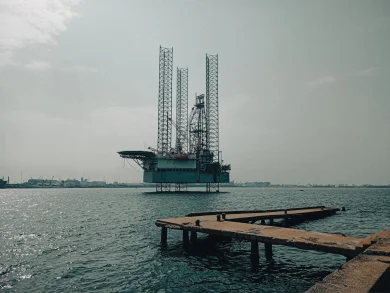
Lukoil's withdrawal from the Trident project is not just a corporate move in an offshore perimeter. It is an X-ray of our energy vulnerabilities and the strategic delays accumulated over the last decade. When an investor invokes force majeure in a strategic project in the Black Sea, the issue is no longer just contractual. It becomes geopolitical, economic, and, especially, European.
Trident was, on paper, one of the potential pieces of the energy security puzzle for Romania and Europe. Not nearly as advanced as Neptun Deep, but promising enough to matter in a region trying to replace dependence on gas with regional production. The irony? A project meant to reduce Europe's gas dependence on Russia has become blocked precisely because of the sanctions imposed on Russia.
A withdrawal that says more than it seems
Lukoil's invocation of force majeure is, in essence, an acknowledgment that Western sanctions make the normal continuation of operations impossible. Drilling services, financing, insurance – all become complicated or inaccessible. Legally, things can be discussed. Strategically, however, the message is clear: you cannot build energy security on unstable political foundations. Romania knew it was operating with a partner exposed to the risk of sanctions. It probably relied on economic pragmatism and the idea that commercial interests would prevail. The reality of recent years has proven otherwise.
What comes next?
There are three possible directions:
1. Prolonged deadlock. The project remains suspended, and Romania loses precious years.
2. Transfer of participation. Lukoil sells its stake to a Western or regional player, acceptable from the perspective of sanctions.
3. National consolidation. Romgaz creates the role and brings in a specialized technical partner for deep-water operations.
The most realistic scenario is the second. International capital still sees the Black Sea as a relevant energy frontier. However, investors will demand fiscal stability, predictability, and legal clarity – exactly the chapters where Romania has fluctuated for years.
Does it not directly affect?
In the short term, no. Trident was not producing gas, so it does not influence tomorrow's bill. In the medium and long term, however, every lost year means:
• less domestic production,
• missed regional export opportunities,
• diminished geopolitical influence.
In a Europe looking for alternatives to Russian gas, Romania has a geological advantage. But geological advantage does not replace political decision-making.
The lesson that can no longer be postponed
Lukoil's withdrawal is not just about sanctions. It is about the fact that the energy strategy cannot be built on improvisation and reaction. The Romanian state must decide quickly:
• whether force majeure is accepted or contested;
• whether the perimeter is put out for retender;
• whether it actively supports a solution to replace the operator.
More importantly, it must send a clear signal: strategic projects cannot remain in ambiguity for years.
A hidden opportunity
Paradoxically, Lukoil's withdrawal could also be a chance. A repositioning of a project under an operator without the risk of sanctions could make Trident more bankable than it was before. In the current European context, gas from the Black Sea is no longer just a commodity – it is a strategic opportunity for Romania to shape its path towards becoming a European security pole through energy.
The real question is not whether Lukoil is leaving. The question is whether Romania knows how to turn this opinion into a new beginning.
Romania has resources. It has a geographical position. It has a favorable context. What is missing is the assumption of a great direction - Romania as a European security pole through energy.
Latest News
19:05
18:49
18:42
18:38
18:34
See more news
NEWS ON THE SAME TOPICS