A report published by CEPA proposes the use of Romanian gas from the Black Sea for a strategic reserve in Ukraine.



Always see our news on Google
The gas that will start to be produced from the Neptun Deep perimeter in 2027 could be used, along with Ukraine's large underground storage capacity, to create a strategic reserve for Central and Southeastern Europe, according to an analysis signed by Petroslava Bratanova and Aura Sabadus and published by the Center for European Policy Analysis. The proposal is based on the perspective of a significant increase in Romanian production in a regional market where demand may not automatically absorb all additional volumes.
In short
Neptun Deep is expected to start production in 2027 and add approximately 8 billion cubic meters of gas per year to Romania's production when the project reaches the planned level.
The authors of the analysis published by CEPA believe that part of the potential Romanian surplus could be transported north and stored in Ukraine, instead of being sold exclusively on regional markets.
Ukraine has one of the largest underground gas storage infrastructures in Europe and has offered European companies up to approximately 10 billion cubic meters of capacity.
The transport links between Romania and Ukraine are becoming more relevant after the European Commission allowed Transgaz to offer export capacity at the interconnection with Ukraine.
The idea of a Romanian-Ukrainian strategic reserve is a proposal from the authors of the analysis, not a project adopted by governments or the European Union.
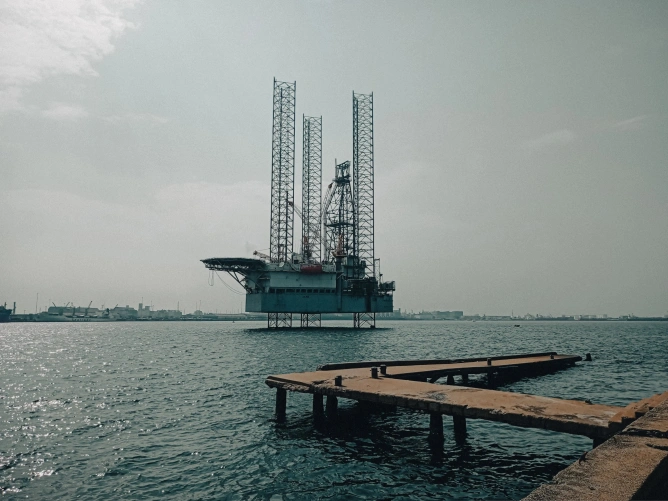
Romania is preparing for the most significant increase in its natural gas production in decades with the commissioning of Neptun Deep, the offshore project developed by OMV Petrom and Romgaz in the Black Sea. Production is scheduled to start in 2027, and the project is expected to add approximately 8 billion cubic meters annually when it reaches the planned level, significantly altering Romania's gas balance and its position in the regional market.
The analysis published by CEPA starts from the question of where the volumes that exceed domestic consumption could go. The authors estimate that even if Romania maintains current consumption and additionally uses gas for new power plants and potential industrial activity growth, it could still have volumes available for export. However, this estimate depends on demand evolution, the actual production pace of Neptun Deep, and the development of domestic consumption and does not represent an already existing or guaranteed surplus.
Neighboring markets represent the first possible destination, but the analysis identifies limits to their capacity to absorb significant volumes in the long term. Hungary has a relatively large market, but exports may be limited by interconnection capacity, existing contracts, and geopolitical factors, while the development of renewables, electricity storage, and nuclear energy in Bulgaria may reduce future gas consumption growth.
In this context, the authors propose changing the way the potential Romanian surplus is viewed: instead of treating the entire volume as a commodity that must find an immediate buyer, part could become a component of a regional strategic reserve. Ukraine would play a central role in this model due to its underground storage infrastructure, built during a time when the country was a major node in the gas transport system between Russia and Europe.
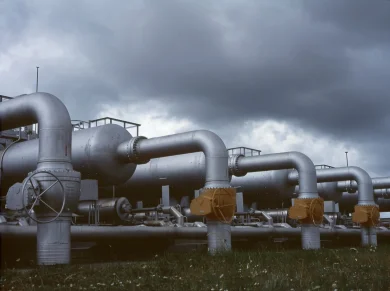
The total underground storage capacity of Ukraine exceeds the country's internal needs, and Ukrainian operators have previously offered European companies approximately 10 billion cubic meters of space. The size of the infrastructure allows for the storage of much larger volumes than in most individual facilities in Central and Southeastern Europe and provides the possibility of withdrawing gas during periods of high consumption or supply disruption.
The proposal would link this capacity to the additional production from the Black Sea. Romanian gas could be transported to Ukraine when regional demand and prices do not justify immediate sales, stored in underground facilities, and later brought back to regional markets as needed. In this configuration, Ukrainian deposits would function both commercially and as an energy security instrument.
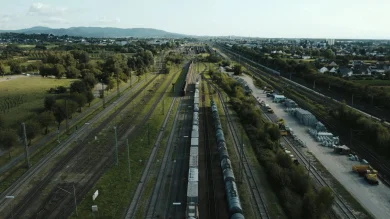
The infrastructure necessary for such a relationship does not start from scratch. Romania is connected to the regional system that links Greece, Bulgaria, Hungary, and other markets in Central Europe, and the old trans-Balkan pipelines, previously used for transporting Russian gas to Southeast Europe, can operate in different directions and configurations than those for which they were originally built.
This reorientation is one of the components of the so-called Vertical Gas Corridor, developed to allow the movement of gas from Southern Europe to Bulgaria, Romania, and further to Central Europe and Ukraine. The route can transport gas from LNG terminals in Greece, including gas imported from the United States, as well as volumes from Azerbaijan and, in the future, Romanian production from the Black Sea.
The Romanian-Ukrainian connection became more important in 2026 after the European Commission approved changes to the commitments previously made by Transgaz in a competition case. The change allows the Romanian operator to offer export capacity both to Bulgaria and to Ukraine through the relevant infrastructure, contributing to the diversification of Ukrainian supply and the development of a more integrated regional market.
This does not mean that there is already an agreement for sending Neptun Deep gas to Ukrainian deposits. The CEPA analysis builds a possible future use of the infrastructure and production, and transforming the idea into a strategic mechanism would require commercial decisions, agreements between operators, and possibly a framework established by governments or the European Union.
The timeline proposed by the authors coincides with a structural change in European supply. The European Union has adopted a gradual phase-out of Russian gas imports, and existing contracts benefit from transition periods. Imports of Russian LNG under long-term contracts will be banned from the beginning of 2027, and pipeline imports will be eliminated in the fall of the same year, with a possible limited extension if storage targets are not met.
In this context, the infrastructure that previously transported Russian gas can be used for alternative sources. Azerbaijani gas, LNG imported through terminals in Southeast Europe, and production from the Black Sea can flow through a regional system that has been developed, modernized, and adapted after the reduction of Russian flows.
The authors of the analysis believe that selling the entire Romanian surplus directly to this market could create competition between gas produced in the Black Sea and imported LNG, especially from the United States. They propose that part of the gas be temporarily removed from the market and kept as a reserve, reducing the pressure to find immediate buyers after production increases.
This hypothesis depends on the actual existence of a surplus. Romanian consumption could increase if new gas-fired power plants are built, if the industry increases production, or if gas is used in other energy projects. The volume available for export or storage will result from the difference between actual production and consumption in the coming years, not just from the nominal capacity of Neptun Deep.
Ukraine could also have a greater need for gas after the war, depending on the reconstruction of the economy, the situation of domestic production, and the state of the energy infrastructure. For this reason, its deposits cannot currently be considered as automatically reserved capacity for Romania or the EU, and their use should be commercially negotiated and adapted to Ukrainian needs.
However, there is a precedent for their use by European traders. Companies from the EU have already stored gas in Ukraine, taking advantage of the available capacity and the links between transport systems. The model has demonstrated that gas introduced from the European market can be stored in Ukrainian deposits and withdrawn later, although the war introduces additional risks to infrastructure and operations.
The CEPA analysis goes further and proposes using this infrastructure for a stock with a strategic function. Such a mechanism would have a different objective than ordinary commercial storage: gas would be kept for situations of severe supply disruption, sudden increases in demand, or other regional crises.
The European Union is working in 2026 on revising the broader framework regarding energy security, following the experience of the crisis triggered by the reduction of supply from Russia. Current regulations impose objectives on EU member states regarding the filling of EU deposits, but the future framework may address more broadly how reserves, interconnections, and external sources contribute to the security of the system.
Ukrainian deposits are not part of the EU storage capacity, and their integration into a European strategic reserve would raise issues related to financing, access, gas ownership, infrastructure security, and guarantees for traders. The material published by CEPA does not present a legal or financial mechanism already agreed upon to address these issues.
However, the authors see the association of Romanian production with Ukrainian deposits as a possible component of the energy architecture of the region after the elimination of Russian imports. Romania would provide a source of gas produced in the EU, Ukraine would ensure storage capacity, and the networks between Greece, Bulgaria, Romania, and Central Europe would allow the movement of volumes based on needs.
Such a configuration would more closely link the energy systems of Romania and Ukraine and would provide Neptun Deep production with an additional destination beyond domestic consumption and regular commercial exports. For now, however, the Romanian-Ukrainian strategic reserve remains a proposal formulated by the authors of the analysis and not a policy adopted by Romania, Ukraine, or the European Union.
Latest News
22:52
22:34
22:28
21:56
21:29
See more news
NEWS ON THE SAME TOPICS