ECFR analysts recommend that Romania coordinate with other EU states in reviewing a potential sale of Petrotel



Always see our news on Google
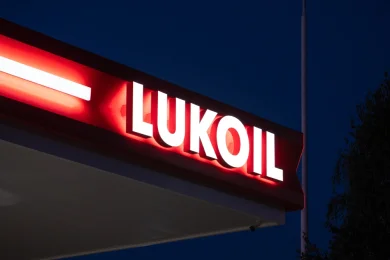
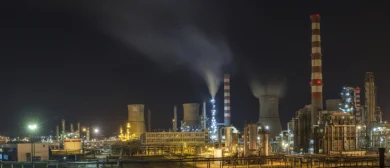
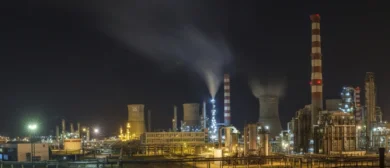
A potential sale of the Petrotel-Lukoil refinery in Ploiești should be examined in coordination with the other European states hosting assets of the Russian group, argue Agathe Demarais and Jim O’Brien in a commentary published by the European Council on Foreign Relations (ECFR). The recommendation comes at a time when the Romanian company is insolvent, and a transaction involving Lukoil’s foreign assets must meet the conditions imposed by US sanctions.
In brief, Agathe Demarais and Jim O’Brien recommend that Romania coordinate with other EU states when examining a potential sale of Petrotel. The proposal is presented in a commentary published by ECFR. Petrotel-Lukoil has been insolvent since August 26, 2026. The court proceedings and the enhanced oversight established by the Government have different roles and do not, by themselves, transfer ownership of the refinery. Investment screening in Romania focuses on security and public order. The authors’ proposal to introduce European authorization for Lukoil sales would require new legal decisions. The US license allows negotiations and conditional contracts until November 21, 2026, at 00:01 EST. Completing a sale requires separate OFAC authorization, and money owed to Lukoil should be blocked in accordance with the conditions announced for potential approval. The timetable for Russian gas is already set out in EU legislation. For eligible old long-term contracts, the ban applies to LNG from January 1, 2027, and to pipeline gas from September 30, 2027, with a conditional exception until November 1 in the member state concerned.
The Prahova Tribunal opened general insolvency proceedings for Petrotel-Lukoil on August 26, 2026, at the company’s request, and appointed Dascăl Insolvency SPRL as provisional judicial administrator. This procedure concerns the company’s financial situation and administration. It supplements the enhanced oversight established by the Government in February over Petrotel and other Lukoil entities, in response to the economic effects of the sanctions. These are interventions based on different grounds and involving different responsibilities, which do not, by themselves, transfer ownership of the refinery.
For Romania, the question is under what conditions a change of control over this energy asset could be accepted. National legislation allows investments to be examined from the perspective of security and public order. Depending on the risks identified and the legal conditions, an investment may be authorized, approved with additional obligations, or rejected. The mechanism provides the authorities with instruments to protect security interests, within the limits established by law.
Demarais and O’Brien recommend that Romania coordinate with Bulgaria, Finland, and the Netherlands. The authors also propose European sanctions against Lukoil, with an exception for negotiating sales, so that completing them would require European authorization. They would make this approval conditional on Russian concessions. The proposal would require new legal acts, including a foreign-policy decision adopted unanimously by the member states. The commentary, published on October 22, expresses the analysis of the two authors, not a collective position of ECFR.
The US framework currently in force allows transactions to be prepared, but retains a separate stage for approving the sale. The license issued by the US Treasury’s Office of Foreign Assets Control, OFAC, on October 21 authorizes negotiations and conditional contracts for Lukoil International GmbH or its subsidiaries at least 50% owned by it. The deadline is November 21, 2026, at 00:01 Eastern Standard Time. The contracts must expressly provide that execution of the sale depends on obtaining a separate OFAC authorization.
In practice, this window allows the price and conditions to be discussed, as well as financial, legal, and operational due diligence with the help of advisers. The license does not allow money transfers to persons or accounts in Russia. For potential approval of the sale, OFAC specifies that it expects, at a minimum, the complete severing of ties with Lukoil and the blocking of amounts owed to the group in an account under US jurisdiction until the sanctions are lifted.
The conditions also seek to prevent an immediate financial benefit for Lukoil, including through asset or share swaps. OFAC says that, in a future sales authorization, it expects to require buyers to submit subsequent resales of important assets to its review as well. Thus, both who takes over the assets and what ties they retain matter, as do the destination of the money and the possibility of a new transfer of ownership.
The ECFR analysis separately links the value of a stake in Nord Stream to the prospect of future imports of Russian gas into the EU. The European legal timetable, however, has already been established. For eligible long-term contracts concluded before June 17, 2025, and complying with the conditions of the regulation, imports of Russian liquefied natural gas are prohibited from January 1, 2027, while pipeline imports are prohibited from September 30, 2027.
For pipeline gas, the deadline may extend to November 1, 2027, only in the member state for which the Commission confirms by decision, by September 15, the risk of failing to meet the storage-filling target for that winter. There is also an emergency mechanism allowing the Commission to impose suspensions of no more than four weeks at a time, under strict conditions and only for short-term contracts. Extending a suspension depends on the emergency situation and the serious threat to supply persisting.
In the case of Petrotel, these European discussions intersect with two concrete procedures: insolvency proceedings in Romania and authorization of transactions under US sanctions. Coordination between states could bring together national reviews, each within the limits of its own law. For a potential sale, the commercial agreement between the parties would remain only one stage, followed by the approvals required for the effective transfer of the assets.

Latest News
12:06
11:44
11:34
11:29
11:17
See more news
NEWS ON THE SAME TOPICS