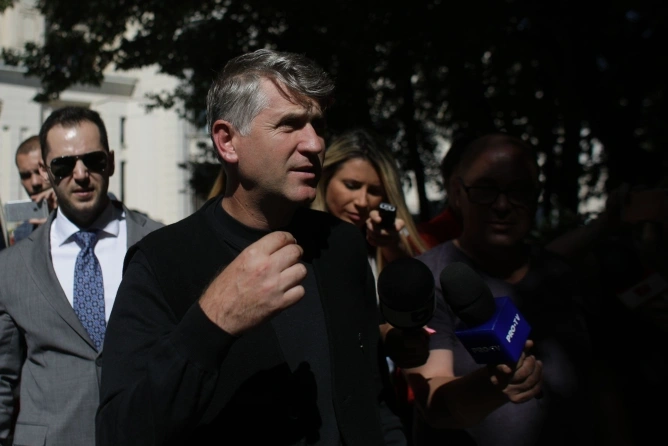
The EU invokes international law in the case of Venezuela, but avoids condemning the US intervention.



Always see our news on Google
The European Union called for respect for the UN Charter following the events in Venezuela, but refused to qualify or explicitly condemn the military action of the United States, describing the situation as a possible opportunity for a democratic transition.
The European Union reacted to the military intervention of the United States in Venezuela with a repeated call for respect for international law and the UN Charter, but avoided explicitly condemning the action or qualifying it as a violation of the sovereignty of the South American state.
In short The EU invokes the principles of international law and the UN Charter.
Brussels refuses to legally qualify the military action of the US.
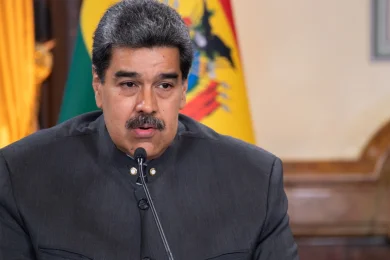
The EU asserts that Nicolas Maduro lacks democratic legitimacy.
The situation is described as a possible opportunity for a democratic transition.
The legal assessment is implicitly left to the UN.
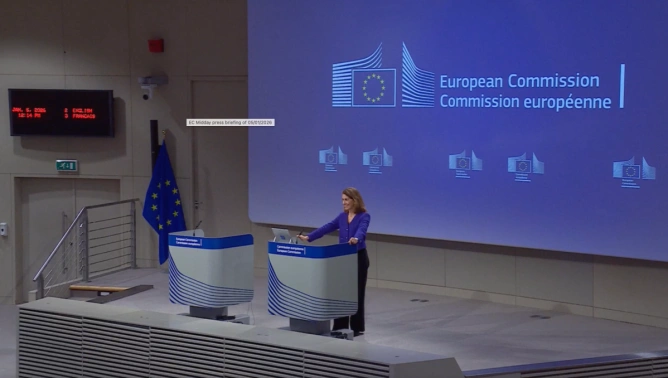
During the daily briefing of the Commission, EU representatives were repeatedly asked whether the military action launched by the United States in Venezuela constitutes an intervention, aggression, or a violation of international law. Brussels' response has been consistent: the European Union reaffirms the principles of sovereignty, territorial integrity, and the UN Charter, but does not provide, at this stage, a legal qualification of the events.
The Commission reiterated the EU's known position that Nicolas Maduro is not considered a democratically elected leader and emphasized support for a democratic transition led by Venezuelans. In this context, Brussels indicated the political opposition, particularly Edmundo González and María Corina Machado, as legitimate actors in a potential transition process.
When directly asked whether Maduro's lack of legitimacy justifies or legitimizes an external military intervention, the Commission avoided a blunt response. European officials insisted that respect for international law remains a fundamental principle and that it is too early for a complete assessment of the legal implications of the action.
This position places the European Union in a zone of strategic ambiguity: on one hand, Brussels reaffirms the international norms it constantly invokes in other crises, while on the other hand, it refuses to apply a clear legal label to a military action undertaken by a strategic ally.
The EU's position maintains a delicate balance between defending the rules-based international order and the geopolitical realities of the transatlantic relationship. Unlike other situations where the Union has explicitly condemned violations of state sovereignty, the case of Venezuela is treated with cautious language, shifting the focus from the legality of the intervention to the possible political outcome. Any formal assessment of compliance with international law is, explicitly or implicitly, left to the United Nations institutions.
Latest News
23:58
22:56
22:51
22:43
22:28
See more news
NEWS ON THE SAME TOPICS







.webp)