



Members of the European Parliament call for stronger EU security partnerships to counter Russia and emerging threats



Always see our news on Google
The Security and Defense Committee identifies cooperation with NATO and a formal alliance with Ukraine as essential for the strategic autonomy of the bloc.
Brussels, January 15, 2026 – In a new report adopted today, the Security and Defense Committee (SEDE) of the European Parliament stated that the European Union must significantly strengthen its security and defense partnerships (SDP) to effectively respond to an increasingly volatile global environment. Although the report is welcomed as a sign of political realism, committee members highlighted critical gaps regarding funding and industrial implementation.
In short
The committee's report identifies Russia as the main threat to European security and calls for a reassessment of relations with China.
MEPs emphasize that, although NATO remains the cornerstone of collective defense, the EU must build a capable defense pillar with interoperable military capabilities.
The text proposes formalizing a strategic partnership with Ukraine, treating it as a provider of military expertise, not just as a recipient of aid.
The report, approved with 25 votes in favor, 6 against, and one abstention, emphasizes that the EU is currently facing the most serious security situation since World War II. This instability is primarily driven by Russia's aggressive war against Ukraine, but is exacerbated by hybrid threats, cyberattacks, and risks associated with critical infrastructure. The text explicitly identifies Russia – supported by allies such as Iran, North Korea, and Belarus – as the main threat to European security. Furthermore, it describes China as a "strategic competitor," urging the EU to reassess economic relations and strengthen resilience against Beijing.
"Political maturation" and operational shortcomings
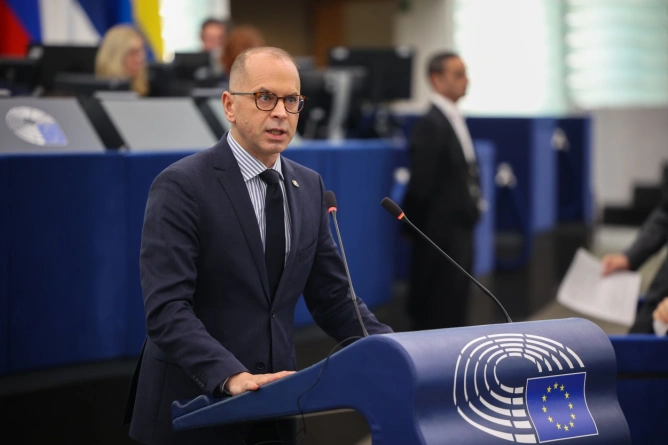
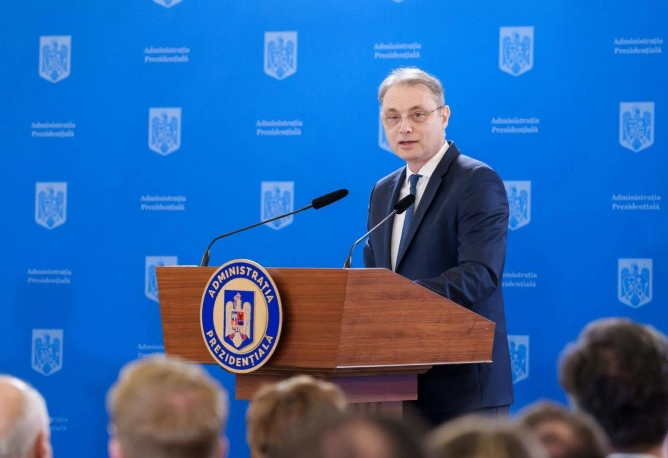
MEP Vasile Dincu, who contributed amendments to the text, characterized the report as a moment of "political maturation" for the EU. He praised the document for clearly stating what many European documents avoid: that "Europe is in a structural security crisis." Dincu highlighted the correct identification of Russia as the main threat and the healthy reaffirmation of NATO's role, mentioning that "a more capable European pillar strengthens NATO, not undermines it." He also pointed out the shift in perspective regarding Kyiv: "Ukraine is no longer just an assisted state. It is becoming a provider of real military expertise. High-intensity warfare offers lessons that no simulation can match."
However, Dincu drew attention to clear limits of the adopted text. He warned that the report "lacks the operational dimension," citing the absence of precise timelines and intermediate goals. "Budgets are treated vaguely," noted Dincu, adding that without addressing the fragmentation of over 200 billion euros spent annually by the EU on defense, these amounts remain inefficient. He also criticized the "excessive caution" regarding the defense industry, arguing that without long-term common orders, capabilities will not grow. "If this report produces concrete policies, the EU strengthens its strategic credibility. If not, the gap between rhetoric and reality will become even more visible," he concluded.
A significant part of the report focuses on expanding partnerships with nations that share the same values, including NATO allies such as Norway, the United Kingdom, and Canada. Rapporteur Michal Szczerba (EPP, Poland) mentioned that "the security of Europe can no longer be taken for granted" and that member states must invest more to cover critical capacity gaps.
Latest News
13:00
12:58
12:55
12:44
12:43
See more news
NEWS ON THE SAME TOPICS









.webp)


