Germany will provide €400 million to maintain Sanofi’s insulin production and reduce the risk of shortages in Europe




Always see our news on Google
The European Commission has approved support for Sanofi’s Frankfurt-Höchst plant, which includes the construction of a new facility by 2032, maintaining minimum production until 2042, and establishing a stockpile of insulin raw materials. Without the aid, the company would close the German site, and Europe would become dependent on imports for some types of insulin.
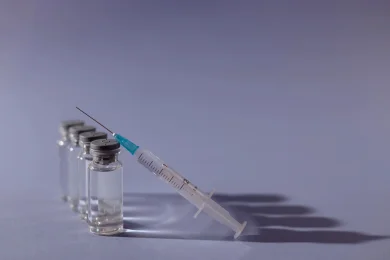
Germany will be able to grant Sanofi €400 million to maintain and expand insulin production in Frankfurt-Höchst, after the European Commission approved the measure intended to reduce the risk of supply problems. In exchange for the public compensation, Sanofi must build a new plant by the end of 2032, maintain annual production of at least 1.1 tonnes of insulin until 2042, and establish a reserve of one tonne of active pharmaceutical ingredients used to produce insulin.
In brief
1. Germany will be able to pay Sanofi €400 million to maintain strategic insulin production capacity in Frankfurt-Höchst.
2. Sanofi must build a new insulin plant by 31 December 2032 and produce at least 1.1 tonnes annually until the end of 2042.
3. The company must maintain a reserve of one tonne of active pharmaceutical ingredients for insulin and give priority to markets in the European Economic Area in the event of shortages.
4. The Commission says that, without this support, Sanofi would close the German site, leaving only one insulin production facility in the European Economic Area.
5. For certain products, including human insulin, production in the European Economic Area would disappear completely, increasing dependence on imports from third countries.
The German support is built around a public service obligation and does not consist of funding granted to the company without conditions. Sanofi must maintain, over the long term, industrial capacity capable of supporting the supply of German patients and, in shortage situations, give priority to markets in the European Economic Area.
The most important investment is a new insulin plant at Industriepark Frankfurt-Höchst, which must be completed by 31 December 2032. At the same time, Sanofi undertakes to maintain annual production of at least 1.1 tonnes of insulin at this site until 31 December 2042 and, by the same date, to store one tonne of active pharmaceutical ingredients needed to manufacture the products.
The stakes go beyond maintaining a single plant. According to the assessment presented by the Commission, Sanofi would close the German site if it did not receive the compensation, which would significantly reduce European production capacity. Germany would no longer have any insulin plant, and only one production facility would remain operational throughout the European Economic Area.
For certain products, the effect would be even greater. The Commission says that some types, including human insulin, would no longer be produced at all in the European Economic Area, forcing European markets to rely on imports from third countries. This dependence is treated as a vulnerability in a sector where continuity of supply is directly linked to patient treatment.
The document also points to additional pressure on existing production capacity. Shortages have become more frequent amid the redirection of some industrial capacity towards products in the GLP-1 receptor agonist category, used mainly in the treatment of diabetes and, for some products, obesity. The Commission uses this development to explain why preserving capacity dedicated to insulin production has become more important.
The €400 million compensation must cover the net costs incurred by Sanofi in fulfilling these obligations. The Commission concluded that the amount does not exceed the net cost of the service and that the agreement between Germany and the company includes mechanisms to prevent and recover any overpayments. The Commission also says that the measure’s structure complies with European public procurement rules.
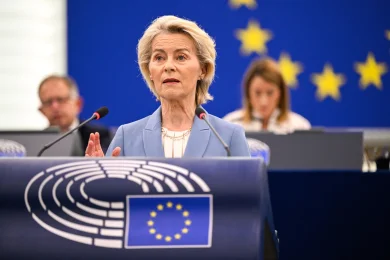
The European Commission’s Executive Vice-President for Clean, Just and Competitive Transition, Teresa Ribera, presented the decision as part of the broader effort to protect the supply of medicines considered critical.
“Today’s decision is an important step towards ensuring the security of supply of critical medicines in the EU,” Ribera said.
In translation, she said that the decision represents an important step towards the security of supply of critical medicines in the EU and that public support must enable reliable access to essential products such as insulin, while maintaining targeted and proportionate public funding.
The measure is part of a broader shift in the way the EU addresses the security of medicine supplies. In December 2025, the Commission clarified the rules allowing Member States to assign specific public service obligations to operators to maintain the availability of critical medicines when the market alone does not provide sufficient security of supply. For compensation of up to €20 million per year, there is a simplified procedure, while support exceeding this level must be assessed separately by the Commission.
The same concern also underlies the Critical Medicines Act, proposed by the Commission in March 2025. The initiative aims to reduce serious shortages of essential medicines, including antibiotics, insulin and painkillers, by strengthening supply chains, increasing production in the EU and reducing excessive dependence on external suppliers.
The German support for Sanofi is not general funding for the company’s activities, but compensation linked to concrete production, storage and supply obligations extending until 2042. Maintaining the Frankfurt-Höchst site is considered necessary because its closure would reduce the insulin production infrastructure remaining in the European Economic Area to a single plant.
The decision illustrates the use of state aid policy not only for industrial investment, but also to preserve capacities considered essential for health. In the case of insulin, the Commission directly links this capacity to reducing the risk of shortages and limiting Europe’s dependence on imports.
Latest News
22:52
22:34
22:28
21:56
21:29
See more news
NEWS ON THE SAME TOPICS