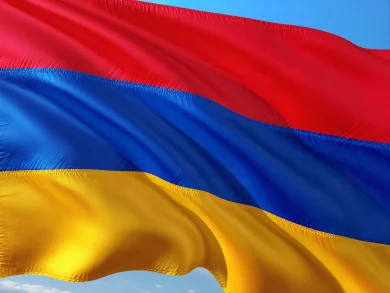
The European Commission is preparing a support package for Armenia after the restrictions imposed by Russia.



Always see our news on Google
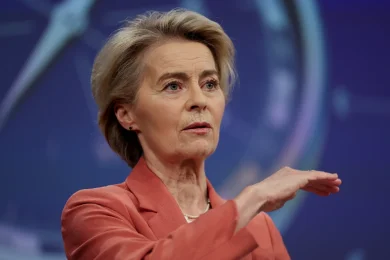
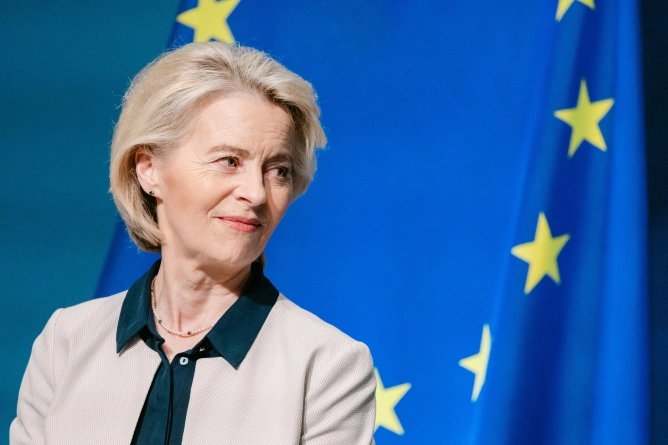
The President of the European Commission, Ursula von der Leyen, announced that the European Union is preparing a support package for Armenia, after Russia extended restrictions on Armenian exports. Von der Leyen described Moscow's measures as "economic coercion" and stated that European support will include immediate financial assistance of over 50 million euros, measures to facilitate trade with Armenian products, and practical support for affected sectors, including flower exporters.
The European Commission is preparing a support package for Armenia, after Russia extended restrictions on Armenian exports, Ursula von der Leyen announced after a phone call with Armenian Prime Minister Nikol Pashinyan.
The President of the European Commission described Moscow's measures as "economic coercion" and stated that Russia is using trade relations as a tool of political pressure on Armenia.
In short
1. Ursula von der Leyen discussed with Armenian Prime Minister Nikol Pashinyan about the restrictions imposed by Russia on Armenian exports.
2. The President of the European Commission described Moscow's measures as "economic coercion".
3. The European Union is preparing a support package that includes immediate financial assistance of over 50 million euros.
4. The Commission announces measures to facilitate trade with some Armenian products, especially agri-food.
5. The European Union and Armenia will create a joint operational group to coordinate initiatives and future measures.
Von der Leyen stated that Europe "stands firmly with Armenia" and presented the Russian restrictions as part of a model of economic pressure already known to the European Union.
"By extending restrictions on Armenian product exports, Moscow is turning economic relations into a weapon of political pressure," said the President of the Commission.
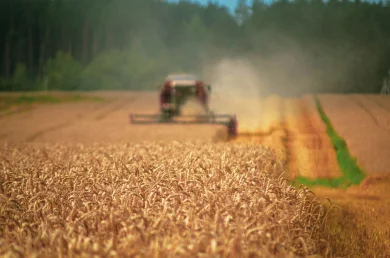
The package being prepared will include immediate financial assistance of over 50 million euros. Von der Leyen specified that other measures will follow, including facilitating trade with some Armenian products, especially from the agri-food sector.
The Commission also announces practical support for sectors affected by Russian restrictions. An explicitly mentioned example is that of Armenian flowers, after Russia recently restricted imports of flowers from Armenia based on accusations that von der Leyen described as dubious.
According to the President of the Commission, a shipment of 10,000 Armenian flowers was supposed to arrive in Latvia, and other deliveries will follow.
The announced support also has a broader economic dimension. Von der Leyen stated that the European Union will continue to connect European and Armenian companies, following commitments made at the recent summit in Yerevan.
According to the Commission, support provided to Armenia from 2024 through the Resilience and Growth Plan has already helped 7,000 companies and contributed to the creation of over 20,000 jobs.
Von der Leyen presented Armenia as a space where talent, innovation, and opportunity meet, stating that the country is important for European companies.
This wording indicates that EU support is not just a one-time reaction to Russia's restrictions, but also part of a strategy for economic and political rapprochement between Brussels and Yerevan.
For Armenia, a country under geopolitical pressures, trade dependencies, and the need for economic diversification, broader access to European partnerships can reduce vulnerability to Moscow's decisions.
In the long term, the Commission links support for Armenia to the Connectivity Partnership agreed upon at the Yerevan summit.
Von der Leyen welcomed the recent reopening of trade routes with Turkey, including the rail connection through Georgia and Turkey, which she described as an important step forward.
In the Commission's vision, Armenia has the potential to become a strategic hub connecting Europe, the South Caucasus, and Central Asia. This idea is important for the EU's foreign and economic policy at a time when Brussels is seeking alternative routes for connectivity, trade, and transport between Europe and Asia.
The Commission states that it is ready to support infrastructure and border crossing points as regional connections are reopened.
These priorities will be further discussed at the ministerial meeting of the Connectivity Platform, scheduled for June 23.
For the coordination of measures, the European Union and Armenia have agreed to create a joint operational group. This will oversee the implementation of announced initiatives and any future measures.
The operational group is expected to cover financial support, trade measures, support for affected sectors, connecting business environments, and infrastructure projects.
The file has a broader stake for the European Union's foreign policy. By supporting Armenia in the face of Russian restrictions, the Commission conveys that economic pressure used for political purposes can receive a rapid European response, financially and commercially.
For Armenia, EU support can serve as a safety net in the short term and as a tool for economic diversification in the long term. For the European Union, rapprochement with Yerevan strengthens its presence in the South Caucasus and in connectivity networks towards Central Asia.
Latest News
21:19
21:03
20:48
20:46
20:46
See more news
NEWS ON THE SAME TOPICS