ANALYSIS. What is the US-EU trade agreement and how would the suspension of its ratification affect Romania?



Always see our news on Google
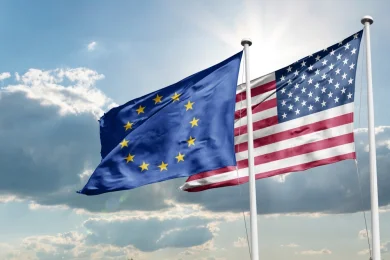
The US-EU trade agreement signed politically in July 2025 was designed as a "transatlantic de-escalation package": reducing tariffs and technical barriers on a range of industrial goods, agri-food products, and digital services, in exchange for closer cooperation on energy, defense, and strategic supply chains. The suspension of ratification by the European Parliament, in response to threats from US President Donald Trump of a 10% tariff on all goods from several European states and punitive sectoral tariffs, shifts the US-EU relationship from the logic of "economic normalization" to the logic of a potential controlled trade war, with direct effects for Romania through increased import costs, pressure on exports, and greater volatility in the currency and capital markets.
What is the US-EU trade agreement of 2025 The 2025 agreement was negotiated as a broad framework, less ambitious than the old TTIP (Transatlantic Trade and Investment Partnership), but focused on quick results: reducing tariffs on industrial goods and better mutual recognition of standards. According to reports from European and Romanian media, it specifically targeted:
Industrial goods (machines, equipment, auto parts) where the US and EU already had relatively low tariffs but wanted to simplify regulations and certifications. Selected agri-food products (processed meat, dairy with geographical indication, alcoholic beverages, wines) in exchange for better access for American agricultural products to the European market, within the limits of EU standards. Digital and financial services, aimed at avoiding fragmentation of data and financial regulatory standards between the two markets.
The July 2025 agreement was politically initialed but needed ratification in the European Parliament and national approvals to come fully into force. In January 2026, this ratification was "frozen" as the first institutional response of the EU to the new tariff threats from Washington.
Why was the ratification suspended
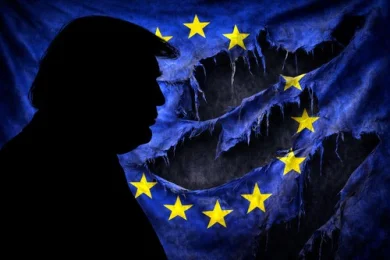
Donald Trump's threats radically changed the political climate around the agreement. In the context of pressures to "reclaim" Greenland, the US President announced:
A general 10% tariff on all goods exported from a group of European states (Denmark, Norway, Sweden, the UK, France, plus other politically targeted states) to the US, starting February 1, unless concessions are made on the Greenland issue.
Specific tariffs, up to 200% on French wines and champagne, as a direct message to Paris, in the context of the harsh exchange of words with Emmanuel Macron.
In the Romanian press, HotNews, G4Media, Adevărul, Newsweek Romania, Evenimentul Zilei, Profit.ro, and news television stations reported that the main political groups in the European Parliament (EPP, S&D, Renew) agreed to suspend the ratification of the trade agreement with the US as a "firm first response" to the tariff pressures and threats. Romanian MEP Siegfried Mureșan publicly confirmed that the ratification of the EU-US agreement of 2025 is postponed, emphasizing that there is a majority for the "freezing" of the process.
For Brussels, the logic is double. On one hand, to convey to Washington that one cannot demand the acceleration of a trade agreement while simultaneously threatening partners with punitive tariffs related to a territorial issue (Greenland) foreign to the trade relationship.
On the other hand, to maintain the EU's flexibility to activate, if necessary, the anti-coercion tool (the "EU bazooka") – a regime of coordinated economic countermeasures, including tariffs of up to 93 billion euros on US exports and restrictions on access for US companies to the European market.
The tariffs announced by Trump and their effects
In the European press (The Guardian, Reuters, CNN, Independent), three concrete levels of tariffs discussed or announced by the Trump administration in the context of Greenland are outlined.
1. The 10% tariff on goods from selected European countries
Donald Trump announced the intention to apply a 10% tax on all goods exported to the US from a group of European states (Denmark, Norway, Sweden, the UK, France, and potentially extended to other states that openly oppose the US plan regarding Greenland).
For Romania, the effects are indirect but real:
Supply chains: many Romanian products enter the US not directly, but as parts, subassemblies, or components integrated into goods exported by Germany, France, or other Western European states. A 10% tax on the final European product reduces the competitiveness of that product in the US, which may diminish the demand for Romanian components upstream.
Domino effect on prices: if European companies affected by the 10% tariff try to recover their margins by redirecting sales to the internal EU market, it may result in additional competitive pressures on segments where Romanian companies are active (for example, auto components, wiring, furniture, textiles).
2. High sectoral tariffs (the example of 200% on wines) Trump explicitly threatened with tariffs of 200% on wines and champagne from France, as a reaction to Emmanuel Macron's position and to bilateral political tensions.
This type of tariff has broader implications:
For Romanian consumers: although Romania is a wine producer, the local market also offers wines and champagne from France and other Western European states. If these products become significantly more expensive in the US, French exporters will try to redirect volumes to the EU, including Romania, which may increase supply and put pressure on Romanian producers through greater competition in the premium segment.
For Romanian producers: increased competition may mean smaller margins and the need for differentiation through quality and marketing, but also opportunities to position as an "affordable European alternative" in the region, while French wines seek compensation for losses in the American market.
3. Potential extension of tariffs to other sectors There is also a risk that the general 10% tariff will be supplemented with additional tariffs on certain sensitive sectors: automobiles, oil, aluminum, industrial equipment, and possibly agri-food products.
For Romania:
The auto sector and components: if the US raises tariffs on imports of cars or parts from the EU, Western European manufacturers with capacities in Romania may reduce orders or investments. The impact may be visible in counties with a strong presence of the auto industry (Argeș, Timiș, Arad, Brașov, Sibiu).
Metallurgy and materials: additional tariffs on oil and aluminum from the EU may reduce the competitiveness of European exports in the US, which is felt in the demand for raw materials and semi-finished products manufactured in Romania.
How it directly affects Romania: imports, exports, prices
Romania is not on the front line of the conflict (it is not directly targeted in the short list of European states mentioned by Trump), but it is strongly interconnected with the EU market.
The effects will be seen mainly through:
Imports – price increases and volatility
American industrial products: if tensions lead to European responses and the freezing of the deepening of the trade agreement, the current tariffs and barriers for imports from the US remain in force.
For Romania, this means:
American IT and technology equipment (servers, networking equipment, software with associated licenses) that will not benefit from planned tariff reductions through the 2025 agreement and may even become more expensive if the EU resorts to countermeasures. Energy and industrial equipment (compressors, turbines, exploration equipment) used in energy and infrastructure projects, where higher costs may delay investments or reduce profitability.
American agri-food products: without the entry into force of the agreement, broader access for American agricultural products to the EU market is delayed. This means:
Maintaining a relatively high level of protection for Romanian meat and dairy producers against direct American competition. The lack of a potential price decrease for Romanian consumers on beef, pork, or certain processed American products, which could have entered the market with lower taxes.
Exports – missed opportunities and risks
Direct Romanian exports to the US: Romania exports machines, auto parts, electrical equipment, furniture, textiles, IT products. Without the agreement, these exports do not benefit from potential tariff reductions or simplifications of standards expected to be negotiated in the coming years. In a scenario of escalation, if the EU activates response instruments and Washington extends tariffs to the entire EU, Romanian exports could be hit by additional tariffs of 10% or more. Indirect exports (through European chains): a large part of Romania's industrial production goes to Germany, France, Italy, or other EU states, and from there, through multinational companies, to the US. American tariffs on "made in EU" goods reduce the competitiveness of the entire chain, which may mean: Decreased orders for Romanian component suppliers. Delays in greenfield or expansion investments in Romania, if multinational groups fear a prolonged trade conflict between the US and the EU.
The internal market – prices and competition Increased competition from Western European producers: producers from France, Denmark, Sweden, or the UK who lose market shares in the US will redirect exports to the EU. On the Romanian market, this may mean:
More processed agri-food products, wines, cheeses, premium products in large retail chains, with additional pressure on local producers. A richer offer for consumers, but also a polarization of the market between strong European brands and Romanian products that must compete not only on price but also on quality and marketing.
Volatility of the exchange rate and stock markets: international economic press already notes declines in global stock markets and the reorientation of investors towards "safe assets" (Swiss franc, bonds) following the announcements of tariffs. For Romania, the effect is:
Possible depreciation of the leu in episodes of maximum tension, which makes imports more expensive and may fuel inflation. Volatility on the Bucharest Stock Exchange, especially for companies related to exports and European production chains.
EU strategies and stakes for Romania
European leaders convey that they do not want to escalate the conflict, but are preparing response tools. Ursula von der Leyen called the tariffs planned by Trump "a mistake" and promised a "steadfast, united, and proportional" response from the EU, warning at the same time that entering a "dangerous downward spiral" would only serve the common adversaries of Europe and America. Emmanuel Macron explicitly called for not hesitating to use the EU's anti-coercion tool against the US if the 10% tariffs and punitive packages become a reality.
For Romania, the stakes are double. First, maintaining as open access as possible to the American market, through a predictable trade framework, without additional tariffs that would hit direct or indirect exports. Blocking the ratification of the agreement is a political signal, but the medium-term interest remains the resumption of dialogue and the reactivation of the agreement in a form compatible with EU interests. Second, avoiding the breaking of the European front. Romania is integrated into the EU's economic chains and has an interest in ensuring that the response to Washington's pressures is coordinated at the European level, not through separate bilateral arrangements.
In concrete terms, Bucharest will need to pursue, on one hand, alignment with the majority position in the EU Council and support for common instruments (including anti-coercion) that discourage unilateral pressure. On the other hand, our country must pursue a continuation of bilateral dialogue with the US to protect strategic projects (energy, defense, IT) from the collateral effects of a trade war focused on Greenland and the Washington-Brussels relationship. Also, affected Romanian businesses (especially in auto, IT, agri-food) will need support schemes, diversification of export markets, and attracting alternative investments if tensions persist.
In the absence of a rapid de-escalation, the effects on Romanian consumers in the medium term will be higher prices for certain imported products from the US (technology equipment, certain niche food products) and, indirectly, for some European goods affected by the shifting of trade flows. At the same time, they may see a richer but more competitive offer for European products redirected to the internal market, with additional pressure on Romanian producers to invest in quality, branding, and efficiency.
At the same time, the EU's decision to suspend the ratification of the trade agreement sends the message that the community space is willing to bear a short-term economic cost to not legitimize a negotiation strategy through tariffs and territorial pressures on an allied partner, a relevant message for both Washington and other capitals outside the West.
Analysis conducted with the support of the NewsVibe platform and Perplexity.
Latest News
16:51
16:50
16:42
16:34
16:27
See more news
NEWS ON THE SAME TOPICS