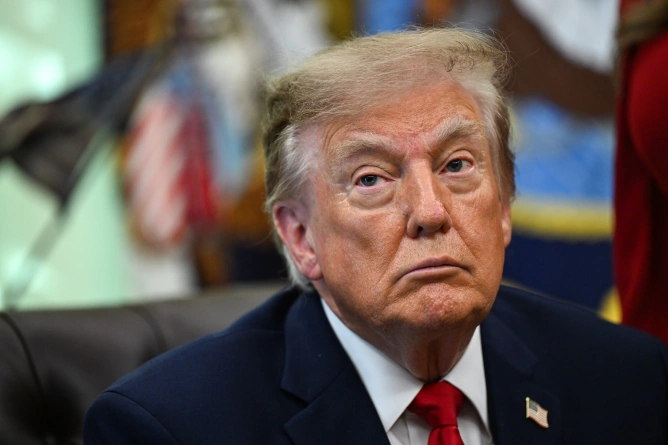
Counterintuitive ANALYSIS: "Russia without Putin" and "NATO without the USA", two hypotheses that hide a dangerous chaos



Always see our news on Google
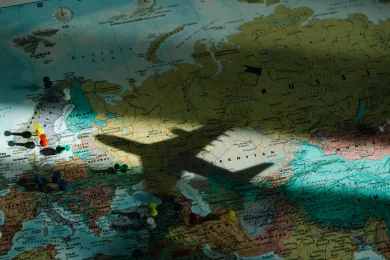
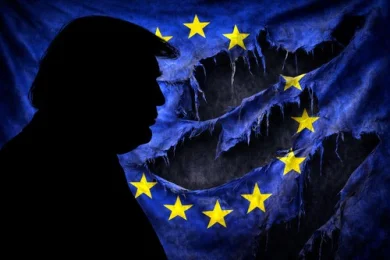
“Russia without Putin” and “NATO without the USA”, two hypotheses that have emerged as possible in recent years, would simultaneously open two fronts of strategic uncertainty, where the risk is not necessarily immediate collapse, but the gradual erosion of the security order established after 1990 and entry into a zone of disordered multipolarity, with fewer guardians of the rules and more revisionist actors.
Russia without Putin: continuities and ruptures
In the scenarios “Post-Putin Russia” discussed in analytical circles, the central question is not whether Russia democratizes, but who controls the coercive apparatus (the army, the services, the National Guard) and the strategic economic resources. Numerous analyses from Western think tanks show that the regime is more of a security-oligarchic clan system, where Putin's person is a pivot, but not the only pillar.
A rarely discussed problem in the public space is the risk of a “nuclear balkanization” of Russia: if succession is contested, regional power centers could try to take control of military units and, implicitly, of the nuclear arsenal. Even without formal disintegration, internal competition for succession can lead to more aggressive foreign policy decisions, where leaders prove their “hardness” through external escalation, not through moderation.
The fragilization of the Russian state and external effects
In the short term, a successor regime could be even more nationalist, to delegitimize any perception of weakness related to Putin's disappearance, regardless of the form it would take. This would mean the continuation – even intensification – of anti-Western discourse as a tool for internal cohesion, which would reduce the space for diplomatic compromises in Eastern Europe.
In the medium term, an institutionally weakened Russia would create a power vacuum in the Eurasian space, targeted by China, Turkey, Iran, and other regional actors. The opening of a competition for influence in the Caucasus, Central Asia, and the Black Sea region would increase the risk of conflicts through proxies and make the security environment more unpredictable for states located on the periphery of NATO and the EU.
NATO without the USA: from pillar to “strategic hole”
In the scenario of a NATO without the USA – either through formal withdrawal or through a de facto political and military disengagement – the biggest problem is not the disappearance of the alliance, but the brutal loss of its credible deterrent component. Tactical and strategic nuclear capabilities, global power projection, and logistics chains are today deeply dependent on American contributions.
Western think tank analyses regarding “European strategic autonomy” underline that European states, even if they significantly increase military spending, need years or decades to build an integrated command, logistics, and military-industrial system comparable to what the USA currently offers within NATO. In the meantime, a window of vulnerability would emerge, in which adversaries would systematically test Europe’s red lines, including through hybrid military pressures in the east of the continent.
Less discussed issues
Fragmentation of nuclear deterrence
An often-avoided aspect in public discourse is what happens to the “nuclear umbrella” if the USA withdraws from NATO, and Russia enters a phase of instability. In the absence of the American nuclear guarantor, deterrence would depend on France's arsenal and – in a controversial measure – that of the United Kingdom, which would generate sensitive discussions among European states regarding risk-sharing and decision-making on use.
This fragmentation could fuel the temptation of some states to develop their own nuclear or “paranuclear” capabilities (conventional capabilities with strategic effect), which would erode the global non-proliferation regime and introduce a new arms race, this time intra-Western.
The re-emergence of “spheres of influence”
In the absence of the USA as an “arbiter” and with Russia in an uncertain transition, regional actors – including medium European powers – could try to define their own “spheres of influence”, including over states between NATO/EU and the post-Soviet space. This would mean a return to the logic of the 20th century, in which states like Romania could be pressured to calibrate their foreign policy not only based on Brussels and Washington, but also on the ambitions of various European or regional capitals.
Such a reconfiguration would fuel intra-European rivalries – for example between north and south, east and west, or between “old” and “new” Europe – reducing EU cohesion precisely at the moment when it would need a united position.
Why analysts view these scenarios with caution
Think tanks and strategy centers in the USA and Europe treat discussions about “Russia without Putin” and “NATO without the USA” with great caution, precisely because the temptation for “quick resets” can hide enormous structural costs. Many analysts argue that, although Putin's regime is deeply revisionist, any uncontrolled transition in a state with a nuclear arsenal and serious demographic problems can generate more risks than short-term opportunities.
Regarding NATO, skepticism arises from the fact that a world without the American security umbrella would perhaps be more “multipolar”, but not necessarily more equitable or stable; instead of a contested hegemony, we could have a “concert of powers” with unstable rules and volatile alliances. From a European perspective, this would dramatically complicate the management of simultaneous crises – from the eastern flank to the Mediterranean and Sahel – and amplify the risk that the EU would be caught between simultaneous pressures from Russia/Asia and the Global South.
Major changes in the geostrategic ecosystem
The shift to fluid multipolarity
The combination of a transitioning Russia with a NATO without the USA would accelerate the transition to a fluid multipolarity, where clear blocks are replaced by flexible, sometimes contradictory networks of alliances. China would gain maneuvering space as an actor that can mediate, arbitrate, or exploit regional conflicts, while medium powers (Turkey, India, Iran) would maximize their autonomy margin.
For small and medium states, this world would be marked by a “transactional security”: guarantees become conditional, temporary, negotiated case by case, not assumed through robust and long-term treaties. This would increase adaptation costs and penalize states without negotiation capacity, projection, or multiple alliances.
Reconfiguring the global political economy
Economically, such a double shock would hasten the fragmentation of supply chains and partial decoupling between Euro-Atlantic and Eurasian spaces. Sanctions, export controls, and the “weaponization” of energy, technology, and finance would become more of a norm than an exception.
In the absence of a rules framework for the game imposed/guaranteed by a relatively predictable superpower, multilateral institutions would have difficulties in enforcing common disciplines – whether we are talking about trade, climate, or technology. The result would be a more fragmented world, with regional “clubs” of standards and rules, and states like Romania would have to navigate a much more fragmented regulatory environment.
What all this means for Romania
For Romania, positioned at the intersection of NATO's eastern flank and the Black Sea neighborhood, these two simultaneous scenarios would amplify both military risks and political and economic ones. Without the American strategic guarantee and with an unpredictable Russia to the northeast, the Black Sea space would become an even more intense theater of competition between powers, with a direct impact on energy security, trade routes, and the stability of the Republic of Moldova and Ukraine.
Internally, Romania would be forced to shift from the logic of “security ensured through membership” to the logic of “security produced internally and regionally”: greater investments in defense, strengthening the defense industry, increasing the resilience of critical infrastructures, and developing proactive diplomacy in the region. There would also be increased pressure for much greater coherence between foreign policy and energy, technology, and infrastructure, as every economic decision would have an explicit strategic dimension.
What Romania should pay attention to
Developments in the EU regarding strategic autonomy – Active participation in discussions regarding common military capabilities, European defense industry, and reforming decision-making mechanisms, to avoid a “two-speed Europe” in terms of security. Romania cannot afford to be just a passive beneficiary; it must be among the states that shape the new architecture.
Internal transformations in Russia – Close monitoring not only of the Kremlin elite but also of regional trends, military behavior, and societal disposition, to anticipate risks such as reignited frozen conflicts, waves of migration, or new forms of hybrid warfare. Romanian intelligence services, diplomacy, and academia should function as an “early warning system” for the region.
Reconfiguring the transatlantic relationship – Even in a scenario of American disengagement, Romania has an interest in maintaining strong bilateral ties with the USA, including in energy, technology, and intelligence dimensions. A dense transatlantic relationship can act as a stabilizing factor even in a weakened NATO.
Strengthening regional ties – Deepened partnerships with Poland, the Baltic states, Bulgaria, and Turkey, as well as with Ukraine and the Republic of Moldova, to create a density of military, economic, and infrastructural cooperation at the regional level. Initiatives like the Three Seas Initiative can become concrete tools for reducing vulnerabilities.
Resilience of society and the informational space – In a world where external guarantees are weakening, internal stability becomes the main “security multiplier”, and polarized societies are more easily exploited by revisionist actors. Combating disinformation, strengthening trust in institutions, and enhancing media education become elements of national security, not just internal politics.
On the justification of the hypothesis “Russia without Putin” / “NATO without the USA”
The pairing of “Russia without Putin” and “NATO without the USA” may seem speculative at first glance, but it is relevant as an analytical tool, as it reflects two structural dependencies of the current order: the personalization of power in Russia and American hegemony in NATO. However, the discussion of these scenarios should not be confused with a normative endeavor (“it would be better/worse”), but treated as an exercise in anticipating risks and testing the resilience of existing institutions.
Without representing a high-probability forecast, the hypothesis “Russia without Putin” and “NATO without the USA” allows the media and analysts to go beyond the level of debate about individuals or electoral cycles and focus on the fundamental question: how robust is the security architecture in the absence of the actors who have defined it for decades, and what can a state like Romania do to not be just a spectator in the reconfiguration of this architecture.
Analysis conducted with the support of Perplexity
Latest News
22:57
22:53
22:42
22:30
22:28
See more news
NEWS ON THE SAME TOPICS