EXCLUSIVE How the rabbit fish instilled fear in consumers of ... media



Always see our news on Google
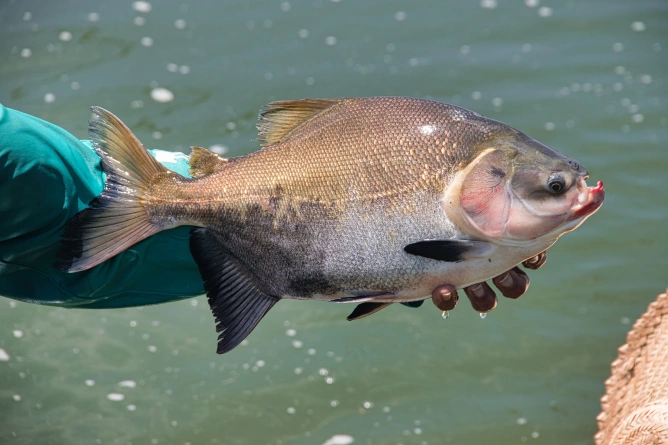
The rabbitfish has recently become one of the favorite topics of our press, especially through alarmist phrases like "alert," "tourist fear," and "danger." Behind the alarmist headlines, however, there is a relatively simple factual core: it is about an invasive species, toxic when consumed, present in the waters of the eastern Mediterranean, including Greece. The problem is not that the fish will "attack" in the strict sense of the word, but that it can cause injuries if handled and can be extremely dangerous if eaten.
What the facts say
The data found shows that, in 2026, there is no confirmed case of rabbitfish attack in Greece in the consulted sources. The relevant materials speak more about warnings and a report tally, not about a verified wave of incidents. For the last three years, the accessible sources here indicate only one confirmed case of injury in 2022, in Crete, which shows how rare the documented phenomenon actually is. Globally, there is no official database to support an accurate tally of rabbitfish attacks for the last three years, and the consulted texts emphasize the isolated nature of the incidents. The available official sources do not provide a consolidated official total for Greece or for the planet, but suggest that confirmed incidents are very rare and can be counted on one hand, not in "tens or hundreds," as media reports have suggested. This means that the figure of "148 cases," circulated in some articles, seems to be an aggregation of local, unconfirmed reports or presented in an alarmist framework, not an official tally of verified attacks.
Where the alarm comes from
Public panic is based on three real elements: the spread of the species in the Mediterranean, its toxicity, and the power of its spines, which can cause injuries upon direct contact. Additionally, some articles mix the risk of injury with the risk of poisoning, which amplifies the feeling of generalized danger. When these facts are placed in a narrative framework of "threat to tourists," the result is a media fear that is very appealing but not necessarily proportional to the epidemiological or statistical reality.
The press in Romania
In the last week, several materials have appeared in the Romanian press on this topic, including on Digi24, Euronews Romania, ProTV News, Antena 3, and Adevărul. Their tone is largely alarmist, focusing on fear and the idea of "alert," although some articles also include correct explanations about toxicity and the rarity of cases. In volume, the subject seems to have been quickly picked up by several newsrooms, indicating that it has a high potential for traffic and emotional reaction.
The European echo
It is not just about Romania. The message is already circulating in the press in Greece and in other European publications, which treat the same subject in a warning key for tourists. This suggests a widespread media dissemination of the same theme, not necessarily a formal coordination, but a network of cross-border repetitions and amplifications. In other words, the phenomenon is European in a journalistic sense, even if it is not in the sense of a real public health crisis.
Rabbitfish, in short
The rabbitfish is an invasive species from the Indo-Pacific region, having reached the Mediterranean through the Suez Canal and mainly established in the eastern Mediterranean basin. The common name comes from its prominent teeth, resembling those of a rabbit, used to crush shells and gnaw on hard structures. It is dangerous mainly for consumption due to tetrodotoxin, and it can also be dangerous when handled, but there is no evidence that it frequently attacks humans in the water.
Analysis conducted with the support of Perplexity
Latest News
20:47
20:46
20:46
20:45
20:43
See more news
NEWS ON THE SAME TOPICS










.webp)