EU pledges cooperation to stop human trafficking used to recruit people into the Russian army



Always see our news on Google
The EU commits to working with the affected countries after an independent UN commission of inquiry documented the trafficking of people from 29 states for recruitment into the Russian armed forces. Investigators describe deception, military contracts imposed after arrival in Russia, and the men’s dispatch to the front. The European statement does not yet detail the mechanism for cooperation.
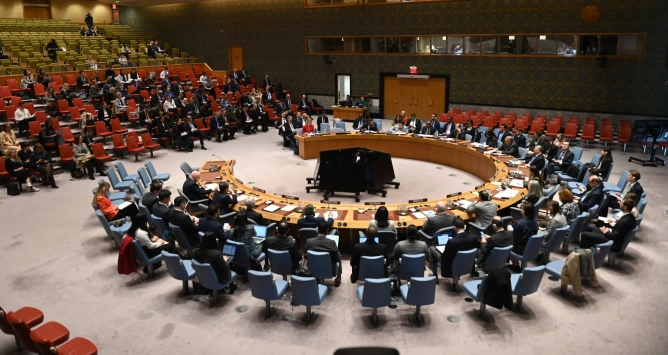
The European Union has committed to working with the affected countries to stop the trafficking of people used to recruit foreign citizens into the Russian army. The position, contained in a statement published on 9 November for the UN Security Council, cites the findings of an independent investigation that documented the deception and coercion of men from 29 countries.
In brief
The EU announces its readiness to cooperate with all affected countries to stop recruitment through human trafficking. The statement does not establish a new mechanism, a timetable, or a list of steps already initiated.
The Independent International Commission of Inquiry on Ukraine presented its findings on 26 October. The 29 countries indicate the origin of the identified individuals, not the number of victims; the UN communiqué does not provide a verified total of those trafficked.
The intermediaries presented themselves as legitimate companies supported by the authorities and handled visas and travel documents. After arriving in Russia, the men were forced to sign contracts in Russian with the Ministry of Defense, according to investigators.
The men were sent to the front in Ukraine and assigned dangerous tasks. Many were killed or disappeared, while others surrendered or were captured by Ukrainian forces. The commission calls for all trafficked persons to be released from the Russian armed forces.
The commitment appears in the statement published on behalf of the EU and its member states, attributed to Ambassador Stavros Lambrinidis, head of the Union Delegation to the UN. The text refers to foreign citizens trafficked and recruited from at least 29 countries and expresses the Union’s determination to work with all affected states to end the practice. It is a diplomatic position based on the findings of UN investigators, made public two weeks earlier.
The commission of inquiry found that Russian authorities acted in coordination with agents and agencies from various countries and regions. The intermediaries presented themselves as representatives of legitimate businesses allegedly supported by the authorities. They processed visas and travel documents for groups of recruits and, in some cases, accompanied them during the journey. Investigators describe a high degree of coordination between these networks and the Russian authorities.
Shortly after arriving in Russia, the men were forced to sign contracts drafted in Russian with the Ministry of Defense of the Russian Federation, according to the UN communiqué. The wife of a man recruited from the Caribbean reported that her husband’s passport was taken from him and that he was pressured to sign a contract exclusively in Russian, without having any real possibility of refusing. The testimony illustrates the coercion documented by the commission, alongside the deception used in recruitment.
The consequences continued on the front in Ukraine, where the men were sent and assigned dangerous activities. The commission states that many were killed or are missing. Others surrendered or were captured by Ukrainian forces and acquired prisoner-of-war status, according to investigators. The independent body classifies the documented recruitment practices as violations of international human rights law and calls for all trafficked persons to be released from the Russian armed forces.
The figure of 29 countries shows the geographical scope of the documented cases without establishing the overall scale of the trafficking. The UN communiqué does not publish a verified global tally of victims. The investigators’ finding concerns recruitment through deception and coercion; it does not mean that every foreign citizen enlisted in the Russian army was trafficked.
The Independent International Commission of Inquiry on Ukraine is mandated by the UN Human Rights Council to investigate violations of human rights and international humanitarian law in the context of Russian aggression. Its conclusions document violations and may support accountability efforts; they are not a conviction handed down by a criminal court.
For the states from which the recruited individuals originate, stopping networks operating in several countries requires identifying victims and intermediaries and cooperation between authorities. However, the EU statement does not specify how this cooperation will be organized, with which states concrete efforts have begun, or within what time frames. The announced commitment does not, by itself, introduce new legislation or a European intervention program.
Latest News
15:40
15:32
15:30
15:28
15:20
See more news
NEWS ON THE SAME TOPICS

.webp)