



The extensive war in the Middle East: The US-Israel offensive against Iran shakes the oil market and puts Europe and Romania face to face with a new security and energy shock.



Always see our news on Google
Israel, the USA, and Iran have expanded this morning the war in the Persian Gulf from the Iranian front to Lebanon, Cyprus, and the entire arc of Gulf states, with immediate effects on the casualty count, air routes, and oil prices. The conflict can no longer be described as a series of pinpoint strikes but is tending towards a regional war with the potential for a global energy shock and a strategic repositioning of Western allies, including Romania. Thus, the extended war has direct ramifications in Europe and in the Gulf states.
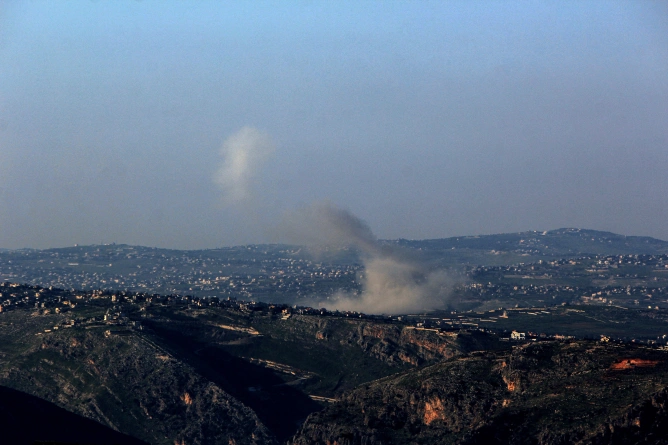
This morning, Israel intensified its operations against Hezbollah across the entire territory of Lebanon, following rocket and drone strikes by the group as "revenge" for the assassination of Ayatollah Ali Khamenei. The southern suburbs of Beirut, controlled by Hezbollah, along with numerous localities in southern Lebanon, are hit by successive waves of bombings, while Lebanese authorities report a toll of at least 31 dead and over 140 injured, provisional figures that change from hour to hour. Israel explicitly assumes the objective of severely degrading Hezbollah's military capabilities and pushing the group away from the northern border, which amplifies the risk of a total conflagration on the Lebanese front, far from any limited scenario.
For Hezbollah, the massive strikes on its urban strongholds transform the conflict from a proximity confrontation with Israel into a chapter of the broader war for the survival of the "axis of resistance" coordinated by Tehran. On the ground, the Lebanese civilian population finds itself once again caught between Israel's strategic calculations and Hezbollah's logic of deterrence, with entire neighborhoods devastated and a government too weak to impose any form of control over non-state armed actors.
Iran: between external strikes and internal pressure
Iran has shifted from symbolic retaliation to a coherent campaign of missile and drone strikes against Israel and American military bases in the Gulf, presented as "proportional revenge" for attacks on its infrastructure and leadership. The attack on a girls' school in southern Iran, attributed by Tehran to US-Israel raids, has fueled a wave of internal anger, with authorities speaking of over 150 dead and dozens injured, a toll that amplifies pressure on the regime to demonstrate that it can respond "in kind." Iranian rockets struck the Beit Shemesh area, causing the deaths of nine Israeli civilians, the bloodiest attack on Israel since the beginning of the current phase of the conflict, while sirens sounded even in Jerusalem, where new explosions were reported.
From the perspective of leaders in Tehran, the expansion of strikes towards Gulf states hosting American bases is inscribed in a clear strategy: all US and Israeli installations in the region are presented as "legitimate targets" until the "decisive defeat of the enemy." This rhetoric strengthens support among the regime's hard core but risks deepening Iran's external isolation and blocking any negotiation bridges with European or regional capitals seeking military de-escalation.
Gulf States: secondary front, major risk
The Gulf states find themselves caught in the middle between Washington and Tehran, transformed from implicitly pro-American logistical platforms into territories directly hit by missiles and drones. In Kuwait, air defense intercepted several "hostile" drones in recent days, with sirens and explosions felt in residential neighborhoods of the capital, while debris from projectiles caused a fire at the Mina al-Ahmadi refinery and injured two workers, an incident classified as "under control" by Kuwaiti authorities. American bases like Camp Arifjan have been directly targeted, with Washington already confirming the deaths of three soldiers and the injury of five others in attacks on facilities in Kuwait, signaling that Iran is willing to strike directly at American military infrastructure in a state that has hosted one of the most significant US military presences in the region for decades.
In the United Arab Emirates, Qatar, and Bahrain, authorities reported explosions, activated air raid sirens, and temporarily closed airspace, while the population received warning messages to remain in shelters or indoors. For the Gulf monarchies, the dilemma becomes existential: on one hand, they do not want to appear as direct actors in a war perceived in the region as "of the USA and Israel," while on the other hand, they cannot afford to indefinitely tolerate strikes on their own cities and strategic infrastructures without demanding guarantees and increased countermeasures from Washington. The result is a combination of public condemnations of Iran, messages of "de-escalation," and discreet negotiations to strengthen air defense and missile systems provided by the USA and Western allies.
Cyprus: NATO platform within Iran's range
In this picture of regional escalation, Cyprus takes on a special role, situated at the intersection of operational theaters in the Levant and the Persian Gulf. The British base RAF Akrotiri, heavily used for missions in Syria and Iraq, was hit by an Iranian Shahed drone, an incident that resulted in minor material damage but symbolically marks the island's entry into the direct range of the conflict. London has admitted that it allows the United States to use Cypriot bases for defensive strikes against Iranian missile infrastructure, insisting, however, that it does not participate in offensive operations, while military families are being evacuated preventively to other locations on the island.
For Nicosia, the official message is twofold: Cyprus does not wish to become part of a war but to remain a humanitarian and logistical hub, facilitating evacuations and medical corridors, yet the geostrategic reality places it de facto on the front line of the rivalry between NATO and Iran in the eastern Mediterranean. Its status as an EU member state but non-NATO emphasizes the ambiguity: the island becomes critical infrastructure for Western operations, while the formal architecture of collective defense remains concentrated elsewhere.
Energy shock: oil, LNG, and inflation
The fastest transmission of the crisis to the rest of the world occurs through the energy market. Brent crude has risen by about 10-13%, crossing the threshold of 80-82 dollars per barrel, while WTI has advanced by approximately 8%, towards the 72 dollar per barrel range, amid fears that the de facto blockade of the Strait of Hormuz will remove up to 15 million barrels per day from the market. Shipowners and insurers have begun to avoid transit through the area, and a significant portion of liquefied gas shipments has been redirected or postponed, with ripple effects in Asian and European markets.
Global stock markets reacted with declines in major indices, the dollar strengthened, and analysts are already discussing the scenario of a new inflationary wave, fueled by rising energy prices and disruptions in logistics chains. For the global economy, this combination revives the specter of the "war tax" at the pump and on utility bills, with explosive political potential in Western democracies weary from successive crises. In Europe, the lessons of recent years – the Russian gas crisis, post-pandemic inflation – mean that any new energy shock is viewed as a threat not only economically but also politically, impacting electoral cycles and government stability.
Europe and the eastern flank: between security and vulnerability
Europe views the conflict with a dual concern: security risk and energy shock. Although it did not participate in the US-Israeli strikes against Iran, the European core – Paris, Berlin, London – has issued a common message, urging Tehran to opt for a "negotiated solution" and explicitly denouncing Iranian attacks on bases and territories in the region. The statements emphasize that European states were not involved in military operations but also reaffirm solidarity with "regional security" and with affected states, trying to maintain a mediating role in a context where diplomatic space narrows with each new wave of rockets.
EU institutions are exploring diplomatic channels with Arab capitals, while the naval mission Aspides in the Red Sea remains on high alert, prepared to protect maritime traffic in the event of the conflict extending to the trade routes linking Europe to Asia. For the states on NATO's eastern flank, the conflict in the Gulf overlaps with the war in Ukraine, redefining the notion of Europe's "security frontier." Romania, already under pressure from Russian drones near the Danube Delta, views the new front in the Middle East through the lens of NATO's real capacity to manage multiple crises simultaneously and to ensure deterrence credibility in all directions.
Romania: immediate effects and strategic dilemmas
For Romania, the immediate effects are visible mainly in three areas: transport, energy, and security. The cancellation and rerouting of flights to the Middle East complicate efforts to repatriate Romanian citizens from Israel, Lebanon, Gulf states, and Cyprus, under conditions of partial closure of regional airspaces and the cancellation of a chain of scheduled and charter flights. The sharp increase in oil prices will translate, with a short lag, into rising fuel prices on the domestic market, with the risk of renewed pressure on inflation and household budgets, at a time when the fiscal maneuvering margin is already limited.
Strategically, Bucharest faces a delicate equation. As a NATO and EU member state, Romania will likely be called upon for additional air policing missions, troop and equipment transit, or humanitarian support if the conflict prolongs and generates evacuation flows from the region. At the same time, the government must manage internally the socio-economic consequences of a new energy shock and any political tensions generated by the perception that Romania is once again paying the cost of "distant wars."
Immediate and long-term consequences of the US-Israel attack on Iran
In the immediate term, the US-Israel attack on Iran has produced three major effects. The first is military: the temporary neutralization of some Iranian capabilities (air bases, missile depots, command centers) reduces Tehran's ability to project power but does not eliminate it, given the conditions of a dispersed infrastructure and a network of regional proxies capable of maintaining pressure on Israel and American bases.
The second is political: the assassination of the supreme leader and strikes on civilian targets have strengthened, at least in the short term, the internal cohesion reflex around the regime, reducing the space for internal contestation and allowing the security elite to present itself as the only guarantee of the state's survival. The third is economic: the shock to the oil market, the de facto blockade of the Strait of Hormuz, and the disruption of LNG flows immediately produce financial volatility and global inflationary pressure.
In the medium and long term, the central question is whether this military campaign can produce the regime change promised by President Donald Trump or, conversely, will it entrench the geopolitical situation.
Statements from the American leader, asserting that operations will continue "until all objectives are achieved," suggest a horizon of action that exceeds the logic of limited reprisals and approaches the "regime change" paradigm. However, experiences in Iraq and Libya show that externally imposed regime change, if achieved, tends to generate power vacuums, civil wars, and new forms of radicalization, rather than stable and pro-Western regimes.
In the case of Iran, a state with reasonably consolidated institutions, a significant social base for the regime, and a strong structure of the Revolutionary Guards, it is unlikely that external bombings, no matter how intense, will produce an internal rupture sufficient for a rapid regime change. A more likely scenario is one of "rallying around the flag," in which external pressure strengthens the legitimacy of the anti-Western narrative, reduces the space for internal opposition, and pushes Tehran to deepen its dependence on the network of proxy actors in the region, on Russia, and on other anti-Western partners. Geopolitically, this would entrench the situation: more asymmetric attacks in the region, fewer channels for dialogue, a more unpredictable Iran, and a more fragmented region.
In the long term, the most dangerous effect could be the normalization of the idea that regime change by force is again an acceptable tool of international politics, which would fuel the arms race and erode the already fragile rules of the global order. In this context, even if the US-Israel strikes succeed in temporarily reducing Iranian military capabilities, the strategic cost could be a more unstable Middle East, a more polarized world, and a Europe caught in the middle between an energy dependence still incompletely resolved and increasing pressure to choose between diplomacy and military complicity.
Trump, criticized in the US by Democrats and Republicans for the attack on Iran
Dissatisfaction in the US regarding Donald Trump's offensive against Iran is already visible both in polls and in internal political debate. A Reuters/Ipsos poll shows that only about a quarter of Americans support strikes against Iran, while 43% disapprove, and nearly 30% are undecided – a sign that the president has triggered a war for which he does not have a clear public mandate.
More than half of respondents believe that Trump is "too eager" to resort to military force to advance US interests, and in the Democratic camp, the rejection of the attacks is overwhelming. However, criticisms also come from within the right: symbolic figures of MAGA, such as Tucker Carlson, have denounced the operation as "absolutely disgusting and evil," accusing Trump of betraying promises to end "endless wars" and to stay away from regime changes abroad. Experts from the Atlantic Council and other think tanks warn that maintaining an operation of such magnitude will consume considerable military and financial resources, will reduce US availability for other strategic priorities, and could fuel a spiral of regional instability that, in the end, will make America more vulnerable, not safer.
Synthesis made with the help of a data monitoring flow provided by the media monitoring platform NewsVibe Romania. The analysis presented has been enhanced with the help of Machine Learning and Artificial Intelligence tools.
Latest News
16:09
15:57
15:56
15:47
15:47
See more news
NEWS ON THE SAME TOPICS







.webp)

.webp)


