SPECIAL Informat.ro: Orbán vs. Magyar in 2026: two opposing scenarios for the future of Hungary



Always see our news on Google
Two directions for Hungary
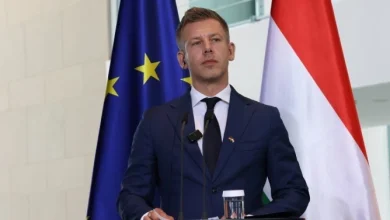
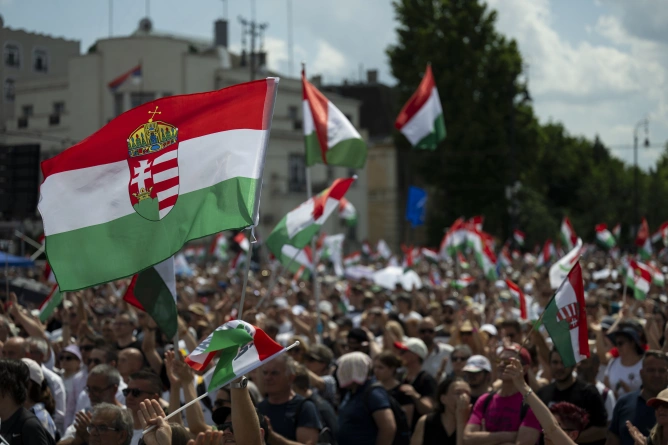
Viktor Orbán and Péter Magyar represent two distinct political directions for Hungary, and the outcome of the April 2026 elections will decisively influence both internal developments and the country's external positioning in relation to the United States, the European Union, and the eastern neighborhood. The current political scene in Hungary is dominated by the direct confrontation between Fidesz, led by Viktor Orbán, and Tisza Párt, led by Péter Magyar, in a climate of heightened polarization, negative campaigning, and recurring media scandals.
Orbán versus Magyar: perceptions and discourses
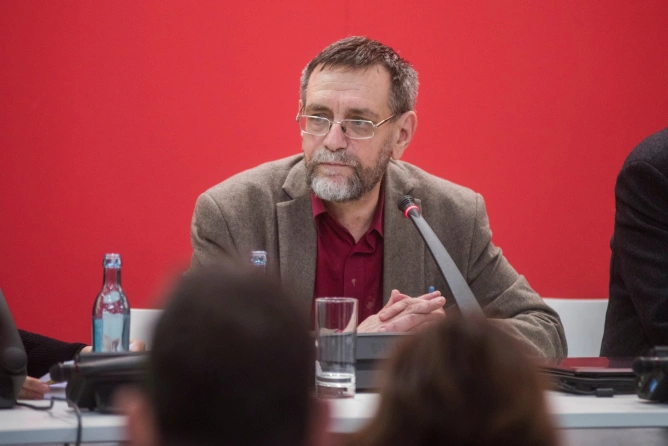
The pro-Fidesz campaign insists on Viktor Orbán's image as a leader with extensive experience, while Péter Magyar is presented as a politician with "two faces," ambiguous and lacking clear positions on major issues such as war or public policy directions. In the media space close to Tisza Párt, analysts like Török Gábor acknowledge that Viktor Orbán's annual accountability speech was more interesting, surprising, and stronger than Péter Magyar's speech, explaining the former's success by the fact that it was well-written and tense, while the latter seemed more like an attempt to "get through the moment," without firm political statements, including on the topic of war, and without clear promises.
The Orbán scenario: internal continuity
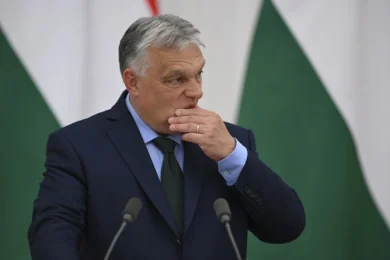
If Viktor Orbán retains power after the April elections, a consolidation of the current political model is anticipated, in which Fidesz legitimizes itself through the message of stability, experience, and strong leadership. Minister Lázár János states that in an "uncertain and crazy" world, there is no place for "beginners" and that Hungary needs a leader with 16-20 years of experience in state leadership, capable of providing security for the future of families and children.
Internally, this continuity would involve maintaining an intense mobilization of the electoral base through negative campaigns that present Péter Magyar as a politician frequently seen at "dubious parties," in contrast to the image of a prime minister focused on citizens' issues. The "drug party" scandal, in which Magyar admits to being in an apartment where substances that appeared to be drugs were present and where a sexual encounter took place, is being heavily exploited. Conservative author Boris Kálnoky emphasizes that the former partner, Vogel Evelin, secretly filmed Magyar while he made derogatory remarks about his own collaborators, raising questions about his vulnerability and blackmail potential.
Orbán, Trump, and the relationship with the United States
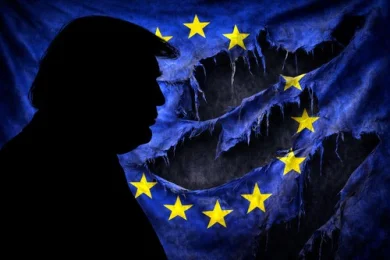
Externally, a victory for Viktor Orbán would strengthen a privileged partnership with the Trump administration. U.S. Secretary of State Marco Rubio, visiting Budapest, conveys the message that "it is in the national interest of the United States for Hungary to prosper, as long as you are prime minister," reaffirming Washington's explicit support for Orbán in the run-up to the elections. Rubio states that the United States is prepared to offer a "financial shield" to Hungary as long as Donald Trump and Viktor Orbán lead the two states and that American companies want to invest in Hungary due to a "strong leadership" that protects their investments. The Financial Times headlines that the United States supports Orbán in the April elections and describes Hungary as an exceptionally loyal European ally for the Trump administration, while political scientist Tóth Erik considers Orbán's victory to be "indispensable" for Washington.
Former diplomat and politician Eörsi Mátyás considers the term "golden age" used to describe the bilateral relationship to be exaggerated and argues that no truly new and substantial results are visible. He believes that measures such as visa facilitation and announced agreements play more of a political communication role than represent a decisive leap in the strategic relationship between Budapest and Washington. Within NATO and in relation to the war in Ukraine, a reconfirmed Orbán government would likely be tempted to maintain a discourse centered on the danger of "slipping into war" and the need to avoid direct involvement, while accusing the opposition and Tisza Párt of downplaying risks and welcoming the "war preparation" of Western leaders.
Orbán and the European Union: structural conflict
In relation to the European Union, a new Orbán mandate would strengthen an already visible structural conflict with the institutions in Brussels. Pro-Fidesz propaganda suggests that Péter Magyar and Tisza Párt have already "colluded" with European Commission President Ursula von der Leyen and European People's Party leader Manfred Weber, which would legitimize the narrative that a potential Magyar government would represent the "European center" and not Hungary's national interests. The French press notes that Viktor Orbán enjoys not only the support of Donald Trump but also the political favors of Vladimir Putin, in a context where the internal economic balance is disappointing, and a conservative rival like Péter Magyar is gaining ground. Another victory for Orbán would strengthen the profile of a Hungary that relies on alliances with Eurosceptic and illiberal leaders, uses anti-Brussels rhetoric as a primary internal mobilization tool, and risks increased isolation within the Union.
The Magyar scenario: generational change and party in construction
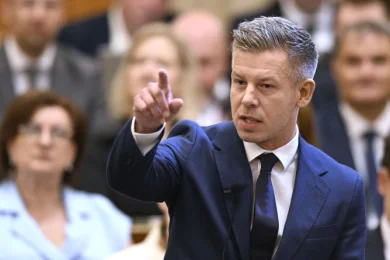
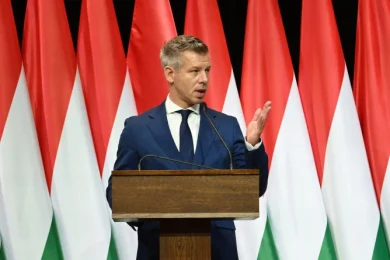
In the event of a victory for Péter Magyar, Hungary would enter a phase of generational change at the top of power and transformation of the opposition into a governing force. Péter Magyar presents himself as a conservative rival to Viktor Orbán, yet the pro-Fidesz campaign constantly portrays him as a leader with "two faces," who avoids taking clear positions on major issues, from war to reforms and relations with European institutions, and adapts his discourse according to public expectations. Tisza Párt's governance plan is considered insufficiently outlined, as the party has not yet presented a clear list of candidates for the parliamentary elections. The publication Demokrata shows that the absence of the list may signal either a lack of personnel or a deliberate strategy of concealment, while political scientist Kéri László suggests that Tisza may have to include politicians from the "old left," such as Hadházy Ákos, Szabó Tímea, Jávor Benedek, or Jámbor András, on the national list to secure safe mandates without direct conflicts with Tisza candidates in single-member constituencies.
Magyar and the "drug party" scandal
The "drug party" scandal amplifies the perception of vulnerability and political instability of Péter Magyar. In a video posted on Facebook, he admits that in the summer of 2024 he was in an apartment where unknown individuals were present and where substances that appeared to be drugs were found, and he simultaneously confirms a sexual relationship with his former partner, Vogel Evelin. Conservative media and commentators close to the government emphasize that the woman secretly filmed Magyar while he made derogatory remarks about his own collaborators, raising questions about his ability to handle pressure and the risk of blackmail. The incident in a Munich brewery, where staff called for police intervention because Magyar's campaign meeting had not been announced as a political event and would have disrupted the proper functioning of the venue, is presented as a new example of a lack of professionalism and a tendency to bend the rules.
Internal challenges of a Magyar government
In this scenario, a Magyar government would begin its mandate with an enthusiastic support base, especially among voters dissatisfied with economic stagnation and the deterioration of public services, but would face serious structural difficulties. Tisza Párt is still a party in construction, with possible tensions between its new core and figures from the old left who could be co-opted for tactical reasons. Fidesz would become a disciplined opposition, with a strong media and organizational infrastructure, ready to exploit any episode of vulnerability, from integrity scandals to errors in foreign policy. The media climate would remain extremely hostile, with a constant focus on Magyar's private life, accusations of "double discourse," and the alleged risks of his promises for institutional reform, including in public media.
Magyar, the United States, and NATO
A victory for Péter Magyar would force Hungary to quickly recalibrate its relationship with the United States, as the Trump administration and Marco Rubio have publicly invested in Viktor Orbán's image as an indispensable ally. Statements that Hungary's prosperity is in Washington's interest "as long as Orbán is prime minister" create a context in which any change of power may initially be perceived as a loss for the Trump-Orbán axis. A Magyar government would need to demonstrate that it remains a credible partner in NATO, despite its closeness to European leaders critical of Orbán. Péter Magyar's participation in the Munich Security Conference, where he was photographed with leaders described in government media as "war partisans," is used to present him as a politician aligned with a firmer Western discourse in favor of Ukraine.
Critics in pro-government media, such as authors from the publication Ellenpont, accuse Magyar and General Romulusz Ruszin-Szendi of "downplaying the danger" posed by Western military preparations and adopting an "ambiguous" discourse on the war, while the Orbán government constantly warns of the risk of "being dragged into conflict." From this perspective, a Magyar cabinet would need to clearly formulate its position on the conflict in Ukraine and the regional risks, to counter the perception that it would expose Hungary to greater involvement, while trying to remain credible in front of NATO partners.
Magyar and the European Union: thaw and internal political cost
In relation to the European Union, a victory for Péter Magyar could lead to a phase of thaw in relations with European institutions and a rapprochement with the European political mainstream. Pro-Fidesz propaganda still presents him as a politician close to the European center, already "colluded" with Ursula von der Leyen and Manfred Weber, and accuses Tisza Párt MEPs of having worn T-shirts with the Ukrainian flag and applauded in the European Parliament as part of an "understanding" for political support. A potential Magyar government could unlock conditional European financial resources, reduce Hungary's political isolation within the Union, and strengthen cooperation with member states critical of Orbán, such as Poland led by Donald Tusk.
However, episodes such as the promise to extradite to Poland former Polish ministers who sought asylum in Hungary, Zbigniew Ziobro and Marcin Romanowski, are criticized in the Polish press, which reminds that such decisions belong to the judiciary and not to politicians, raising questions about Magyar's realism and legal culture. Internally, polarization would remain high, as Fidesz and its media would continue to present Magyar as "the man of Brussels," willing to cede national sovereignty in exchange for the support of European institutions.
Two scenarios for Hungary
Comparing the two scenarios outlines the image of two possible Hungaries. In the scenario where Viktor Orbán remains in power, Fidesz consolidates its position through the message of stability and accumulated experience, the illiberal model is entrenched, media pressure on the opposition continues, and personal scandals are systematically used as a tool of delegitimization. Economic policy remains marked by narrative disputes regarding GDP and growth, the relationship with the United States deepens through the Trump-Orbán axis, with promises of American "financial shields," and the relationship with the European Union continues along the lines of sovereignty and conflict with Brussels. The position on the war in Ukraine remains one of distancing, with a focus on "slipping into war" and refusal of further involvement.
In the scenario where Péter Magyar wins the elections, Tisza Párt takes over governance with a new leader and a party still in construction, which must manage both the expectations of a highly mobilized electorate and the pressure of a disciplined and aggressive Fidesz opposition. The generational change is also accompanied by risks of political instability, integrity scandals, controversies regarding the ability to reform public media, and uncertainties regarding how foreign policy will be concretely reconfigured. The relationship with the United States would require a delicate recalibration, starting from a situation where the Trumpist Washington has openly bet on Orbán, while the relationship with the European Union could enter a phase of thaw and increased cooperation, at the cost of internal polarization fueled by accusations of "subordination to Brussels."
The April 2026 elections thus confront Hungary with a clear choice between the continuity of a strongly centralized leadership model, openly supported by the Trump administration and anchored in a sovereignist rhetoric, and a generational political change that promises closeness to the European center and institutional reforms, but brings with it a high level of internal uncertainty, conflict with an opposition Fidesz, and major tests of credibility both internally and externally.
Analysis conducted with the support of the NewsVibe platform and Perplexity
Latest News
22:52
22:34
22:28
21:56
21:29
See more news
NEWS ON THE SAME TOPICS