NEWS FOCUS. The EU-Mercosur agreement on the agenda of Romanian online sources


.webp)

Always see our news on Google
The EU–Mercosur agreement has strongly entered the agenda of online sources after the vote expressed by Romania in COREPER (Committee of Permanent Representatives) in favor of this trade treaty, a moment that generated new tensions within the governing coalition. According to data processed by NewsVibe, an AI-supported media monitoring platform, there were nearly 2,800 mentions about this topic in the last month in relevant online sources from Romania (web, Facebook, YouTube, Tiktok), with an estimated impact of over 50 million views.
PSD has sent multiple signals distancing itself from the vote cast by Romania's representative in the mentioned body, while the President of Romania, USR, and PNL positioned themselves at the opposite pole. After the vote on January 9, the press in Romania began to pay increased attention to the individual positions of other EU member states, especially highlighting those of opposition, such as was the case, among others, of France.
Until this moment, the European debates on the trade agreement between the EU and the Mercosur member states have been rather sporadic on the agenda of relevant online sources. In the last month, only the decision made by the European Commission in December to postpone the necessary procedures for the actual signing of the agreement with the Mercosur states generated consistent mentions in reference online sources. The visibility of this moment was boosted by protests organized by farmers from several European states in Brussels.
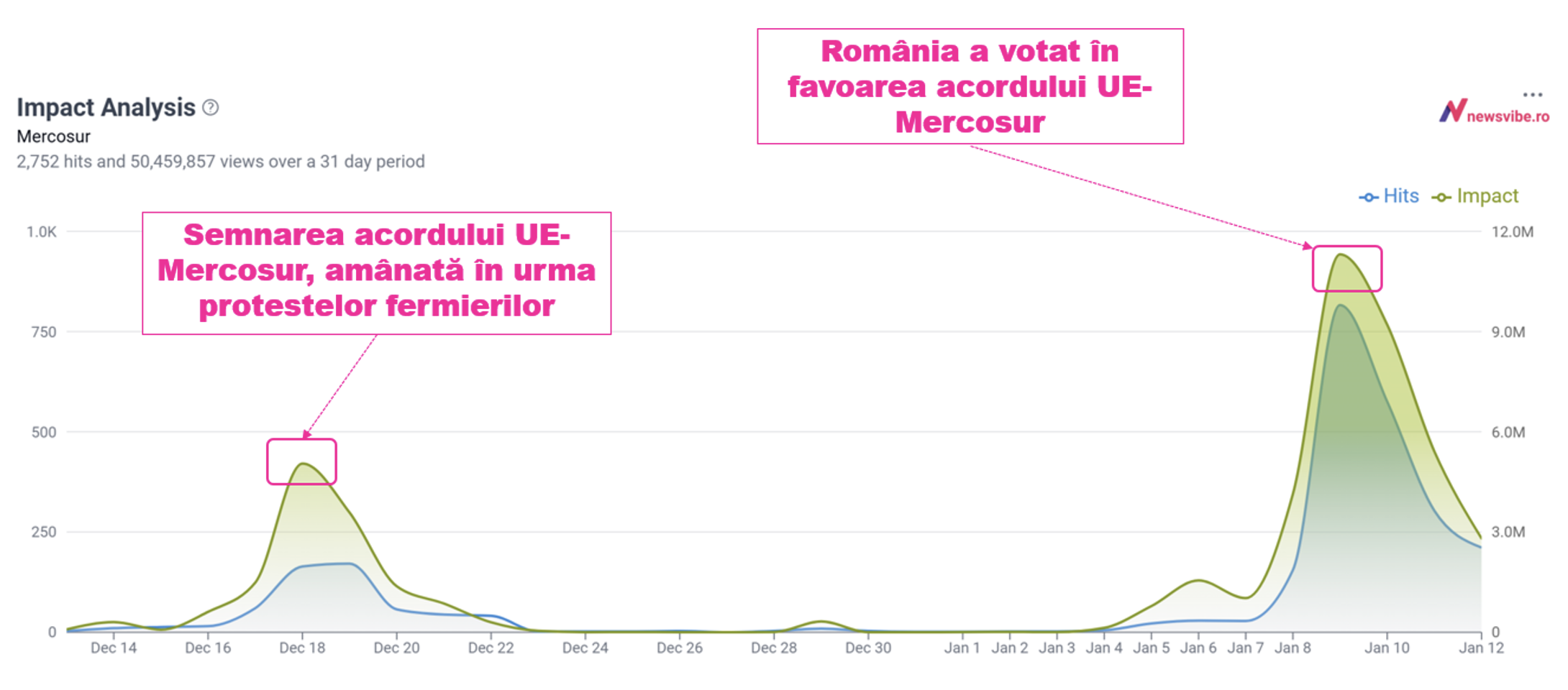
NewsVibe Chart. The evolution of the number of mentions about Mercosur and their impact in the last month
CENTRAL THEMES. The entities most strongly associated with Mercosur are the European Union, Romania, Brussels, and France. Thus, alongside discussions in Romania, those generated in other European states also mattered, among which those from France were the most visible. There are also multiple associations with the member states of Mercosur (Paraguay, Argentina, Brazil), with the South American continent, but also with Romanian politicians such as Nicușor Dan or Oana Țoiu.
It is thus observed that the dynamics of the debate in online sources encompasses both the national and the European dimension of the topic, which, in many areas, intertwine. At the same time, there is a notable increased attention from online sources rather towards the political or institutional actors who send signals on this subject.
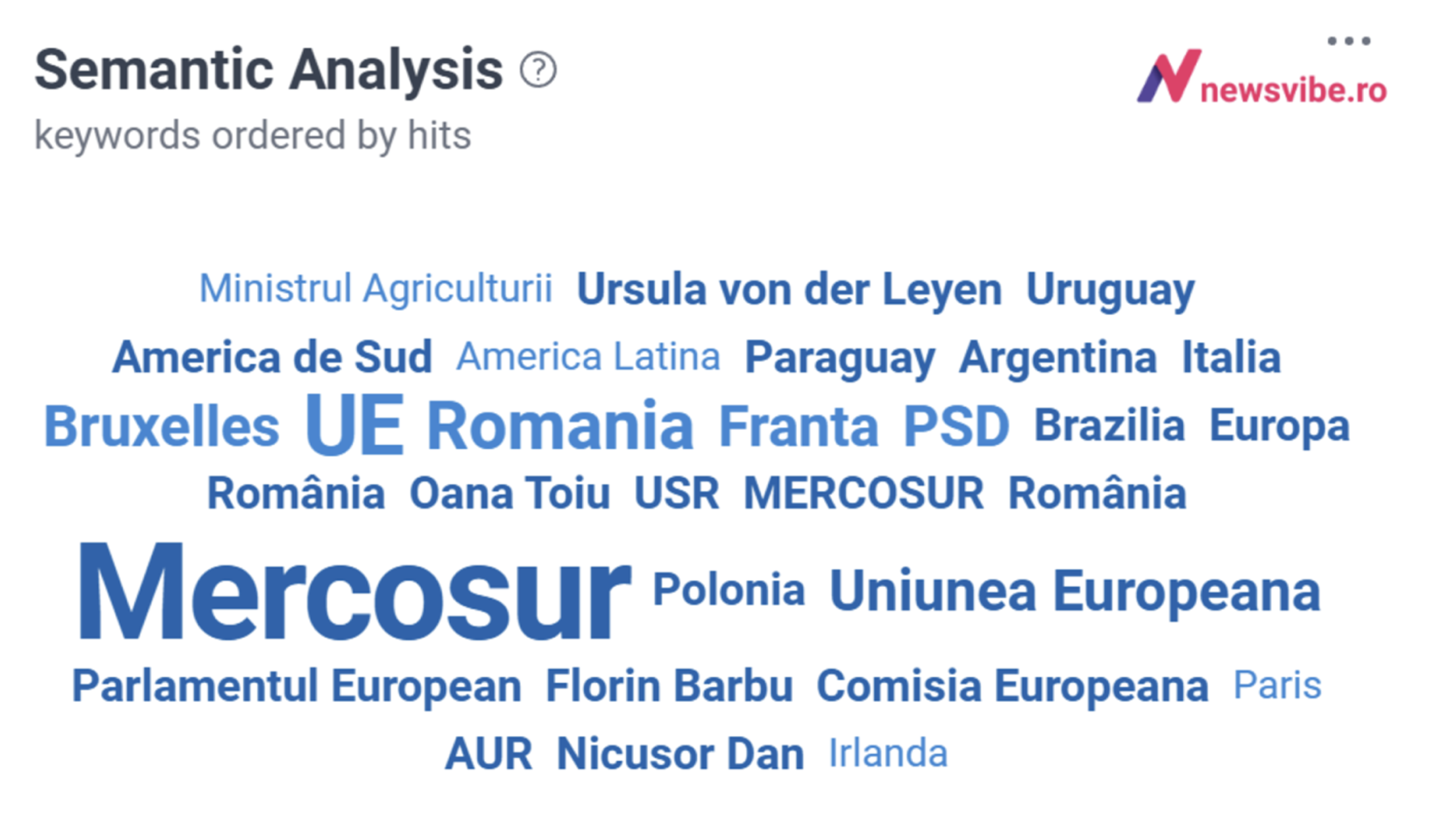
NewsVibe Charts. The entities most frequently associated in online sources with Mercosur in the last month
THE SEMANTIC NETWORK OF ONLINE DEBATE. The tool created by NewsVibe – semantic network analysis – uses advanced artificial intelligence and machine learning methods to build interaction maps that highlight: the central actors of a conversation, the connections between them, the groups (clusters) of themes, concepts, and influencers (personalities and organizations) that have formed around an event, subject, or idea.
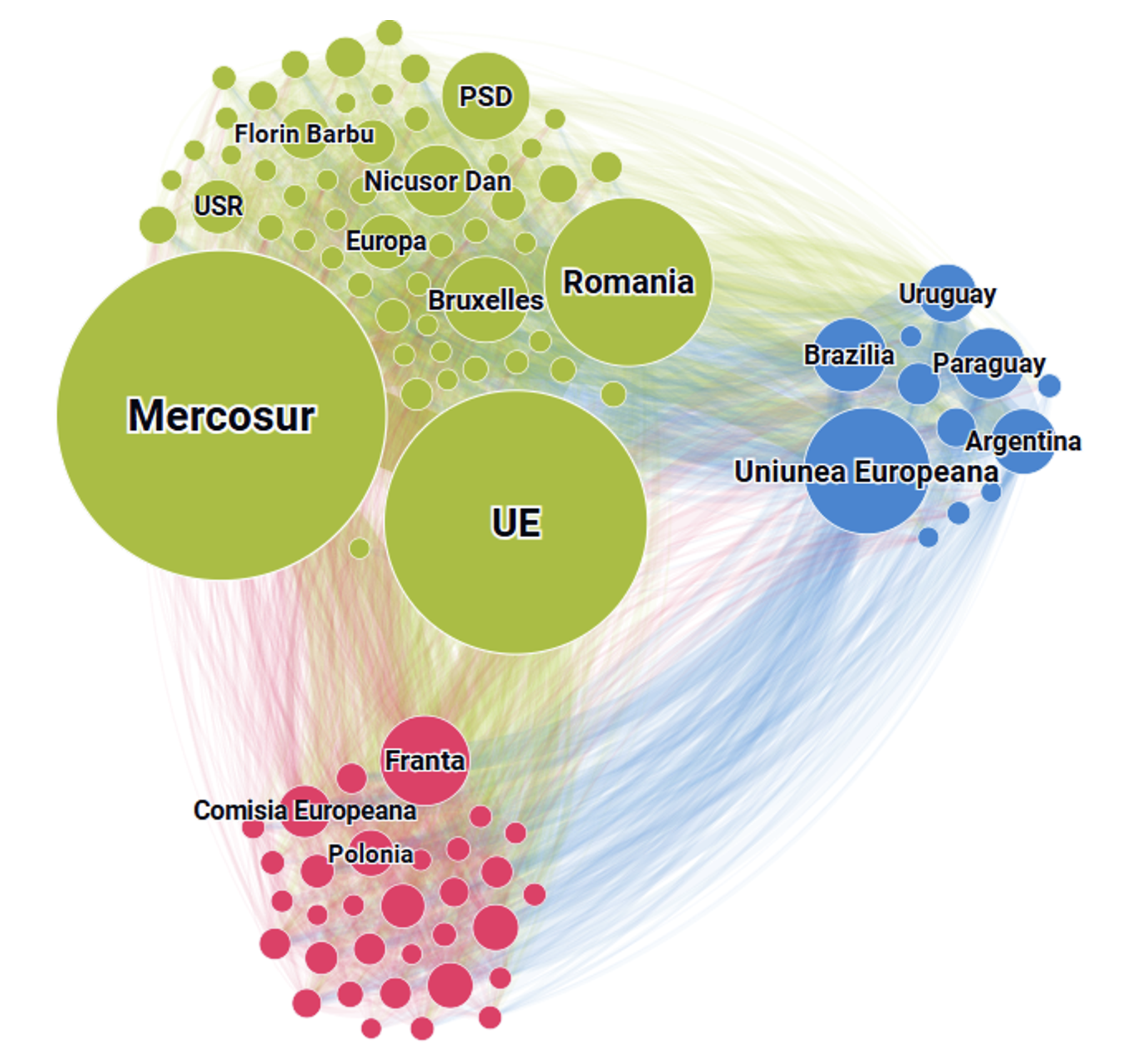
NewsVibe Chart. The semantic network associated with the online debate about the EU-Mercosur agreement in the last month
What the analysis shows:
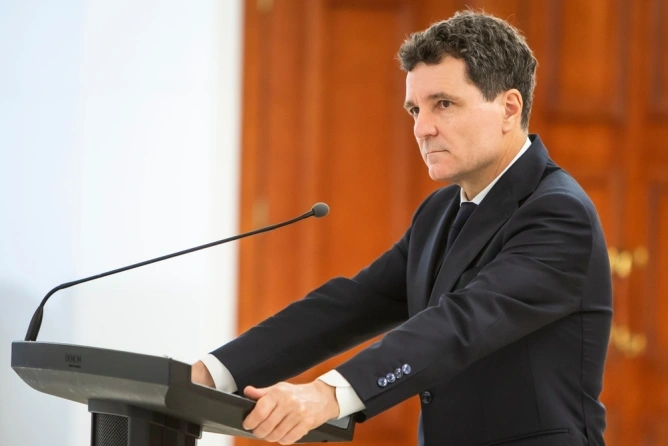
- A primary area of the online conversation is categorically dominated by the discussions generated internally regarding Romania's vote in COREPER on the EU–Mercosur agreement. In this area, internal political actors are predominantly present, such as President Nicușor Dan, PSD, USR, or the Minister of Agriculture, Florin Barbu, who have expressed themselves on the Mercosur topic.
- A second segment of the online debate focuses on the relationship between the European Union and the member states of Mercosur. This segment particularly captures the negotiations held between Brussels and these states, as well as various positions regarding the outcomes or implications of these negotiations.
- Another important area of the online discourse involving the treaty with Mercosur is concentrated on the opposition expressed in some European states against signing the respective trade agreement under current conditions. Among these, the most visible and intensively covered were the cases of France and Poland.
SENTIMENT ANALYSIS. The NewsVibe platform has created an advanced automated sentiment analysis system that uses specially trained AI algorithms and LLM tools to detect tonal nuances – favorable, unfavorable, or neutral – in the context of references to the relevant entities for an online conversation.
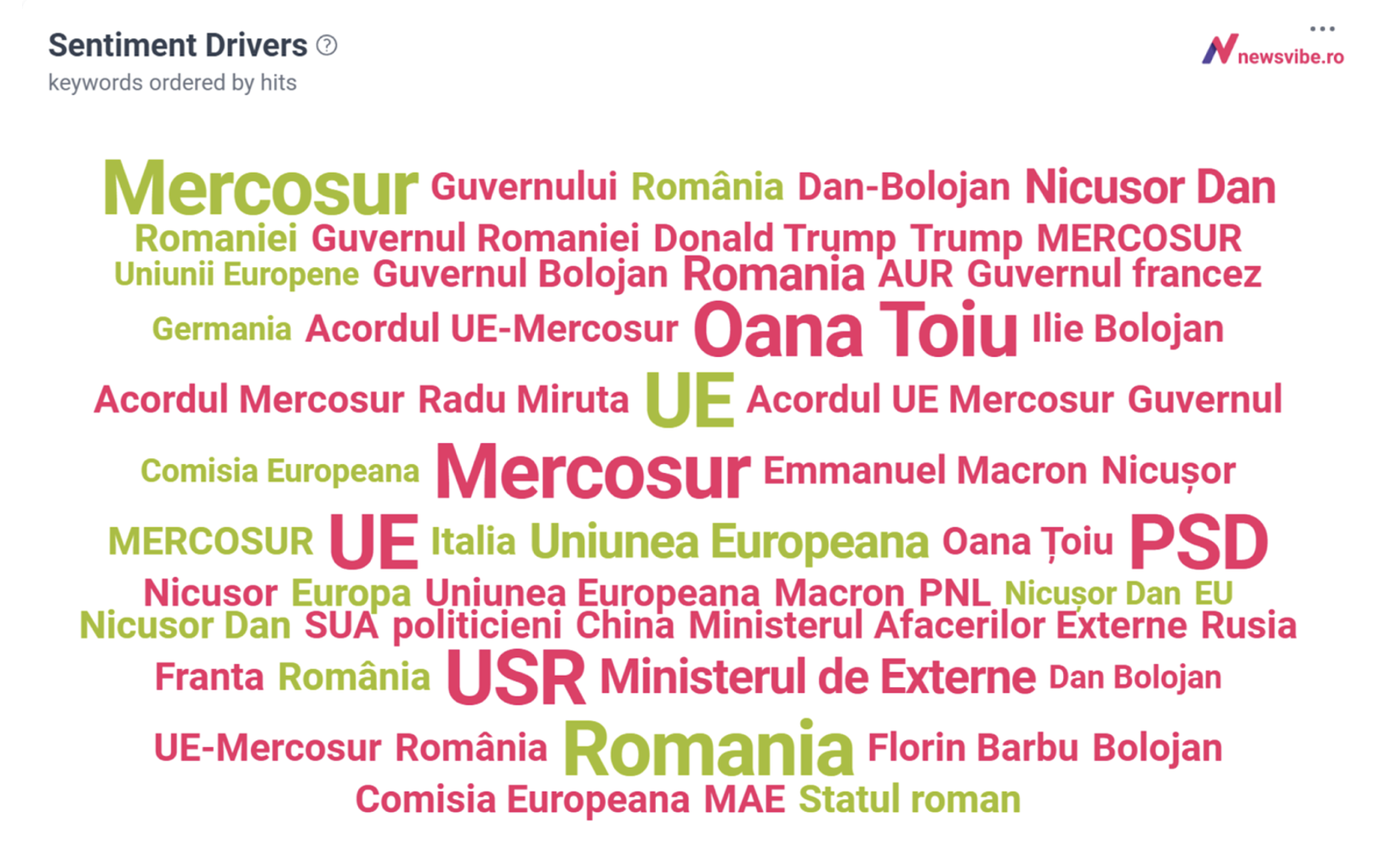
NewsVibe Chart. The automated assessment of the tone of the online conversation about Mercosur in the last month
What the analysis shows:
- In general, the tone of the online media coverage of discussions about the EU–Mercosur agreement has a predominantly negative character, being decisively influenced by the multiple tensions expressed within public debates and, specifically, by political decisions.
- The entities most frequently present in negative contexts within these debates are PSD, USR, the European Union, and Oana Țoiu, which reflects, first and foremost, the disputes generated internally by the vote expressed by the Romanian state's representative in COREPER.
- At the same time, entities such as Nicușor Dan, but also other actors directly associated with the ongoing process, have also benefited from media coverage in positive contexts (although the President's name frequently appears in unfavorable contexts as well). This dynamic has been particularly influenced by the signals sent by these actors, in an attempt to explain the potential advantages of a possible treaty for the member states.
- The term Mercosur in itself stands out through the debate in a dual register – both positive and negative.
*****Summary created with the help of a data stream provided by the media monitoring platform NewsVibe Romania. The analysis, data, and images presented have been enhanced with the help of Machine Learning and Artificial Intelligence tools.
Latest News
18:37
18:36
18:26
18:18
18:04
See more news
NEWS ON THE SAME TOPICS


.webp)