NATO ANALYSIS, involved for the first time in the Middle Eastern war. Iran's capabilities and what the official appointment of Mojtaba Khamenei as supreme leader would mean.



Always see our news on Google
The interception by NATO of an Iranian missile aimed at Turkey marks the first clear episode in which the Iran–US–Israel war directly reaches the defense perimeter of the Alliance, against the backdrop of Tehran's explicit threats that it will strike European cities if EU states get involved in the conflict. Following the attacks already launched on Western infrastructures in the Mediterranean, the official appointment of Mojtaba Khamenei as supreme leader risks solidifying this logic of long-term confrontation.
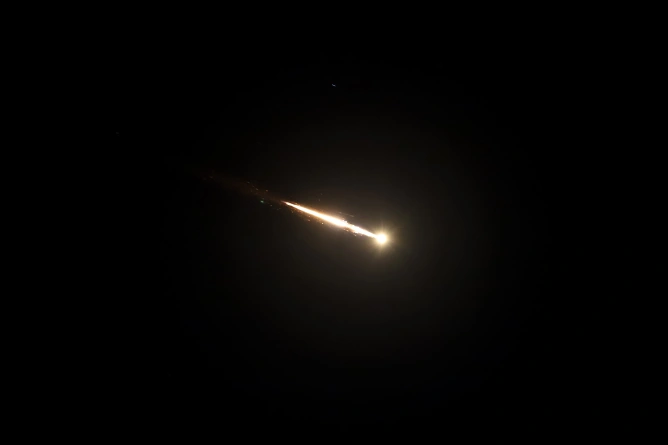
NATO confirmed that air defense and missile defense systems deployed in the eastern Mediterranean shot down a ballistic missile fired from Iran, which had crossed Iraq and Syria and was heading towards Turkish airspace. Debris fell in Hatay province, without casualties, but the episode is presented as "the first incident of this kind" since the escalation of the conflict. Additionally, it is not yet known at this hour what the target was. Although there are two American bases in Turkey that could have been targets: Incirlik Air Base (near Adana) and the Kurecik radar station (Malatya province), where there is an AN/TPY-2 early warning radar, a critical part of NATO's missile defense that detects missile launches from Iran and transmits the data to the American and allied command network.
Ankara warned that it reserves the right to respond to "any hostile attitude," and NATO emphasized that it will defend "every inch of allied territory," which implicitly raises the question of what happens in a scenario where the next missile targets not only Turkey but military or energy infrastructures in southeastern Europe.
In parallel, Iran has sent a direct warning to European capitals: any military involvement of Europe on the side of the US and Israel will be treated as an "act of war," and the response could target cities and European targets. The message comes in the context where Iranian or proxy drones have already attacked the British base Akrotiri in Cyprus, and countries like Greece, Germany, and France have sent frigates and aircraft to strengthen defense in the Eastern Mediterranean – which brings the conflict very close to the eastern flank of the EU and NATO.
In this context, Romania finds itself in a position of indirect exposure: as a state on the eastern flank, with essential American bases at Mihail Kogalniceanu and Deveselu, critical infrastructure integrated into NATO architecture and a logistical hub between the Black Sea, the Balkans, and the Ukrainian front.
In this context, if the Assembly of Experts officially names Mojtaba Khamenei as Supreme Leader, Europe and NATO will not face an unpredictable "post-Khamenei Iran," but the institutionalization of a leadership directly connected to the IRGC, that is, to the same apparatus that orchestrated missile strikes, drones, and threats against the EU.
What is Iran capable of and why would it create agitation just to scare Europe
According to reports, Iran has claimed that it has developed an intercontinental ballistic missile with a range of 10,000 kilometers, which could potentially place European and even American territory within range, said Antonio Giustozzi from the Royal United Services Institute think tank in London, according to Politico. On the other hand, it is unclear whether, under constant attack, Tehran would be able to manufacture and deploy an experimental missile of this kind, he said.
"Realistically speaking, the further you shoot them, the less accurate they will be," Giustozzi told POLITICO. "Let’s assume they had four or five long-range missiles. It might be useful to hit something in Europe just to create a little agitation and scare public opinion into not intervening." The arsenal of ballistic missiles of Iran is known to include several medium-range systems that extend over approximately 2,000 kilometers, according to the Center for Strategic and International Studies missile threat database.
According to the Center for Arms Control and Non-Proliferation, "there is little evidence that Iran could build missiles that could reach the United States in the near future," and "recent estimates have established that not only does Iran lack the capability to launch intercontinental ballistic missiles, but the country seems to have maintained the self-imposed limit of 2,000 km for the range of its missiles."
It is estimated that the Sejjil and Khorramshahr missiles, powered by solid fuel, have approximately this range, which would extend into parts of southeastern Europe from Iranian territory, including areas in Greece, Bulgaria, and Romania, depending on the launch location.
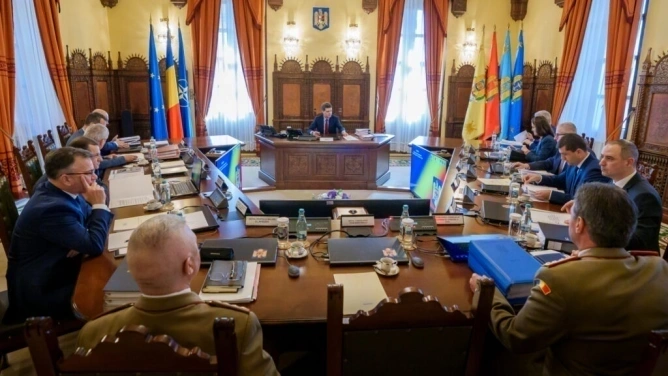
Romania has an American missile shield at Deveselu, in the southern part of the country, built to intercept potential missile attacks from Iran. This week, military security on the ground has been intensified, according to Romania's defense minister.
Analysts cited by AFP/France24 emphasize that Iran has "neither the strategic incentive nor the intention" to actually strike Turkish territory, as it would be an "extremely risky" bet that could trigger a NATO response and completely isolate Tehran.
They describe attacks on American and allied targets in the Gulf as "message operations," calibrated to show that Iran can strike, but without crossing the red line represented by NATO and the large bases in Turkey. The interception of the missile heading towards Turkish airspace is seen in this light: a signal that Iran is willing to push the limits to scare the West and deter greater NATO involvement, but also a test of the alliance's defense and political will to react.
When could the supreme leader of Iran be named
The opposition in Tehran claims that the Assembly of Experts has already chosen Ali Khamenei's son, Mojtaba, as the supreme leader of Iran, but The Guardian notes that such an announcement would come only after the burial of Ali Khamenei.
It is believed that Ali Khamenei's son is the choice of the Islamic Revolutionary Guard Corps (IRGC), and Israeli Defense Minister Gideon Saar warned that he would be assassinated.
Iran has stated that the Assembly of Experts that will select the new leader will announce its decision soon, being only the second time it has done so since the founding of the Islamic Republic in 1979.
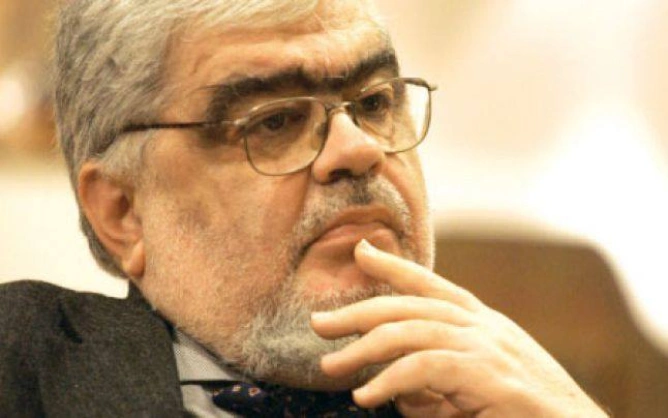
"The supreme leader will be identified as soon as possible, we are close to a conclusion, but the situation in the country is one of war," said Ayatollah Ahmad Khatami on state television, quoted by Al Jazeera. He said that candidates have already been identified, but he did not name them.
Thus, an official announcement regarding the new supreme leader of Iran is expected in the coming days, amid converging signals that the regime is "close" to a decision and that Mojtaba Khamenei is alive and remains the internal favorite to succeed his father, Ali Khamenei. His appointment would close the transition in favor of the Guardians of the Revolution and the hardline wing, establishing a leader of military and ideological continuity – not of reconciliation – with direct implications for the war with Israel, for relations with the US, and for the security of Europe, from the nuclear file to energy blackmail and the destabilization of maritime routes.
Initially reported dead, Mojtaba Khamenei is alive and has the first chances to be the supreme leader
Two Iranian sources, speaking on condition of anonymity, told Reuters that Mojtaba, at the age of 56, was not in Tehran at the time of the attack that destroyed the leader's complex and also killed Ali Khamenei's wife, another son, and a number of high-ranking military and leadership figures.
We recall that in the chaos following the first American-Israeli strikes, some reports suggested that the entire elite around Ali Khamenei – including family members – had been killed, fueling the idea that Mojtaba could also be among the victims, although without official confirmations. The change in tone came when Iranian sources told Reuters that Mojtaba survived the attacks and is seen as a possible successor to his father, and live feeds from Reuters and The Guardian explicitly note that the regime is close to choosing its new leader, which risks becoming a declared target for Israel – a clear sign that the supreme leader's son remains a central actor in the power equation.
Who is Mojtaba Khamenei
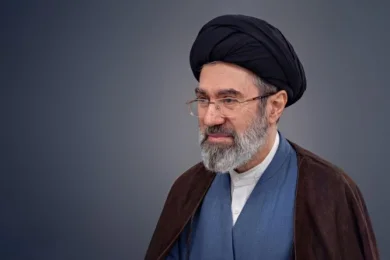
Mojtaba Khamenei is the second eldest son of the late supreme leader Ali Khamenei and has been considered by analysts for years a possible successor, due to his networks within the Revolutionary Guards and the hard core of the regime.
At the end of high school, he enrolled in the Revolutionary Guards, where he served during the Iran–Iraq war and built the first networks with people who would later reach the top of the intelligence services and IRGC commands.
After his father became supreme leader, Mojtaba began his religious studies and gradually became the discreet brain of the Leader's Office (Beit), filtering access to the ayatollah, influencing appointments, controlling opaque financial flows, and coordinating, according to several reports, both electoral campaigns and the repression of protests through Basij and IRGC.
Despite his informal influence, he has not held major public office, preferring a "behind-the-scenes operator" profile in decision-making, which enhances his aura of omnipresence but limits his public legitimacy base.
The list of names constantly circulated as possible supreme leaders includes, alongside Mojtaba, figures such as Hassan Khomeini or various high-ranking officials of the system, but several recent reports indicate his son as the internal favorite of a part of the establishment. The very potential "dynastic" nature of this succession risks straining relations with segments of Iranian society and even with part of the clergy, for whom the repetition of a monarchical pattern contradicts the official spirit of the 1979 Revolution.
What Mojtaba Khamenei's appointment as supreme leader would mean for the EU
Mojtaba Khamenei's appointment would thus establish for the European Union a leader of military and ideological continuity, not of reconciliation: Brussels would see in him the direct product of a pact between the Revolutionary Guards and the hardline clergy, not the beginning of a "post-Khamenei opening."
In place of the "window of opportunity" that Ursula von der Leyen and Kaja Kallas have tied to the death of the supreme leader – a moment officially described as "defining" and full of "hope," but also with "real risk of instability" – the installation of his son would signal that exactly the actors responsible for militarizing internal repression have won the transition.
The EU would see validated the scenario of a "credible transition, but not a paradigm shift": a new figure at the head of the same system, not "another Iran." Strategically, the main European concerns would be energy security and price shocks, in conditions where the Strait of Hormuz remains vulnerable to escalation, and the Commission has activated monitoring mechanisms and a task force on energy.
A Iran led by Mojtaba would therefore, in the reading of European capitals, be a more militarized regime, less permeable to strategic compromise and more prone to use energy blackmail and pressure through proxies, and Europe would remain stuck in a crisis management paradigm – sanctions, deterrence, protection of routes, and fortifying the internal front – rather than one of de-escalation and diplomatic reset.
What Mojtaba Khamenei's appointment as supreme leader would mean for the US and Israel
Mojtaba's appointment would be for Washington and Jerusalem the confirmation of the worst-case scenario: an Iran formally led by the man who is already coordinating, from the shadows, the security apparatus and the proxy network, that is, a political victory for the IRGC, not a step towards moderation.
For the US, a supreme leader raised in the matrix of the Guards and already sanctioned by the Treasury means that all crisis files – nuclear, missiles, proxies, prisoners – are managed with an interlocutor perceived as the architect of the hard line, not as a potential reformer.
This pushes the Trump administration towards a combination of continued military pressure (strikes on IRGC infrastructure and leadership), strengthening the regional posture, and expanding sanctions, with very little appetite for a rapid relaunch of negotiations. In the logic of this scenario, such an outcome validates the thesis of the "unreformable regime" and shifts the focus from changing behavior to gradually eroding the regime, including through support for internal opposition and the diaspora.
In operational terms, a supreme leader Mojtaba means, for Israel, an open mandate for continuing targeted assassination campaigns, repeated strikes on Iranian military infrastructure, and maximum pressure on Washington not to "relax" the campaign until the regime either yields or fractures.
****Summary prepared with the help of a data monitoring flow provided by the media monitoring platform NewsVibe Romania. The analysis, data, and images presented have been enhanced with the help of Machine Learning and Artificial Intelligence tools.
Latest News
23:04
22:36
22:16
22:01
21:44
See more news
NEWS ON THE SAME TOPICS


.webp)