SPECIAL Informat.ro / New or second-hand car? Electric, hybrid or classic? Buyer’s guide



Always see our news on Google
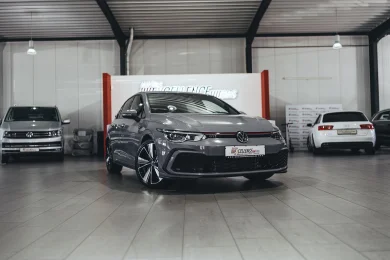
A new car loses a lot of value in the first years, but it is more predictable and has low technical risk, while a second-hand car saves you money on purchase, but comes with slower depreciation and higher repair risks and unpredictable costs.
Depreciation – the invisible cost of the car
At the moment you drive your new car out of the showroom, you have already lost an important part of your money, even if technically you have not "spent" anything extra. Market studies show that, in the first year, a new car typically loses between 15% and 35% of its value, depending on the brand, model, and market conditions. After 3 years, cumulative depreciation often reaches 40–60% of the initial price, and after 5 years many mainstream models have already lost 60–70% of their value, remaining with only 30–40% of the list price.
The depreciation curve is not linear: in the first 3 years you lose the most, then the rate stabilizes, making the 4–8 year range the "sweet spot" where the ratio between price and remaining value is more reasonable. Practically, a well-maintained car that is 3–6 years old, with verifiable history, concentrates the greatest advantages for the buyer who strictly seeks economic efficiency. If you take as a reference a new car worth 30,000 euros, it is not unrealistic for it to be worth 12,000–18,000 euros after 3 years, and to drop to 9,000–12,000 euros after 5 years, while a car bought at 4 years for 15,000 euros may lose only 6,000–7,000 euros in the next 4 years.
When repairs start to cost you, not depreciation
After the "shock" of depreciation in the first years wears off, the car starts to cost you more through maintenance and repairs. Aggregate estimates from consumer guides show that an average driver spends around 900 dollars a year on maintenance and repairs, but the amount varies significantly depending on the brand and age. While brands like Toyota, Honda, Mazda, or Hyundai often stay below the 700 dollars annual threshold, European premium brands like Audi, BMW, Mercedes, or Land Rover frequently exceed 1,300–1,600 dollars a year, especially after the warranty expires.
Data collected on consumer behavior indicates that, after 6–7 years, repair costs start to rise visibly, and between 10 and 15 years you enter a zone where many major components – from suspension to braking system, clutch, or engine elements – are nearing the end of their lifespan. In this period, unscheduled repairs can exceed in a single year the entire depreciation loss of the car, especially for complex or premium models, which completely changes the economic calculation. Practically, between 0 and 5 years your main loss is depreciation, between 6 and 10 years you enter a balance between moderate depreciation and increasing maintenance, and after 10 years you consciously assume a higher risk of unpredictable bills, in exchange for very slow depreciation.
Combustion, electric, hybrid – what you pay and what you get
Choosing the type of engine shapes both direct costs (fuel or energy) and indirect ones (maintenance, insurance, depreciation). Currently, traditional combustion cars are generally the most affordable to purchase, especially on the second-hand market, but they come with the highest costs at the pump and a large number of moving parts, which increases the risk of long-term repairs. Hybrids, especially full hybrids, significantly reduce consumption in urban areas and maintain the flexibility of quick refueling with fuel, but add a layer of technical complexity – combustion engine plus electric system and high-voltage battery – which can mean costly interventions in case of failure.
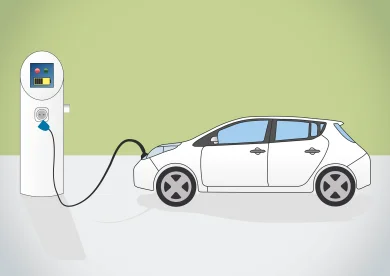
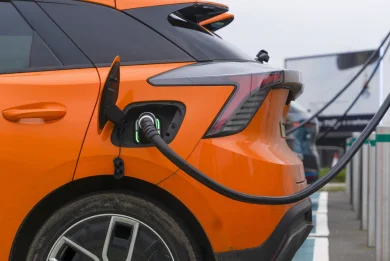
Electric vehicles stand out for their low energy cost per kilometer and a simplified technical architecture, without a traditional gearbox, exhaust, or oil changes in the engine, which reduces average service expenses. However, the purchase price is often higher, insurance can be more expensive, and depreciation is uneven: some premium models retain their value well, while other electric vehicles suffer from accelerated depreciation due to the rapid evolution of battery technology and range. Comparative analyses show that, at 15,000 miles per year, the annual cost per mile can be very close between a new electric, a hybrid, and a gasoline model, because savings on fuel and maintenance for EVs are sometimes offset by higher depreciation and higher insurance and financing costs.
User profiles and purchase scenarios
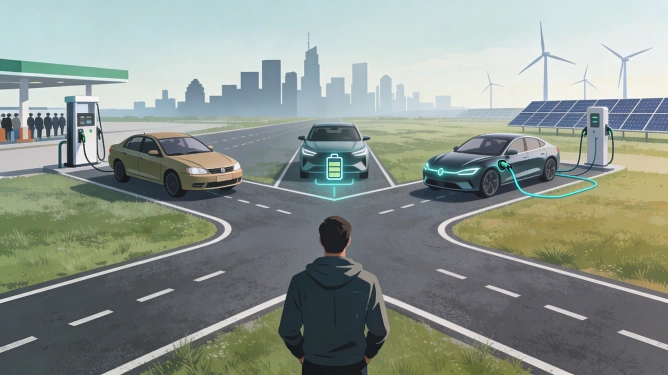
If you view the car as an economic tool, not as a status symbol, the decision shifts from "I want it" to "who am I as a user and how much does this choice cost me over 8–10 years." For an urban driver, with a short commute and access to a charging point at home or at work, an electric or plug-in hybrid used disciplined in electric mode can bring substantial savings on cost per kilometer, provided you accept dependence on charging infrastructure. For those who predominantly make long trips, in the country or abroad, and do not have easy access to charging, a modern combustion engine or a classic hybrid remains a robust compromise between flexibility, minimal refueling time, and reasonable total ownership cost.
The most efficient economic scenario for many buyers remains the purchase of a 3–6 year old car, with a clear history, from a brand recognized for reliability, followed by use for about 10 years or until repair costs start to exceed, consistently, the gain of keeping it. For a user who makes a mix of urban and extra-urban trips, a full hybrid or a simple combustion engine, bought a few years old, can offer the best balance between purchase price, controlled depreciation, operating cost, and freedom of movement. In contrast, for those who want maximum comfort, cutting-edge technology, advanced assistance systems, and accept a higher capital cost, leasing or subscribing to new cars, changed every 3–4 years, can be a rational decision, even if it is the most expensive in terms of depreciation.
Analysis conducted with the support of Perplexity
Latest News
22:59
22:55
22:44
22:40
22:40
See more news
NEWS ON THE SAME TOPICS