ANALYSIS Elections in Denmark: who are the key players. The effect of the Trump administration on the vote



Always see our news on Google
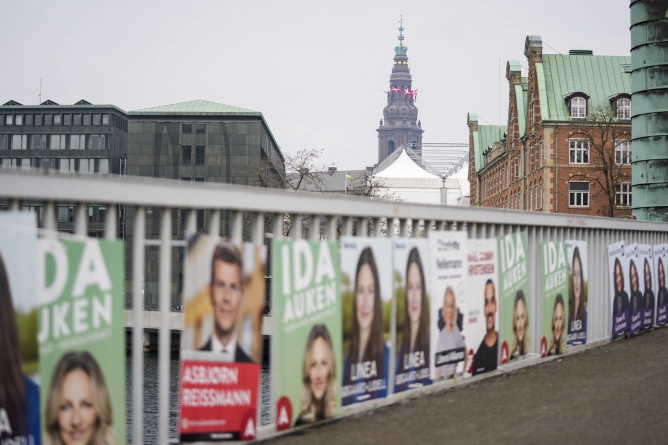
The early elections in Denmark have been called for March 24, in the context of a double pressure: tensions with the Trump administration regarding Greenland and the erosion of internal support for the government led by social democrat Mette Frederiksen, against the backdrop of discontent related to the cost of living and cuts to social programs. An aggregate poll conducted by POLITICO shows that the social democrats remain the leading party in voting intentions, but at a significantly lower level than the score in 2022, while the left and right blocs are balanced enough that the election results will depend on complex coalition negotiations. However, the stakes of the elections go beyond domestic politics, as the outcome will weigh decisively on how Copenhagen will calibrate its role in NATO and reconfigure its strategic relationship with the United States.
Why are these elections being held
The elections are early, with the prime minister choosing to call them six months earlier than the deadline to capitalize on the wave of support generated by how she managed the conflict with Donald Trump over Greenland. At the same time, polls indicate a decline for the social democrats, who risk their weakest result since World War II, even though they remain the largest party, amid discontent related to inflation, energy prices, and the perception that the government has "neglected" some domestic issues.
On one hand, the public agenda is dominated by concrete themes: the cost of living, the economy, the environment, wealth tax, migration, and the expansion of solar panel parks in rural areas; on the other hand, the campaign unfolds "in the shadow" of Trump's threats to take control of Greenland, without this subject being transformed into a central electoral theme. The parties seem to have adopted a tacit agreement not to "militarize" the debate about Greenland and the security of the kingdom, even though this issue triggered the early elections and redefined Denmark's positioning in NATO.
Portrait of Mette Frederiksen and the social democrats
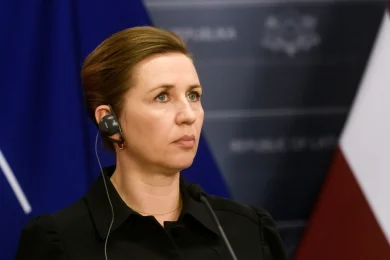
Mette Frederiksen, the leader of the social democrats, has been in power since 2019 and is running for a third term, which could make her the longest-serving prime minister in Denmark since World War II. Her political profile combines a leftist economic agenda, with a focus on protecting the welfare state, wealth tax for the richest, investments in public services, but with a very tough stance on migration, which has brought the center-left closer to the traditional right line in this area.
Frederiksen has built her campaign around the slogan "Safety in uncertain times," trying to link internal stability to how she managed the crisis with the Trump administration regarding Greenland. In recent months, she has managed to reverse a negative trend in polls, after the social democrats dropped to 17% and lost the Copenhagen mayoralty, benefiting from the political capital generated by the firm opposition to pressures from Washington. However, the election will show whether the electorate rewards this firmness or punishes her for the perception that she has "neglected" domestic issues, from the cost of living to the quality of public services.
The social democrats enter the elections as the main party of the center-left bloc, with a slight advantage in polls over the right, but without clear prospects of obtaining a stable parliamentary majority. The current bipartisan government is almost certain to lose its majority, opening the scenario for complex coalition negotiations and a "normalization" of the traditional left-right polarization in Danish politics.
Troels Lund Poulsen and Venstre: the challenge from the right
Frederiksen's main opponent is Troels Lund Poulsen, the Minister of Defense and a central figure of the liberal Venstre party. Poulsen represents the center-right wing that bets on a message of fiscal responsibility, attention to the business environment, and a more conservative approach to taxes, without departing from the broad consensus on the need for investments in defense and a firm position in NATO.
In the campaign, Poulsen has tried to offer an alternative to the Frederiksen model, criticizing the reduction of social programs and how the government has managed inflation and the cost of living, but without contesting the line adopted regarding Trump and the Greenland issue. This convergence on the issue of Arctic sovereignty shows that, despite differences on economic and social issues, the Danish political elite shares a common core of security priorities.
For Venstre, these elections are also a test of reconstruction, after previous electoral cycles marked by internal competition on the right, the rise of populist parties, and the fragmentation of the conservative electorate. If Poulsen manages to coalesce a sufficiently broad right-wing bloc around him, he could claim the mandate to form a government, but even in this scenario, he would be obliged to respect the consensus on rejecting Trump's plans for Greenland.
Other relevant figures and parties
Outside the Frederiksen-Poulsen duel, several parties and leaders influence the tone of the campaign and the profile of the future parliament. The Socialist People's Party (SF), led by Pia Olsen Dyhr, presents itself as "Denmark's green party," putting the protection of drinking water, a total ban on pesticides, investments in nature, and a social agenda focused on strengthening the welfare state ahead of tax cuts. SF's message – "velfærd før skattelettelser," meaning "welfare before tax cuts" – seeks to capture the electorate concerned about climate and public services, while maintaining a critical line against the government's "laziness" in the environmental field.
On the far right, the Danish People's Party, led by Morten Messerschmidt, remains a media-visible actor, despite having a low share in parliament (about 4% of seats). Messerschmidt has built part of his political brand by drawing inspiration from MAGA rhetoric, using themes such as "Sharia law" and a pronounced anti-immigration discourse, but the confrontation with Trump over Greenland has forced him and his colleagues to distance themselves from the American president. In the current campaign, even candidates from this party admit that "you can't speak positively about Trump without losing voters," and supporting Frederiksen's position in the Greenland crisis has become a condition for political "respectability," including on the radical right.
The Danish political system remains very fragmented: 12 parties and 933 candidates are participating in the elections, with traditionally high voter turnout of over 80%, even though the trend in recent years has been slightly downward.
Trump's position and effects on the campaign
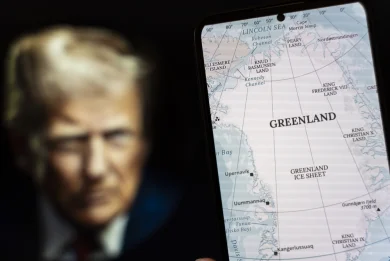
At the center of these elections is the conflict between Copenhagen and Washington generated by Donald Trump's insistence that the United States should "purchase" or take control of Greenland, a semi-autonomous territory of the Kingdom of Denmark considered vital for U.S. security in the Arctic. The American president directly linked national security arguments to the idea of annexing Greenland, going so far as to make veiled threats against the kingdom, which prompted Danish authorities to prepare crisis scenarios, including transporting blood reserves to Greenland and plans to bomb runways in case of invasion.
Trump's position has had two major political effects in Denmark. On one hand, it has given Mette Frederiksen the chance to present herself as the leader who "avoided an American invasion and saved Greenland," turning the confrontation with Washington into an electoral argument for a third term. On the other hand, it has generated an almost total consensus among parties against the American president's plans, to the point where positioning oneself on Trump's side in the Greenland debate has become "equivalent to treason." Public analyses published in the international press, including in Le Monde and the Los Angeles Times, emphasize that Trump's attempt to build a network of allies on the European far right, including in Denmark, by supporting nationalist parties and exerting pressure on issues like Greenland, has had the opposite effect. Leaders like Messerschmidt, who had visited Trump at Mar-a-Lago and adopted some of his political vocabulary, have been forced to publicly distance themselves, and a member of the Danish People's Party, Anders Vistisen, even told Trump in a speech in the European Parliament, "Trump, fuck off," precisely because of the pressures over Greenland.
In the current campaign, far-right politicians acknowledge that Trump "actually helps" Frederiksen, as "every hostile statement regarding Greenland makes Danes rally around her," thus strengthening the pro-European vote and the reflex to defend the kingdom's sovereignty. From this perspective, Denmark becomes a textbook case of how aggressive external interference and "America First" rhetoric can paradoxically strengthen internal cohesion around a leader who adopts a pro-NATO, pro-EU position and a firm stance against the pressures of a great power.
*****Synthesis made with the help of a data monitoring flow provided by the media monitoring platform NewsVibe Romania. The analysis, data, and images presented have been enhanced with the help of Machine Learning and Artificial tools
Latest News
18:44
18:31
18:22
18:09
17:42
See more news
NEWS ON THE SAME TOPICS