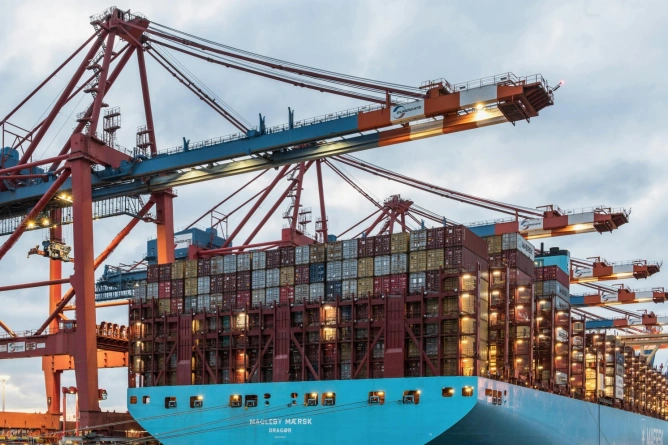
The EU is launching the most comprehensive customs reform in recent decades to control global trade.



Always see our news on Google
The European Parliament and the Council have reached an agreement on the reform of the European Union's customs code, presented by the European Commission as the most ambitious revision of the European customs framework in recent decades. The agreement specifically addresses the pressure generated by electronic commerce, product safety, and the efficiency of controls, in a context where 5.9 billion low-value items entered the EU in 2025.
In short 1. The reform creates a new EU Customs Authority, EUCA, based in Lille, and a unique European customs data platform.
2. Online platforms and sellers sending goods directly to consumers in the EU will be treated as importers and will become responsible for customs data, taxes, and product compliance.
3. The exemption from customs duties for packages under 150 euros is eliminated, and from July 1, 2026, a temporary customs duty of 3 euros per item will apply to low-value imports.
4. The agreement also introduces a handling fee for goods imported into the EU, which will be established by the Commission and applied no later than November 1, 2026.
5. The customs data platform will start with electronic commerce in 2028, will become optional for all other companies in 2031, and mandatory for all traders in 2034.
The political agreement between the European Parliament and the Council aims to respond to a cumulative pressure on the European customs system, from the rapid growth of electronic commerce and cheap imports to the fragmentation of national systems, new compliance requirements, and risks related to unsafe products, fraud, organized crime, and circumvention of European rules. The Commission shows that the current framework operates through 27 national customs administrations and over 111 distinct IT systems, which complicates unified oversight at the EU's external border.
At the center of the reform is the new EU Customs Authority, EUCA, which will be based in Lille, France. According to the Commission, the agency will concentrate expertise and resources, coordinate future customs cooperation, manage risks at the Union level, and administer the new EU customs data platform, designed as a unique environment for collecting, processing, and sharing customs information. The Authority is presented as the element that should allow European customs to operate more as a single system.
The new EU customs data platform is one of the central pillars of the reform. The Commission states that this will allow companies to submit data once, regardless of where the goods enter the Union, and will provide customs authorities with real-time access to information about trade flows. For member states, the European executive estimates savings of over 2 billion euros per year from IT development and maintenance costs, while for companies, the reduction in compliance costs is estimated at 2.7 billion euros annually.
The reform significantly changes the treatment of electronic commerce. According to the Commission, in 2025 approximately 5.9 billion low-value items entered the EU, of which over 90% came from China. In the new system, online platforms and sellers facilitating remote sales to consumers in the Union will effectively become importers for these sales. They will need to provide authorities with all necessary data, pay or guarantee taxes, and ensure that goods comply with Union legislation. The Commission presents this move as a major shift from the current system, which shifts responsibility to individual consumers.
Another important change concerns the elimination of the 150 euro threshold below which packages were exempt from customs duties. Member states and the Commission have already agreed in December 2025 to eliminate this exemption, and from July 1, 2026, a temporary customs duty of 3 euros will apply to items in these packages. According to the Commission, the measure aims to restore fairness between electronic commerce and traditional retail. Additionally, the agreement introduces a handling fee for goods imported into the Union, intended to cover the additional administrative and operational costs incurred by customs authorities. The exact value will be established by delegated act and reassessed every two years.
For economic operators who comply with the rules and accept a high level of transparency, the reform provides for a simplified regime called "trust and check." Companies will need to go through a rigorous verification process and provide customs authorities access to their electronic systems, and in return, their shipments will be checked less frequently and they will benefit from more flexibility in paying taxes and fees. The current Authorized Economic Operator (AEO) status remains in place to maintain accessibility for smaller economic operators.
The agreed text also provides for penalties for operators who repeatedly ignore Union rules. According to the European Parliament, companies that repeatedly violate the rules can be fined between 1% and up to 6% of the total value of goods imported into the EU in the last 12 months. Additionally, customs authorities will be able to suspend, revoke, or cancel the status of trusted trader or authorized economic operator and may mark those entities as high-risk operators.
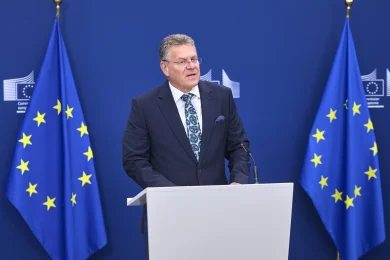
The Commissioner for Trade and Economic Security, Interinstitutional Relations, and Transparency, Maroš Šefčovič, stated that "Today's agreement marks a crucial moment, opening a new chapter for our customs union. This reform represents a transformative step towards a more unified and modern customs system in the EU, where the EU customs union operates as a single entity." He added that the new central data management platform and enhanced coordination among member states will provide authorities with the tools necessary to protect the single market, boost competitiveness, and strengthen economic security, while businesses and consumers will benefit from simplified procedures and more effective protection against unsafe products and unfair competition conditions.
For his part, the rapporteur of the European Parliament, Dirk Gotink, stated that "The Parliament and the Council have reached a historic agreement on the most important reform of European customs legislation since 1968. The new rules respond to the explosive growth of electronic commerce: last year, 5.8 billion low-value packages entered the EU." According to him, the goal is for the internal market not to leave platforms like Temu, SHEIN, and AliExpress untouched when they introduce large quantities of non-compliant goods into the European market and unfairly compete with European businesses.
The agreement remains provisional and must be officially approved by the European Parliament in plenary and by the EU Council before it becomes law. However, the timeline in the Commission's documents shows that some elements are already being accelerated: measures related to electronic commerce and the taxation of low-value packages start in 2026, the data platform for e-commerce is scheduled for 2028, its use expands voluntarily in 2031, and becomes mandatory for all traders in 2034.
The EU customs union has been functioning since 1968 and is one of the pillars of the single market, allowing the application of the same tariffs at the external border and the free movement of goods within the Union after customs clearance. The current rules of the Union Customs Code came into force in 2016, but the Commission has considered that the existing model no longer responds to current trade volumes, new business models, security requirements, and geopolitical pressures.
The proposed reform in May 2023 is built on three pillars: a smarter, data-driven approach to customs controls, a modern approach to electronic commerce, and a stronger partnership with businesses. In its visual presentation, the Commission explicitly links the reform to competitiveness, economic security, and the modernization of customs, and the published timeline shows a phased implementation over the next decade.
Sources

Latest News
11:13
11:08
11:01
10:58
10:41
See more news
NEWS ON THE SAME TOPICS










.webp)