Slovakia is trying to bring the Visegrad Group back into the European game, after four years of political blockage EN



Always see our news on Google
A PISM commentary shows that Slovakia took over the annual presidency of the Visegrad Group on July 1, 2026, at a time of relaunching V4 intergovernmental cooperation, after more than four years of political blockage. Bratislava's program emphasizes European competitiveness, EU enlargement, sectoral cooperation, and people-to-people contacts, but bilateral tensions and differences regarding Russia, Ukraine, and enlargement may limit the use of V4 as a coherent regional platform.
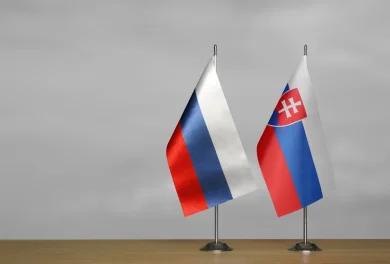
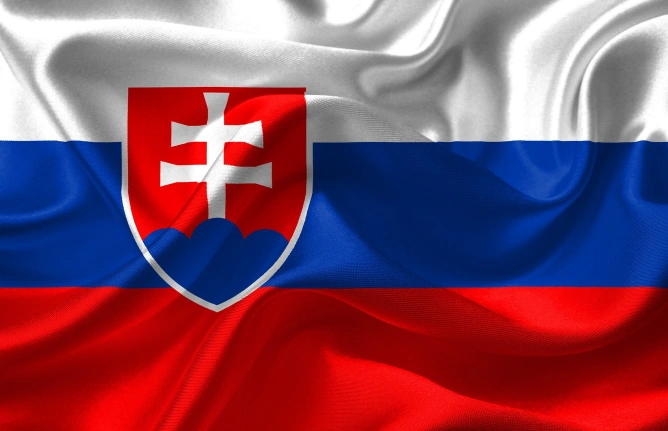
Slovakia is trying to relaunch the Visegrad Group as a coordination platform in the European Union, after a period of over four years of political stagnation, a commentary published by the Polish Institute of International Affairs shows. Bratislava took over the annual presidency of V4 on July 1, 2026, under the motto "V4 for a stronger Europe."
In short Slovakia took over on July 1, 2026, its seventh annual presidency of the Visegrad Group. PISM states that V4 is gradually returning to intergovernmental cooperation after more than four years of political blockage. Slovak priorities are European competitiveness, EU enlargement, sectoral cooperation, and people-to-people contacts. Bratislava wants V4+ consultations with European and global partners, including Germany, Ireland, Japan, the USA, Turkey, India, and China. Tensions between Slovakia and Hungary, differences regarding Russia and Ukraine, and the risk of using V4 in Slovak domestic politics remain obstacles.
The PISM commentary shows that the resumption of political cooperation in V4 became possible towards the end of the Hungarian presidency, after the formation of a new government in Budapest following the parliamentary elections in April 2026. The change of government led to changes in Hungary's eastern and security policy, a renunciation of pro-Russian actions, and a rapid improvement in Polish-Hungarian relations.
The first signals of unblocking came through statements from the prime ministers of Poland, the Czech Republic, and Slovakia at the European Political Community summit in Yerevan, through brief consultations on the margins of the European Council on June 18, and through the meeting of V4 prime ministers in Gödöllő, near Budapest, on June 23.
Sectoral cooperation resumed through meetings of V4 defense ministers in Budapest on June 25, and agriculture ministers in Balatonfüred on June 30. The agricultural meeting also included representatives from Romania, Croatia, Bulgaria, and Slovenia. Meetings of parliamentary presidents and heads of state continued even during the blockage, and the next summit of V4 heads of state is scheduled for Trenčín in November 2026.
The Slovak program emphasizes European files. The four announced priorities are European competitiveness, EU enlargement, sectoral cooperation, and people-to-people contacts. PISM notes that the relaunch of political cooperation allows for a more ambitious program than in the last four presidencies, including the Polish one and the previous Slovak presidency, which began immediately after Russia's invasion of Ukraine.
The government led by Robert Fico sees the V4 presidency as an opportunity to strengthen Slovakia's international position. Bratislava wants to use the V4+ formula for consultations not only with EU partners, such as Germany and Ireland, which will hold the EU Council presidency, but also with Japan, the United States, Turkey, India, and China.
Regarding sectoral cooperation, Slovakia indicates infrastructure, including the long-term high-speed railway project, security, especially police cooperation, and energy. The program also includes the potential of Polish LNG terminals for diversifying gas supply in V4 countries.
In EU files, the Slovak presidency wants coordination on negotiations for the future multiannual financial framework 2028-2034. V4 countries will remain beneficiaries of the European budget, and the program emphasizes funds for cohesion, common agricultural policy, transport infrastructure, and nuclear energy.
Slovakia is skeptical about ETS2, the European emissions trading system that will include households and transport, and announces support for a review. The position could become a common pressure point in the EU if the four states manage to align and coordinate their approach.
EU enlargement is another central file. The Slovak program invokes the traditional V4 support for candidate states. The Fico government considers Montenegro, Albania, and Serbia the most prepared for accession, although PISM notes that only the first two have all accession negotiations open, while Serbia's negotiations are practically suspended.
In the case of Ukraine, the program emphasizes aligning agricultural products with EU standards and support for post-war reconstruction, including through the transit role of V4 states. At the same time, political differences remain strong: Slovakia opposes Ukraine's NATO membership, while Hungary announces a referendum on Ukraine's EU membership.
PISM identifies several obstacles to the return of V4. Polish-Hungarian relations have improved, but relations between Hungary and Slovakia have deteriorated after the change of government in Budapest. A source of tension is the return of the dispute over the Beneš decrees, related to measures taken by the Czechoslovak government during and after World War II against the Hungarian population.
Another obstacle is Slovakia's policy towards Russia. Slovak authorities declare that they support Ukraine and are preparing bilateral intergovernmental consultations with Kyiv, but Robert Fico has had a conciliatory line towards Moscow, including through visits to Russia. PISM considers it unrealistic to transform "peace efforts" into a fifth objective of the presidency, due to the differences in eastern policy within V4.
The commentary also warns of the risk that the V4 brand may be used in Slovak domestic politics ahead of the parliamentary elections in the fall of next year. For Poland, the relaunch of cooperation in V4 offers primarily a perspective for more effective coordination of European issues with regional partners.
https://2eu.brussels/ro/stiri/pism-slovacia-vrea-sa-relanseze-grupul-de-la-visegrad-dar-tensiunile-regionale-pot-limita-revenirea-v4
Latest News
22:59
22:55
22:44
22:40
22:40
See more news
NEWS ON THE SAME TOPICS