Kosovo elections were calm, but PACE flags use of public resources in the campaign and digital violence against women



Always see our news on Google
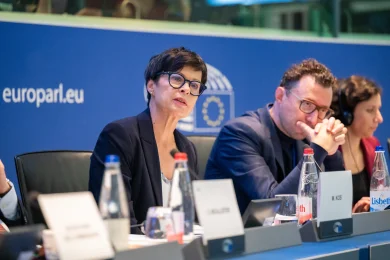
Kosovo’s snap parliamentary elections on June 7 were conducted calmly, orderly and professionally, without major incidents, but the campaign was marked by the use of administrative resources under conditions observers considered favorable to the ruling party, a sharp decline in turnout, and the proliferation of political content generated or manipulated using artificial intelligence. The conclusions appear in the election observation report presented to the Parliamentary Assembly of the Council of Europe by rapporteur Iulian Bulai.
In short, PACE says the electoral administration managed the vote efficiently, complaint-resolution mechanisms worked, and voters were able to exercise their right to vote freely. However, the report found an uneven playing field after the interim government announced financial payments for certain categories of citizens and subsidies for air routes used by the diaspora before the election. Turnout fell to 37.03%, compared with approximately 45% in the December 2025 elections and 46.44% in February 2025. Monitoring cited by PACE identified 56 online incidents in the first five days of the campaign, 35 of which involved hate speech, with nearly half targeting women in politics. The report calls for rules against the use of public resources for electoral advantage, greater transparency in campaign financing, and stronger institutional capacity to respond to deepfakes and AI-generated disinformation.
The PACE report describes voting day as well organized. Observer teams found that the polling stations they visited generally operated professionally, in a calm atmosphere, while the Central Election Commission and electoral staff managed the process without major problems. Electoral complaint mechanisms were also assessed favorably, with the report noting a decline in the number of complaints and their resolution within the time limits set by law.
However, this positive assessment of the technical administration is accompanied by a list of structural problems. One of the most important concerns the conditions of competition between parties. The report notes that, shortly before the vote, the interim government made decisions on one-off financial payments to various categories of citizens and subsidies for air routes intended for the diaspora.
PACE reports that several of the delegation’s interlocutors viewed these measures as the use of administrative resources that blurs the line between public policy and electoral interest. The report does not dispute that such decisions may have a public-interest justification, but says that the timing of their adoption can create an advantage for those in power and affect perceptions of the fairness of the competition.
On this basis, observers recommend introducing explicit rules prohibiting the use of public funds, government communications and decisions on public benefits for partisan purposes during electoral periods. The report also calls for independent oversight and effective sanctions in cases where administrative resources are used for electoral advantage.
The campaign is described as competitive and generally calm, but lacking substantive political debates. Messages focused mainly on salaries, pensions, social assistance, infrastructure and energy, without sufficient detail on the costs and funding of the measures. PACE also notes the absence of direct debates between candidates for prime minister, considering that this reduced voters’ ability to compare political alternatives.
Campaign financing is another problem. Democracy in Action, cited in the report, identified spending of more than EUR 100,000 on political advertising on Meta platforms during the final week of the campaign alone. PACE considers that rules on party-financing transparency, electoral spending and candidates’ asset declarations need to be strengthened.
The report devotes significant attention to the digital campaign. Observers say artificial intelligence was increasingly used to produce political disinformation, including artificially generated images, manipulated videos and fabricated claims about candidates from several parties.
Democracy in Action monitoring identified 56 online incidents in the first five days of the campaign. Of these, 35 were classified as hate speech, and nearly half targeted women in politics. The report lists manipulated images, deepfakes, blackmail and sexist language among the forms of digital violence observed against women involved in public life.
PACE stresses that the problem is not limited to a single party. Manipulated materials and false claims targeted candidates from the main political formations, and the report considers institutional response capacity insufficiently developed. Electoral authorities, media regulators, digital platforms and civil society organizations are encouraged to cooperate more systematically to identify and manage these threats.
The report recommends adopting amendments to criminal legislation that would explicitly cover forms of cyber violence such as online stalking, incitement to hatred and the non-consensual distribution of intimate images, including content produced with artificial intelligence. Amendments in this direction were proposed in 2024 but were not adopted.
Women’s participation remains another concern. Of the 917 candidates certified for the election, 314, or 34%, were women. The proportion slightly exceeds the minimum threshold of 30% provided for electoral lists, but women’s presence in televised debates was much lower, at around 20%.
PACE also points to the discrepancy between the gender equality law, which provides for representation of at least 50%, and the electoral law, which sets a minimum quota of 30% on lists. The issue was referred to the Constitutional Court and had not been resolved when the report was drafted.
Accessibility also remains incomplete. Approximately 19% of polling centers did not provide adequate conditions for people with physical disabilities. The first-time introduction of home voting for people aged at least 80 is viewed positively, but PACE calls for a more systematic solution to physical access to polling stations.
Overall turnout was 37.03%, significantly below the levels recorded in recent parliamentary elections. PACE links the decline partly to the fact that voters were called to the polls three times within approximately 16 months and warns of electoral fatigue and declining confidence in the parties’ ability to produce functioning institutions.
The certified results kept Vetëvendosje as the largest formation in the Assembly, with 53 of the 120 seats. PDK won 22, LDK 18 and AAK seven, with the remaining seats going to formations representing the various communities.
However, the report does not focus solely on the election result. PACE considers that the underlying issue is turning the electoral outcome into functioning institutions and warns that holding elections again does not automatically resolve political deadlocks if parties fail to reach compromises on the formation and functioning of institutions.
The document was prepared by the ad hoc committee of the PACE Bureau under the responsibility of rapporteur Iulian Bulai, a Romanian parliamentarian from the Alliance of Liberals and Democrats for Europe group. The delegation observed the June 7 election in Pristina and 17 other localities, and the final report was presented during the PACE session at the end of September.
In accordance with Council of Europe practice, all PACE references to Kosovo are made in accordance with United Nations Security Council Resolution 1244 and without prejudice to positions on Kosovo’s status.
|
Latest News
22:52
22:34
22:28
21:56
21:29
See more news
NEWS ON THE SAME TOPICS