Eurostat: Renewable sources produced 45.5% of the EU's electricity in the first quarter of 2026



Always see our news on Google
Renewable sources produced 45.5% of the electricity generated in the European Union in the first quarter of 2026, according to data published by Eurostat. The share increased compared to the first quarter of 2025, when electricity from renewable sources accounted for 42.7% of the EU's net electricity production. In short Renewable sources produced 45.5% of the EU's electricity in the first quarter of 2026.
In the first quarter of 2025, the share was 42.7%.
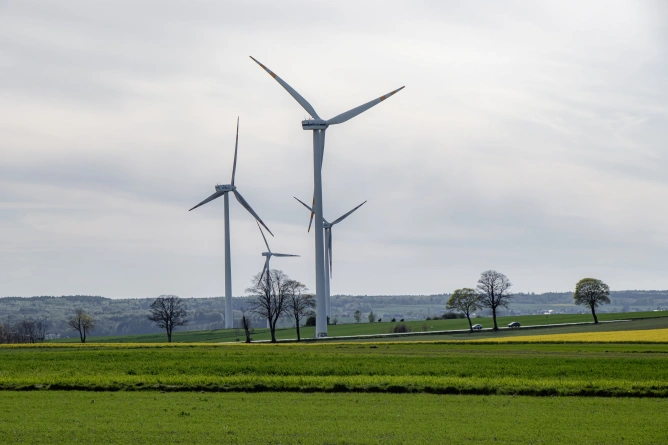
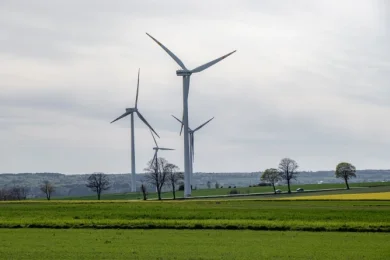
Wind energy provided 44.9% of the renewable electricity produced in the EU.
Hydropower had a share of 28.0%, while solar energy accounted for 17.3%.
Denmark, Portugal, and Lithuania had the highest shares of electricity from renewable sources. Wind energy was the main renewable source of electricity in the EU in the first quarter of 2026. It represented 44.9% of the total renewable electricity, an increase from 42.3% in the first quarter of 2025. Hydropower was the second source, with 28.0% of renewable electricity. Solar energy followed with 17.3%. The rest of the renewable production came from renewable fuels, with 9.4%, and from geothermal energy and other sources, with 0.4%. The data shows significant differences between member states. Denmark had the highest share of electricity from renewable sources, 90.0%, mainly due to wind energy. Portugal followed with 82.9%, mainly due to hydropower, and Lithuania with 75.7%, mainly due to wind energy. At the other end, the lowest shares were recorded in the Czech Republic, with 12.7%, Malta, with 13.0%, and Slovakia, with 17.2%. Eurostat specifies that the indicator used in the article refers to the share of renewable sources in net electricity production. This should not be confused with the share of renewable sources in gross electricity consumption, the main indicator used for monitoring the Renewable Energy Directive. The difference matters because the two calculation methods do not measure the same thing. The data presented here is based on electricity production, while the methodology of the Renewable Energy Directive reports production to consumption and applies special rules for normalizing hydropower and wind energy, so that the results are not distorted by weather variations from year to year. Eurostat also notes that hydropower excludes pure pumping, while solar energy includes both photovoltaic electricity and solar thermal electricity.

Latest News
14:33
14:33
14:27
14:24
14:22
See more news
NEWS ON THE SAME TOPICS





.webp)