Parliament Calls for Any Future EU Agreement with Azerbaijan to Be Conditional on the Release of Political Prisoners



Always see our news on Google
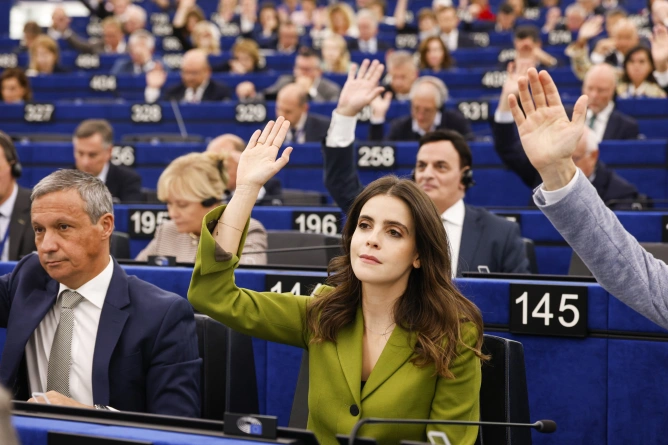
Any future partnership agreement between the European Union and Azerbaijan must be conditional on concrete progress on human rights, including the release of political prisoners, the European Parliament demanded on Thursday, 8 October. The resolution, adopted by 492 votes in favour, 23 against and 60 abstentions, condemns the detention of opposition leader Ali Karimli, the conviction of human rights defender Anar Mammadli and the situation of journalist Anar Abdullayev. MEPs also called for targeted measures to be prepared at European level, but Parliament’s vote does not itself impose sanctions or suspend energy or economic cooperation between the EU and Azerbaijan.
In brief, Parliament is calling for any future EU–Azerbaijan agreement to depend on concrete progress on human rights and the release of political prisoners. The resolution calls for the immediate and unconditional release of Ali Karimli, Anar Mammadli and Anar Abdullayev. Anar Mammadli was sentenced to 13 years in prison in September, and the Parliamentary Assembly of the Council of Europe described the verdict as arbitrary and questioned the fairness of the trial. Parliament calls on the EU High Representative to prepare targeted measures under the European Union’s global human rights sanctions regime. The resolution is a non-legislative political position. It does not automatically impose sanctions, halt energy imports or cancel the current framework for cooperation with Azerbaijan.
The resolution focuses pressure on three cases. Ali Karimli is chairman of the Azerbaijan Popular Front Party, and Parliament condemns his detention and reports concerning the conditions in which he is being held. MEPs call for his immediate and unconditional release and treat the case as part of a broader problem affecting the political opposition, non-governmental organisations, independent media and civil society.
Anar Mammadli, known for his election-monitoring work and the 2014 recipient of the Václav Havel Human Rights Prize, was sentenced to 13 years in prison on 8 September. In the same case, journalist Anar Abdullayev received a 12-year sentence. The Parliamentary Assembly of the Council of Europe’s rapporteur on political prisoners said after the verdict that the charges against Mammadli appeared to be politically motivated and that the trial had not provided fundamental guarantees of fairness, calling for his release and an independent review of the conviction.
Mammadli’s case also has a history before the European Court of Human Rights. In connection with an earlier criminal proceeding, the Court found that his detention was intended to silence him and punish him for his civil society activities. In 2026, the Committee of Ministers of the Council of Europe continued to supervise the execution of judgments in the Mammadli group of cases and found that several necessary individual measures had still not been implemented.
Parliament separately welcomes the fact that economist and activist Gubad Ibadoghlu recently reached Europe for urgent medical treatment, but calls for the criminal proceedings against him to be dropped. MEPs insist that the possibility of receiving treatment outside Azerbaijan must not be interpreted as resolving his legal case.
The resolution extends the issue beyond individual cases and criticises the use of criminal legislation and national security rules against non-governmental organisations and the media. Parliament calls on the Commission to step up its support for civil society and independent publications operating in Azerbaijan or in exile and requests that the diplomatic relationship with Baku retain fundamental rights among its central conditions.
MEPs call on the High Representative for Foreign Affairs and Security Policy to prepare targeted measures under the EU Global Human Rights Sanctions Regime. This is a request addressed to the European diplomatic executive and the member states, not the adoption of sanctions through Parliament’s vote. The listing of individuals under European restrictive measures requires a separate procedure at Council level.
However, the resolution’s most important political consequence concerns the future architecture of relations with Azerbaijan. Parliament explicitly says that any new partnership agreement must depend on tangible improvements in the human rights situation, including the release of political prisoners. The call comes at a time when the EU and Azerbaijan are discussing both the renewal of the Partnership Priorities and a broader new bilateral agreement.
The two processes are not identical. Legal relations between the EU and Azerbaijan are currently based on the Partnership and Cooperation Agreement, which entered into force in 1999. Negotiations on a new bilateral agreement began in 2017 and were still described as ongoing at the EU–Azerbaijan Security Dialogue in May 2026.
Separately, on 11 September the Commission presented a proposal to amend and extend the EU–Azerbaijan Partnership Priorities for 2026–2030. These priorities operate within the existing agreement and set out the areas in which the parties seek to develop their cooperation. Parliament’s resolution concerning a future agreement does not cancel this proposal or suspend the current Partnership and Cooperation Agreement.
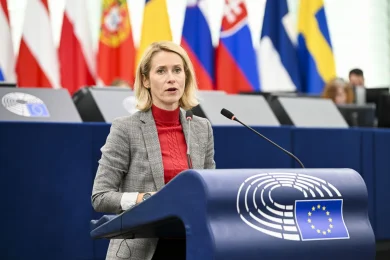
The tension between strategic cooperation and the human rights situation is also visible in the Commission’s position. During her visit to Baku in May, Kaja Kallas, the EU High Representative for Foreign Affairs and Security Policy, described Azerbaijan as an important energy partner for the Union and pointed to opportunities to deepen cooperation in trade, transport and digital matters. In the same statement, she said that open dialogue on human rights remained an integral part of the relationship.
In the parliamentary debate, the Commission’s position followed this line. Jessika Roswall, the commissioner who represented the European Executive in plenary, said that the EU was following the cases of Ali Karimli and Anar Mammadli with concern, but defended continued dialogue with Azerbaijan, arguing that a closer relationship could provide more space to discuss difficult issues. The Commission also highlighted Azerbaijan’s role in energy security, connectivity between Europe and Asia, and the peace process with Armenia.
Parliament is taking a more conditional approach. Strategic cooperation can continue, but its deepening through a future agreement should be linked to verifiable results on fundamental freedoms and political prisoners. The resolution does not itself call for the halting of Azerbaijani gas deliveries or suspend existing energy agreements, even though some MEPs argued during the plenary debate for broader measures concerning the energy relationship.
The situation of prisoners is also documented by the Council of Europe. In June, its Parliamentary Assembly stated that an Azerbaijani non-governmental organisation had identified 328 people as political prisoners in May 2026. This figure comes from the Union for the Freedom of Political Prisoners of Azerbaijan and should be treated as the estimate of the organisation cited by PACE, not as a number established through an individual judicial procedure for each case.
For EU–Azerbaijan relations, the vote on 8 October does not itself produce an immediate legal change. It does, however, establish Parliament’s position at a time when bilateral cooperation is being redefined and conveys to the Commission and the Council the criterion that most MEPs consider necessary for a new agreement: concrete progress on human rights and the release of people whom Parliament considers to be detained for political reasons.
,
Latest News
22:57
22:53
22:42
22:30
22:28
See more news
NEWS ON THE SAME TOPICS
.webp)