The EU warns of a global backlash against democracy and human rights


.webp)

Always see our news on Google
The EU's annual report for 2025 describes increasingly coordinated pressures on democracies, through disinformation, media control, shrinking civic space, and attacks on human rights defenders. Conflicts, repression, and reduced international funding have amplified pressures in numerous regions.
Human rights and democracy are in retreat in many parts of the world, and the methods used to weaken democratic institutions have become more direct and coordinated, warns the European Union in its annual report on human rights and democracy. The assessment for 2025 indicates a combination of conflicts, political repression, disinformation, pressures on the media and civil society, and an increasingly pronounced challenge to international norms regarding fundamental rights.
In short
The EU notes a global retreat of human rights and democracy and states that attempts to undermine democratic progress have become bolder and more coordinated.
The report identifies disinformation, information manipulation, media control, and the reduction of space for human rights defenders among the methods used to weaken democratic societies.
Pressures on the freedom of association have increased, and unprecedented cuts in public funding for civil society have forced organizations to reduce activities, close offices, and lay off staff.
The EU simultaneously notes some positive developments, including the abolition of the death penalty in several states and peaceful transfers of power following elections in 2025.
The report also identifies the withdrawal of a significant portion of American funding and political support for human rights, democracy, and development as one of the major changes in the international context in 2025.
In its assessment of the year 2025, the EU describes a deterioration that exceeds individual crises in states or regions and affects the mechanisms through which democratic societies function. In the introduction to the report, the EU's High Representative for Foreign Affairs and Security Policy, Kaja Kallas, states that the retreat of human rights and attempts to undermine democracies are closely linked to instability and international conflicts.
The report identifies a pattern in which pressures on democracy manifest through disinformation and information manipulation campaigns, media control, reduced capacity for human rights defenders to act, and challenges to equality, diversity, and pluralism. Kallas states that these methods are being used in an increasingly coordinated and visible manner by actors attempting to reverse democratic progress.
One area where the deterioration is visible is the freedom of association. The EEAS finds that pressure on civil society organizations has intensified globally in 2025, through restrictive laws, administrative practices that limit their activities, and measures that hinder their funding. In the most repressive environments, activists and organizations have faced intimidation, online and physical threats, harassment, arbitrary detentions, and assassinations.
These pressures have been compounded by an unprecedented reduction in international public funding for civil society organizations. The report shows that some international and local organizations have been forced to cut back operations, close offices or field presences, and lay off employees, at a time when the demand for support for human rights defenders has continued to grow.
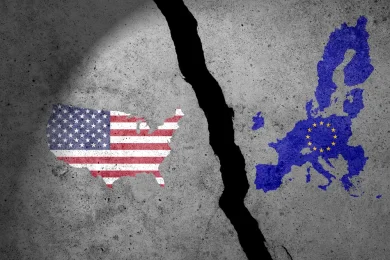
A significant change has come from the United States. The EU report notes that in 2025 Washington reduced a significant portion of funding and political support for human rights and democracy internationally, including development assistance that supported economic and social rights, and withdrew from some UN bodies. The EU presents this change as part of a broader transformation of the global cooperation environment.
The effects are also visible in states close to the Union. In Georgia, the country report describes a severe contraction of fundamental rights and a significant democratic retreat, with repressive measures against civil society, the media, and the opposition. The EU states that the freezing of accounts of civil society organizations has turned the judiciary into a tool of political pressure and that political pluralism has been put at risk.
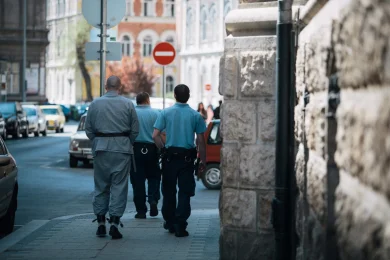
In Serbia, the report describes the deterioration of the environment for journalists and civic organizations in the context of the protests in 2025. Cases of violence against demonstrators and journalists are mentioned, accusations of excessive use of force by the police, increased pressures on the media, the use of strategic lawsuits against public participation, and complaints regarding the use of spyware against journalists and human rights defenders.
The report describes an even more pronounced deterioration in Russia, where the UN special rapporteur on human rights has characterized the situation as a "seismic decline." By the end of 2025, human rights organizations estimated between approximately 1,200 and 1,800 political prisoners, and the unofficial number could exceed 3,000. Restrictions have also targeted digital communication, messaging services, the use of VPNs, and organizations designated by authorities as "foreign agents" or "undesirable."
Belarus remains another case of severe repression. The report estimates that by the end of 2025 there were still over 1,100 political prisoners, after at least 1,254 people received prison sentences in cases considered politically motivated during the year. At least two political prisoners died in detention, and some released individuals were forcibly deported and left in a state of legal uncertainty.
In Tunisia, the EU notes the continued deterioration of the rule of law and fundamental freedoms, through the arrest and conviction of journalists, lawyers, opposition figures, and human rights defenders. Over 20 civil society organizations were suspended in 2025, and workers from some NGOs were prosecuted for humanitarian activities conducted in support of migrants and refugees.
However, the EU assessment does not describe the year 2025 exclusively in terms of setbacks. The report notes that the majority of countries in the world continued the trend of moving away from the death penalty, with measures for abolition or limitation in Kenya, Grenada, Vietnam, Lebanon, Indonesia, and Malaysia. The number of states carrying out executions remained at a historic low for the second consecutive year, even though the total number of executions increased significantly due to developments in states such as Iran, Iraq, and Saudi Arabia.
The report also mentions elections that produced peaceful transfers of power and greater youth participation in public life, including through Gen Z movements in several regions. At the same time, the EU deployed seven new electoral observation missions and continued to fund programs for civil society, independent media, and human rights defenders.
Pressure on civic space has also led to changes in European policy. In November 2025, the European Commission adopted the first EU strategy for civil society, which aims to protect civic space, strengthen relationships with civil society organizations, and maintain adequate and sustainable funding both within and outside the Union.
The annual report on human rights and democracy is the assessment through which the EU monitors global developments and presents its external actions in areas such as fundamental freedoms, the rule of law, civil society, equality, press freedom, international justice, and the protection of individuals in vulnerable situations.
The edition published in August 2026 covers developments from 2025 and is accompanied by individual reports for states from all regions of the world. The overall assessment indicates an increasing pressure on democratic systems, but also significant differences between countries and areas, from intensified repression in some states to specific progress in the abolition of the death penalty, democratic participation, and the protection of rights.
Latest News
14:32
14:28
14:18
14:15
14:04
See more news
NEWS ON THE SAME TOPICS