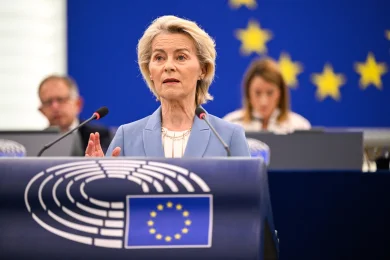
The European Commission is targeting December for the adoption of a package on the security of gas, electricity and oil supplies. Spokesperson Anna-Kaisa Itkonen announced at the 12 November briefing that the package appears in the indicative agenda of the College of Commissioners. She did not specify the adoption date or the content of the proposals.
Itkonen said that member states had not reported any supply problems to the Commission, including with liquefied natural gas (LNG), during coordination discussions. She identified high prices as the immediate concern for consumers and businesses. The package aims to prepare the Union for possible future disruptions.
On 8 October, following a meeting of the Gas Coordination Group, the Commission said that stocks were below historical levels. The outlook for winter 2026–2027, prepared by the European Network of Transmission System Operators for Gas (ENTSOG), indicated that infrastructure could cover demand in the scenarios analysed, provided storage facilities and LNG imports were used flexibly.
An open question is whether the package will include strategic gas reserves. Itkonen explained that the EU has rules on storage filling, while member states may take national measures concerning reserves, in compliance with European law. The Commission has not announced whether it will propose a common system or how any potential reserves would be financed or used.
The regulation on gas storage sets a general target of 90% for underground storage facilities, which can be reached between 1 October and 1 December, with exemptions under the conditions laid down in the act. The framework has been extended until the end of 2027. In the oil sector, countries are already required to maintain emergency stocks equivalent to at least 90 days of average net imports or 61 days of average domestic consumption, whichever is higher.
The review had been announced in the Commission’s 2026 work programme. The assessment published at the beginning of the year examined rules on the security of gas supply and risk preparedness in the electricity sector. The 12 November briefing confirmed the inclusion of oil. If the package contains legislative proposals, they will follow the applicable adoption procedures after being approved by the Commission.
Context: The EU had previously discussed price pressures, methane rules, and “Energy Union” measures as part of the package
Before the announcement concerning the supply security package, the Commission examined French President Emmanuel Macron’s request to postpone the new methane rules for imports, without publicly confirming a change in the timetable or any easing of fuel quality requirements. Spokesperson Anna-Kaisa Itkonen said that the EU executive was examining the proposals and remained assessing whether risks to supply security might arise, amid a global fossil fuel price crisis.
Separately, the Commission also announced preparations for measures aimed at a more integrated “Energy Union”, based on networks, interconnections, and joint purchasing power, in response to dependence on imported fuels and high prices. At the same time, the Commission indicated that supply could remain free of a “physical shortage” while markets remained strained, closely monitoring the risk of new disruptions affecting diesel and aviation fuel.






.webp)


.webp)