The European Commission is preparing a plan to reduce energy prices by connecting national markets



Always see our news on Google
The European Commission will draw up a plan for an Energy Union focused on grids, interconnections, and joint purchasing power. Ursula von der Leyen links the initiative to high prices and dependence on imported fuels. The plan does not yet have a presentation date or a newly announced budget.
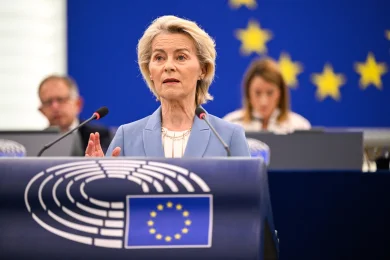
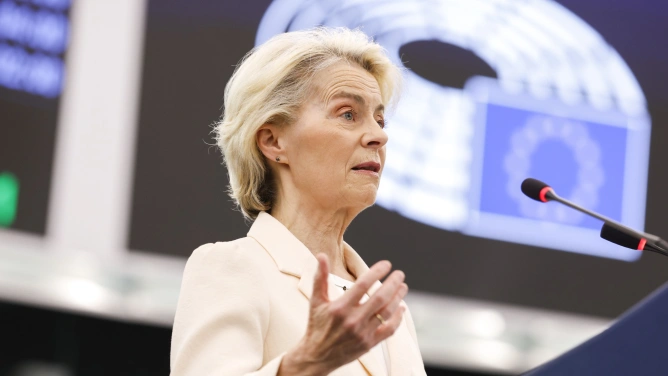
The European Commission will draw up a plan for a more integrated Energy Union that makes better use of grids, connections between states, and the joint purchasing power of the European market. Ursula von der Leyen announced the initiative on Wednesday, 21 October, in the plenary session of the European Parliament in Strasbourg, linking high energy costs to dependence on imported fossil fuels, the role of gas in setting prices, and the insufficient integration of national systems.
In brief
Ursula von der Leyen announced in Strasbourg on 21 October that the EU executive would draw up a plan for an Energy Union focused on grids, interconnections, and joint purchasing power. She did not specify a presentation date or a new budget.
The Commission links high prices to dependence on imported fossil fuels and the role of gas in setting electricity prices. A more integrated market could make more efficient use of energy produced in Europe and limit exposure to external suppliers.
Interconnections can enable electricity to be transferred from areas with a surplus to markets that rely on more expensive production. The benefits depend on grid capacity, while bills also remain influenced by consumption, the energy mix, taxes, and tariffs.
EU leaders have already welcomed the voluntary aggregation of energy demand. The AggregateEU experience shows how companies’ needs and suppliers’ offers can be brought together without requiring all states to use a single public buyer; the form of the future plan remains to be defined.
The grids package, presented on 10 December 2025, aims for better planning, cost sharing, and faster permitting. Legislative negotiations are continuing, and leaders are calling for their conclusion by the end of 2026. This deadline concerns the existing package, not the launch of the new plan.
Southeastern Europe is already among the eight Energy Highways priorities, with an emphasis on price stability and energy security, including through storage. For Romania, the stake is access to a better-connected market, without the statement establishing new national allocations.
Von der Leyen reaffirmed that energy sanctions will remain in place until Russia stops its war against Ukraine. She referred to the interruption of Russian gas supplies and the use of energy dependencies for blackmail.
The announcement came during the debate on the results of the European Council meeting of 15–16 October, at a time when expensive energy is weighing on industrial competitiveness and household budgets. The Commission President argued that Europe is losing opportunities because it is not making sufficient use of the potential of an energy market operating on a European scale. She has not yet presented the document, a launch timetable, or a new budget; the measures and their effects will depend on the content of the future plan.
Grids and interconnections are important because electricity must be able to reach the areas where it is consumed from those where it is produced. A surplus of renewable energy in one state can help a neighboring market that relies on more costly production, if sufficient transmission capacity exists. Cross-border links and more efficient use of infrastructure can therefore reduce bottlenecks and price differences, without guaranteeing identical bills: consumption, the energy mix, taxes, and network tariffs continue to matter.
This stake also explains von der Leyen’s reference to gas. When gas-fired power plants are needed to meet electricity demand, the cost of fuel can be passed on to the wholesale price of electricity. More energy produced in Europe and the ability to transport it where it is needed can limit exposure to imported fuels and their price fluctuations. Market integration is therefore both an infrastructure issue and one of economic security.
The future plan comes against the backdrop of European initiatives already launched. On 10 December 2025, the Commission presented the energy grids package, with proposals for more coordinated planning of cross-border infrastructure, fairer cost sharing, and faster permitting of projects. The package aims both to make more efficient use of existing grids and to develop them, in order to enable the connection of new generation and consumers.
These proposals have their own legislative process. In its conclusions of 16 October, the EU leaders called on the European Parliament and the Council to advance negotiations on the grids package, with the aim of concluding them by the end of the year. The announcement in plenary represents a political commitment to a broader plan, but does not specify how it will bring together or complement existing instruments.
On purchasing, a European market that aggregates its demand may have a stronger position vis-à-vis external suppliers. At the October summit, the leaders of the member states already welcomed the Commission’s intention to take initiatives for the voluntary aggregation of energy demand. This voluntary nature is essential to understanding the discussion: cooperation can bring together participants’ needs and suppliers’ offers without meaning that all states must purchase through a single public buyer.
The Union has experience in this area. The AggregateEU crisis mechanism, launched in 2023, brought together companies’ gas demand and facilitated the identification of offers, with contracts subsequently negotiated by companies. After its conclusion in March 2025, the Commission moved to a broader platform for energy and raw materials, with mechanisms for gas, hydrogen, and strategic raw materials. This precedent shows what using the power of the European market can mean; the architecture of the initiative promised in Strasbourg remains to be defined.
In the same address, von der Leyen reaffirmed that energy sanctions against Russia would remain in place until Moscow stops its war against Ukraine. She recalled that Russia had interrupted Europe’s gas supply and warned about the use of energy dependencies for blackmail. The Commission President thus linked the discussion about prices to the need for Europe to reduce its vulnerability to external suppliers.
For Romania and the other countries of Southeastern Europe, the discussion concerns access to a better-connected market and the ability to manage imbalances between production and consumption. The region is already among the eight priorities of the European Energy Highways initiative, which seeks to eliminate infrastructure bottlenecks. The component dedicated to Southeastern Europe focuses on price stability and energy security, including through storage. This is an existing framework for cooperation, distinct from the plan that the Commission is to draw up.
At the October summit, leaders associated temporary measures against price increases with the acceleration of electrification, renewable and low-emission production, grids, storage, and energy efficiency. The plan announced by von der Leyen is part of this search for a European response to energy costs. For households and businesses, the outcome will depend on the investments made, infrastructure capacity, and the rules applied.
Latest News
22:05
21:57
21:34
21:01
20:56
See more news
NEWS ON THE SAME TOPICS