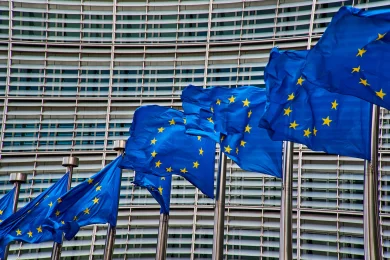
The European Commission launches OceanEye to transform the European Union into a global leader in ocean observation.



Always see our news on Google
The European Commission has presented the OceanEye initiative, through which the European Union aims to become by 2035 the world's leading provider of ocean intelligence, to contribute 35% to the global ocean observation system and to obtain 35% of the ocean observation technology market. The initiative includes 92 million euros from Horizon Europe, an international alliance for the Global Ocean Observing System, the development of the Digital Twin Ocean, and an integrated European marine data system for research, industry, security, climate, and the blue economy.
The European Commission has presented OceanEye, an initiative through which the European Union wants to become a global leader in ocean observation and the provision of ocean intelligence, at a time when the seas are becoming increasingly important for climate, economy, security, energy, food, and critical infrastructures.
The Commission's objective is that by 2035, the EU will contribute 35% to the global ocean observation system, obtain 35% of the ocean observation technology market, and become the world's leading provider of information and data-based services about the ocean. In short The European Commission has adopted OceanEye, the EU initiative for expanding ocean observation and strengthening the European position in ocean technologies. The EU wants to provide 35% of the global ocean observation system and obtain 35% of the ocean observation technology market by 2035. The Commission will invest 92 million euros from Horizon Europe for global observation, data systems, and innovation in ocean technologies. OceanEye will include an international alliance for the Global Ocean Observing System and a European digital ocean system. The European Digital Twin Ocean should be fully operational by 2030 and provide monitoring, simulations, and scenarios for public policies, research, and the economy.
The Commission starts from a simple but strategic reality: the ocean covers 70% of the Earth's surface, yet only 5% has been explored and mapped. At the same time, the ocean regulates the climate, supports biodiversity, provides food, supports the blue economy, and hosts essential infrastructures for energy, transport, data, and security.
OceanEye defines ocean observation as an essential infrastructure, not as an optional capacity. Data on water temperature, currents, sea level, salinity, acidification, oxygen, ecosystems, pollution, economic activities, and maritime risks can influence decisions in very different areas, from fishing and aquaculture to maritime security, insurance, shipping, offshore energy, and coastal protection.
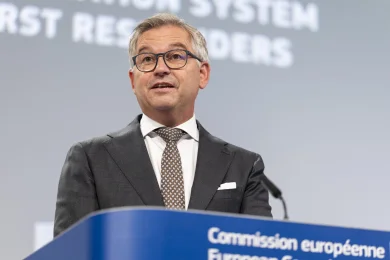
Ursula von der Leyen, President of the European Commission, said that through OceanEye, Europe wants to lead the effort to understand, protect, and sustainably use the ocean's potential. "With OceanEye, Europe will lead the race to understand the ocean, protect it, and sustainably harness its potential," von der Leyen said. The Commission presents the initiative as part of the European Ocean Pact, adopted in June 2025, the strategy through which the EU seeks to bring its ocean policies together into a single framework. The Pact aims to protect the health of the ocean, strengthen the blue economy, support coastal and island communities, research, maritime security, and ocean diplomacy.
OceanEye is based on four pillars. The first concerns European governance of ocean observation. The Commission states that ocean observation in Europe remains fragmented, with risks of duplication in data collection, monitoring gaps, and insufficiently coordinated investments.
To address this issue, the Commission proposes a European governance framework that will be included in the future Ocean Act, scheduled for the end of 2026. The goal is for member states, research bodies, industry, and European data services to work more coherently.
The Commission also wants a European digital ocean system that will bring together existing services, such as Copernicus Marine Service, EMODnet, WISE Marine, and WISE Freshwater. This system would provide a single point of access to ocean data and quality marine knowledge.
This integration is important because the EU already has strong assets in the marine data area, but they still operate in distinct ecosystems. OceanEye seeks to transform these infrastructures into an operational marine knowledge network, from sensors and satellites to services for researchers, companies, authorities, and citizens.
The Commission believes that clearer governance will reduce inefficiencies, enable common investment priorities, and fill existing gaps in ocean monitoring. The second pillar is the international dimension. The Commission will launch an international alliance to support the Global Ocean Observing System, the global system coordinated by the Intergovernmental Oceanographic Commission of UNESCO.
Commission data shows that 64 countries contribute to the global ocean observation system, but 90% of global observations are funded by only nine countries. The system produces over 120,000 ocean observations per day, but remains underfunded and vulnerable to financial and geopolitical disruptions.
The Commission warns that certain components of the global system, including Argo and tropical mooring systems, are at risk of degradation. Without corrective measures, Argo's capacity could decrease by 35% by 2030.
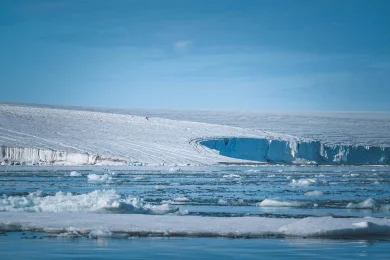
OceanEye aims to reduce observation gaps in poorly monitored areas, including the Southern Hemisphere, the Arctic, deep-sea areas, and coastal zones. The EU wants to mobilize member states, third countries, philanthropic organizations, and private actors for funding, infrastructure, data, vessels, sensors, drones, submarine cables, and technical capacity.
The Commission will initially contribute 50 million euros from Horizon Europe for strengthening global in situ observation and 12 million euros for more resilient international marine data systems.
The third pillar is digital and industrial infrastructure. The central component is the European Digital Twin Ocean, a virtual representation of the ocean that integrates data from satellites, sensors, numerical models, marine infrastructures, and even applications used by citizens.
The Digital Twin Ocean should be fully operational by 2030 as a public service for Europeans and as a global offering. It will enable real-time monitoring, predictive modeling, and testing of "what-if" scenarios, for example, for the impact of offshore wind farms, marine warming, pollution, or coastal protection options.
The public platform EDITO is the foundational infrastructure of the Digital Twin Ocean. It combines and integrates data and services from EMODnet and Copernicus Marine Service into a common digital framework. Users will be able to explore data, run simulations, build applications, and develop services for public or economic decisions.
The Commission sees this infrastructure as a tool for researchers, public authorities, entrepreneurs, blue economy companies, NGOs, educators, and coastal communities. An entrepreneur could use the data for more efficient shipping routes or the placement of an aquaculture facility, while a local authority could use it for coastal protection solutions against rising sea levels.
OceanEye will also support the development of new technologies, including sensors, autonomous systems, underwater drones, artificial intelligence, data-based services, and digital twins. The Commission announces 30 million euros for a thematic challenge of the European Innovation Council dedicated to ocean observation technologies.
The economic dimension is explicit. The Commission estimates that the global annual ocean observation market is worth between 10 and 20 billion euros, with an annual growth rate of about 5-10%. This market serves a much larger business ecosystem, estimated between 40 and 90 billion euros, with the United States having the largest share.
For the EU, the development of ocean observation technologies is presented as an economic and geopolitical choice. The ability to collect, process, and interpret ocean data becomes relevant for competitiveness, strategic autonomy, maritime security, defense, and climate resilience.
OceanEye pays special attention to deep tech startups and scaleups that develop solutions in sensors, autonomous systems, data, artificial intelligence, and digital twins. The Commission wants to accelerate the transition from research to market, improve access to funding, and use public procurement to stimulate demand.
An important element is the dual nature of the technologies. Ocean observation can serve both civil objectives, such as ecosystem protection, fishing, offshore energy, and climate, as well as security and defense objectives, including the protection of submarine infrastructures, maritime surveillance, and detection of hybrid risks.
The fourth pillar concerns education, culture, skills, and public engagement. The Commission wants ocean observation to be more visible to society and not remain only in laboratories, databases, or technical infrastructures.
The initiative foresees the launch of a New European Bauhaus Ocean, Coastal and Island Communities Lab, which will connect ocean data with art, design, museums, public installations, coastal communities, and education.
The Commission wants Ocean Observation Week to become a theme for schools, European Blue Schools, and projects for youth by 2027. Through EU4Ocean, campaigns, awards, and mentoring programs, the European executive aims to increase ocean literacy and promote careers in marine science, engineering, data, maritime technologies, and environmental monitoring.
OceanEye will also introduce a dedicated label that will mark the infrastructure participating in the initiative. This should increase the visibility of the system and show the public what capabilities contribute to ocean observation.
This cultural and educational dimension also has an economic stake. The Commission believes that Europe will need new skills to support the blue economy, ocean technologies, marine data, and digital infrastructures.
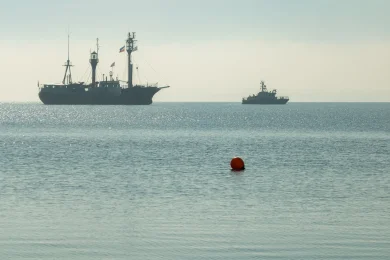
The Commission's technical sheets explain how ocean observation works in practice. Direct measurements can be made through anchored buoys, research vessels, profiling floats, gliders, submarine cables, and other in situ infrastructures. They collect data on temperature, waves, currents, CO2, water chemistry, marine life, seabed geology, salinity, oxygen, pH, nutrients, harmful algae, seismic activity, and pressure.
Space observation complements this data through satellites that provide global coverage and real-time monitoring. Observed parameters include sea level, surface temperature, salinity, currents, wind speed, ice thickness, wave height, and ocean color. This data is used for ocean and weather forecasts, climate monitoring, navigation safety, fishing, cryosphere, marine resource management, coastal ecosystems, and marine pollution. The Commission thus presents ocean observation as a system that transforms measurements into knowledge. In this logic, raw data becomes forecasts, simulations, warnings, investment decisions, protection policies, and economic services. Funding remains one of the biggest challenges. The Commission estimates that the annual funding level required for the ambition of OceanEye is three to four times higher than current investments. Initially, the Commission will mobilize 92 million euros from Horizon Europe: 50 million for the EU's contribution to the Global Ocean Observing System, 12 million for resilient international marine data systems, and 30 million for innovation in ocean observation technologies.
But the European executive also calls on member states, international partners, philanthropic organizations, and private actors to contribute. Commitments can include money, access to observation vessels, sensors, drones, submarine cables, digital infrastructures, human and technical capacity, or making relevant data available.
The Commission emphasizes that one euro invested in ocean observation systems can generate 5-6 euros in economic and social benefits. This argument is used to present OceanEye as an investment in competitiveness, not just as funding for research.
OceanEye is closely linked to the European Ocean Pact. The Pact shows that the EU has about 70,000 kilometers of coastline, 40% of the population lives in coastal or island communities, and the blue economy contributes 5 million jobs and 250 billion euros in gross added value.
In this context, ocean observation becomes a basis for public policies and for the economy. Quality data can support ecosystem restoration, pollution reduction, sustainable fishing, aquaculture, tourism, offshore energy, maritime transport, submarine infrastructures, and coastal security.
For the European Union, the stakes are also geopolitical. The ocean is a space for transport, energy, data, defense, and strategic competition. Attacks on submarine infrastructures, hybrid risks, data cables, offshore energy, and maritime route security make ocean knowledge an element of strategic autonomy.
The Commission states that ocean observation and the marine knowledge chain are critical for sustainability, competitiveness, resilience, strategic autonomy, and security. The future Ocean Act should create a more robust framework for transforming data into action and science into solutions.
For citizens, OceanEye may seem like a technical initiative, but its effects can be concrete: better warnings for storms and floods, protection of coastal areas, safer shipping routes, better-managed fishing, more efficient investments in offshore energy, pollution detection, and protection of submarine infrastructures.
For Europe, the question is whether it can transform scientific advantage and existing infrastructures into a global industrial position. OceanEye is the Commission's attempt to turn ocean data into a European strategic asset.
https://2eu.brussels/ro/stiri/comisia-europeana-lanseaza-oceaneye-pentru-a-transforma-uniunea-europeana-in-lider-global-al-observarii-oceanelor
Latest News
18:12
17:48
17:31
17:17
17:03
See more news
NEWS ON THE SAME TOPICS