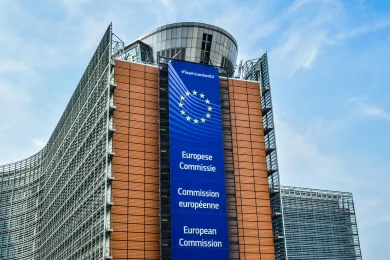
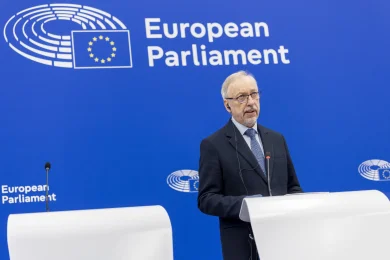
The Commission adds EUR 500 million to Horizon Europe for biodiversity, technologies and the transition to the post-2027 research programme




Always see our news on Google
The European Commission is adding EUR 500 million to the Horizon Europe work programme for 2026–2027, bringing the total budget for the two years to approximately EUR 14.8 billion. The new funding includes EUR 237 million for biodiversity-related research and innovation and EUR 260 million for projects preparing the link between the current programme and the future European research and competitiveness framework.
The European Commission has added EUR 500 million to the Horizon Europe work programme for 2026 and 2027 and is introducing two new cross-cutting calls for biodiversity, advanced technologies and preparations for the future European research framework. The increase brings the total budget of the work programme for the two years to approximately EUR 14.8 billion and changes funding priorities ahead of the end of the current Horizon Europe period.
In brief
The Commission is adding EUR 500 million to the Horizon Europe work programme for 2026–2027, bringing it to approximately EUR 14.8 billion.
A EUR 237 million call will fund 11 research and innovation actions for the transition towards a nature-positive economy and society.
A second call, worth EUR 260 million, will fund 16 actions designed to prepare the link between the current Horizon Europe programme and the 2028–2034 research programme.
The areas mentioned include artificial intelligence-based technologies for energy, skills for innovative SMEs, research infrastructures, autonomous mobility and a European AI platform for the media.
The EUR 260 million is not reserved entirely for the media platform. It is only one of the topics included in the broader Bridging Actions 2027 call.
The first component of the increase is the Transformative Change Towards a Nature-Positive Economy and Society call, with a budget of EUR 237 million. The Commission says it will fund 11 research and innovation actions and contribute to the objective of directing 10% of the expenditure planned under the Horizon Europe Strategic Plan 2025–2027 towards biodiversity.
The funded projects will seek to transform economic models in a direction compatible with nature restoration, but the Commission also links them to competitiveness, resilience and strategic autonomy. The call is connected to several existing European initiatives, including the Ocean Pact, EU Ocean Eye, the Nature Restoration Regulation, the Clean Industrial Deal, the European Water Resilience Strategy and the policy on integrated wildfire risk management.
The second call, Bridging Actions 2027, has a total budget of EUR 260 million and is structured differently. Its purpose is to prepare the transition to the next European research and innovation programme for 2028–2034 and its link to the future European Competitiveness Fund.
The Commission introduces the concept of an “innovation to investment journey” in this call, through which research results should move more quickly towards demonstration, investment and market uptake. The EUR 260 million will fund 16 actions, not a single project or sector.
The areas mentioned include next-generation AI-based digital platforms for a more affordable, secure and sustainable European energy system, skills for innovative SMEs, and research and technology infrastructures capable of attracting and retaining researchers in Europe.
The list also includes Autonomous Drive Ambition Cities, projects on the development of advanced technologies and tools for scaling up New European Bauhaus initiatives. In this way, the Commission aims to test, in the final year of the current programme, approaches that could be used more widely after 2027.
One of the 16 actions is the EU AI Media Platform. The Commission describes it as a modular, multilingual public-interest infrastructure for the European press and audiovisual sector, based on artificial intelligence technologies.
However, the presence of this topic in the call does not mean that the EUR 260 million is intended entirely for the press or the media platform. The amount represents the total budget of Bridging Actions 2027 and must be divided among the 16 included actions.
The amended work programme will also support the New European Bauhaus Academy. The funding may be used to upskill and reskill workers in the construction ecosystem, in an attempt to link innovation objectives with industrial transformation and the skills needed for it.
The increase comes in the final two years of the current Horizon Europe programme, the EU framework programme for research and innovation for 2021–2027. The programme’s overall budget is EUR 93.5 billion, while the 2026–2027 work programme was initially adopted in December 2025.
The Commission has also published two monitoring reports on the operation of Horizon Europe. According to the State of Play report, the programme has so far invested EUR 61 billion in grants and a further EUR 1.3 billion in equity investments.
The funding is distributed across nearly 23,000 projects involving more than 34,000 organisations. Of these, approximately 20,000 are companies, while universities and research centres remain the main beneficiaries of the funds.
According to the Commission, the private sector has received more than EUR 11 billion. Horizon Europe projects have so far generated more than 32,300 peer-reviewed publications and support more than 151,000 early-career researchers, including doctoral and postdoctoral researchers.
The second report published by the Commission shows that 55% of Horizon Europe beneficiaries are organisations that had not previously participated in European research and innovation programmes. Two-thirds of these newcomers are companies.
However, the report also identifies a limitation. On average, a new beneficiary participates in a single project, while experienced organisations succeed in obtaining funding for multiple projects. This issue is sufficiently distinct to be addressed separately when the report data are fully reviewed.
For beneficiaries interested in the new calls, the Commission’s announcement represents an effective change to the work programme, not merely an intention for the future financial framework. The EUR 500 million is being added to Horizon Europe for 2026–2027, and the calls become part of the funding opportunities under the current programme.
Details on each topic, individual budgets, eligibility conditions and submission deadlines must nevertheless be followed in the amended work programme documents and on the Funding & Tenders Portal. The Commission’s communication establishes the structure and budgets of the two calls, but does not justify assigning the entire amount to a single project or field.
https://2eu.brussels/ro/news/comisia-adauga-500-de-milioane-eur-la-horizon-europe-pentru-biodiversitate-tehnologii-si-trecerea-spre-programul-de-cercetare-de-dupa-2027
كان,Latest News
17:02
16:57
16:57
16:49
16:44
See more news
NEWS ON THE SAME TOPICS