Commission adds over EUR 210 million to the Marie Skłodowska-Curie programme for 700 more researchers



Always see our news on Google
The European Commission is increasing funding for Marie Skłodowska-Curie Actions by more than EUR 210 million, with the aim of creating opportunities for more than 700 additional researchers and doctoral candidates. The funds will strengthen two of the programme’s main components, postdoctoral fellowships and doctoral networks, at a time when demand for research career funding in Europe has reached a record level.
In brief, the Commission is adding over EUR 210 million to the Marie Skłodowska-Curie budgets for postdoctoral fellowships and doctoral networks. According to the Commission’s estimates, the increase is expected to create opportunities for more than 700 additional researchers and doctoral candidates. These are not beneficiaries already selected. The 2026 call for postdoctoral fellowships received 21,627 applications, the highest number recorded for a funding action in more than 40 years of European framework programmes for research and innovation. In 2027, the postdoctoral fellowship budget will reach EUR 459 million, while the doctoral networks budget will reach EUR 645 million. The funding is part of the Choose Europe initiative and was incorporated into the Horizon Europe 2026–2027 work programme amended by the Commission on 29 September.
The increase is intended for the two components of Marie Skłodowska-Curie Actions that directly fund researchers’ career development. Postdoctoral Fellowships give researchers who have obtained their doctorate the opportunity to work in other organisations and, frequently, in other countries or sectors, while Doctoral Networks fund consortia of universities, research institutes, companies and other organisations that train doctoral candidates.
The Commission says the new funding responds to unprecedented demand. The 2026 call for postdoctoral fellowships received 21,627 applications from around the world, the highest number recorded for an individual funding action in more than four decades of European framework programmes for research and innovation.
The high number of applications does not mean that all researchers will receive funding. Marie Skłodowska-Curie fellowships are awarded through competitive calls, and proposals are evaluated before projects are selected. The budget increase raises the potential number of beneficiaries, but it is not a list of researchers already approved, nor does it represent a payment made to more than 700 people.
The additional funding was introduced in the context of the amendment to the Horizon Europe work programme for 2026 and 2027, adopted by the Commission on 29 September. Following this amendment, the budgets for postdoctoral fellowships and doctoral networks will reach their highest levels since the two actions became available, according to the European executive.
For 2026, the Postdoctoral Fellowships budget will reach EUR 434 million, while Doctoral Networks will receive EUR 628 million. In 2027, the amounts will rise to EUR 459 million for postdoctoral fellowships and EUR 645 million for doctoral networks.
Based on current estimates, the Commission believes that the 2027 Postdoctoral Fellowships call could fund more than 1,800 postdoctoral researchers, while the Doctoral Networks call could support more than 2,000 doctoral candidates. The increase of over EUR 210 million is expected to add more than 700 opportunities for researchers and doctoral candidates to the levels previously estimated.
These figures are forecasts of the calls’ funding capacity and should not be interpreted as final selection results. The actual number of beneficiaries will depend on the proposals submitted, project evaluations, eligible costs and the structure of the grants awarded.
The Commission links the increase to the Choose Europe initiative, through which it is seeking to make the European research area more attractive to researchers from the EU and beyond. The initiative aims both to attract international talent and to create career prospects that encourage researchers to remain in Europe.
Competition for researchers has become an important component of European competitiveness policy. On the same day as the announcement regarding Marie Skłodowska-Curie funding, the Commission published its report on the EU’s performance in science, research and innovation, which shows that Europe remains a major producer of scientific results but faces difficulties in turning them into strategic technologies and companies that scale up.
Marie Skłodowska-Curie Actions address another part of the same problem: the people who produce and transfer knowledge. The programme funds mobility between countries and sectors, doctoral training, skills development and professional experience in academic institutions and organisations outside academia.
Roxana Mînzatu, Executive Vice-President of the Commission for Social Rights and Skills, Quality Jobs and Preparedness, linked the programme to the Union of Skills and to the need for Europe to give researchers the opportunity to gain experience in other countries and sectors and build sustainable careers.
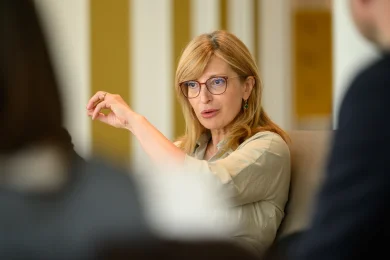
Ekaterina Zaharieva, Commissioner for Startups, Research and Innovation, presented the increase at an event held in Brussels to mark the 30th anniversary of the launch of Marie Skłodowska-Curie Actions. The Commission’s message is that the funding should also be viewed in the context of international competition for researchers and specialists.
The Marie Skłodowska-Curie programme was established in 1996. According to the Commission, more than 150,000 researchers have participated in its actions over the three decades of its existence, including 23 people who subsequently or previously received the Nobel Prize.
The programme has grown significantly. From approximately 800 researchers supported annually at the beginning, the actions now fund approximately 8,000 researchers each year, according to data presented by the Commission.
Marie Skłodowska-Curie Actions are part of Horizon Europe, the Union’s framework programme for research and innovation for the 2021–2027 period. The Commission’s press release indicates that Horizon Europe has a budget of close to EUR 100 billion for this period.
The increase of over EUR 210 million is not a programme separate from Horizon Europe, nor is it a payment distributed equally among the more than 700 potential beneficiaries. The funds are integrated into the budgets of the competitive Postdoctoral Fellowships and Doctoral Networks calls, and final support will be awarded through the procedures specific to these actions.
,
Latest News
00:32
22:56
22:37
22:23
22:09
See more news
NEWS ON THE SAME TOPICS