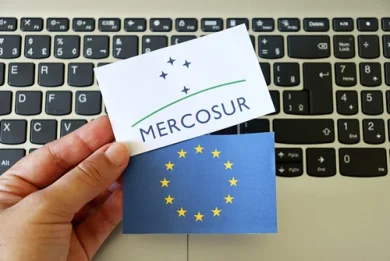
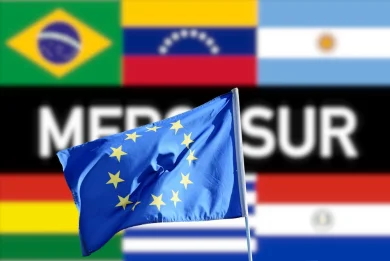
The EU-Mercosur agreement enters into provisional application from May 1



Always see our news on Google
The provisional application will eliminate or reduce tariffs for European exports such as cars, pharmaceuticals, wine, and olive oil, and 344 EU geographical indications, including Romanian products, will receive legal protection in Mercosur.
The EU-Mercosur interim trade agreement will provisionally enter into force on May 1, opening immediate tariff reductions for European exporters and legal protection in Mercosur for 344 EU geographical indications, including Romanian products.
In short The EU-Mercosur interim trade agreement will provisionally enter into force on May 1. The agreement will gradually eliminate import duties for over 91% of EU goods exported to Mercosur. From May 1, tariffs for European exports such as cars, pharmaceuticals, wine, spirits, and olive oil will be eliminated or drastically reduced. Farmers and agri-food producers in the EU will benefit from lower or eliminated customs duties, and European agri-food exports to Mercosur are expected to increase by 50%. 344 European geographical indications will receive legal protection in Mercosur, including Topoloveni plum jam, Sibiu salami, and Ibănești telemea. Full entry into force depends on the consent of the European Parliament, which will only be able to vote after the opinion of the EU Court of Justice regarding the compatibility of the agreement with the treaties.
The European Parliament approved in February 2026 safeguard clauses that allow for the temporary suspension of tariff preferences for agricultural imports from Mercosur if they affect European producers.
The EU-Mercosur interim trade agreement will provisionally enter into force on May 1, bringing tariff reductions and new market opportunities for businesses, workers, and citizens of the European Union.
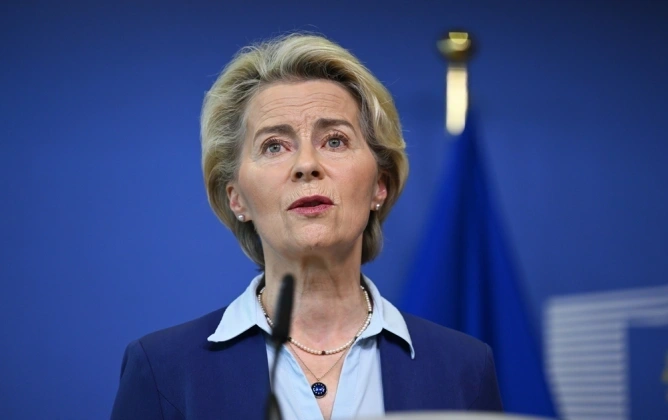
To mark the occasion, European Commission President Ursula von der Leyen, together with European Council President António Costa, will participate in a video conference with Mercosur leaders.
The European Commission presents the provisional application as a step with immediate economic effects for European exporters, following a lengthy negotiation process and after the Council's decision to allow the application of the agreement after the first ratification by a Mercosur country.
"A lot of effort has been made to bring this historic agreement to fruition; now is the time to invest the same level of effort to ensure that our citizens and businesses benefit immediately from its advantages. From day one, tariffs are reduced and new market opportunities are opened. This is good news for businesses in the EU, regardless of their size, for consumers in our market, and also for our farmers, who will gain valuable new export opportunities while being fully protected in sensitive sectors. Tomorrow I will speak with all four Mercosur leaders to celebrate this important day and to reiterate the need for maximum efforts to harness the extraordinary potential of this agreement. This is a good day for competitiveness, resilience, and the strategic positioning of Europe; the EU's trade agenda is once again delivering good results," said Ursula von der Leyen.
The agreement will gradually eliminate import duties for over 91% of EU goods exported to Mercosur, a market of over 700 million people. Starting May 1, tariffs for significant EU exports, such as cars, pharmaceuticals, wine, spirits, and olive oil, will be eliminated or drastically reduced.
The Commission estimates that the application of the agreement will create rapid opportunities for European companies in one of the largest trading areas in the world. The institution emphasizes that the benefits should be relevant for both large companies and small and medium-sized enterprises.
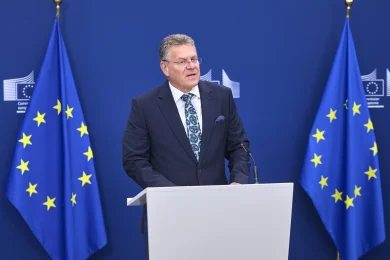
Commissioner for Trade and Economic Security, Maroš Šefčovič, stated that the provisional application marks the beginning of an implementation and information phase for European companies.
"May 1 is an important day for the European Union regarding trade. With the provisional application of the EU-Mercosur Agreement, the time has come for us to get to work and ensure that this historic agreement delivers results. Trade agreements essentially refer to the buying and selling of goods and services, based on mutually agreed norms and for mutual gain, and this will be our main objective in the coming weeks and months. The Commission is already engaged in intensive and structured activities to inform EU businesses, including SMEs, to ensure they have all the necessary information to start exploring the valuable opportunities available to them. This agreement, and many others we have recently concluded or are currently working on, will bring real change to the EU economy and its global competitiveness," said Šefčovič.
Farmers and agri-food producers in the EU will benefit from lower or eliminated customs duties, which is expected to make European products more competitive in the Mercosur market. The Commission estimates that the agreement will increase EU agri-food exports to the region by 50%.
The first tariff quotas and reductions will come into effect from May 1. The Commission states that sensitive agri-food sectors in the EU will benefit from protections through calibrated tariff quotas, a safeguard mechanism, and enhanced controls.
The agreement also brings legal protection for 344 European geographical indications in Mercosur. Among the mentioned products are Topoloveni plum jam, Sibiu salami, and Ibănești telemea, which will be protected against imitation in this market.
The provisional application also marks the beginning of the removal of non-tariff and technical barriers to trade. Norms regarding conformity assessment, labeling, and compliance with international standards will begin to apply, which should allow European companies to operate more easily and quickly.
The agreement also opens public procurement markets, allowing EU firms to bid for government contracts at the federal and state levels on equal terms with local competitors.
Service exporters in sectors such as finance, information technology, and transport will benefit from clearer rules regarding licenses, non-discriminatory procedures, and the movement of workers.
The Commission estimates that these combined benefits will lead to a 39% increase in annual EU exports to the Mercosur region by 2040. Exports are expected to reach 50 billion euros.
The European Parliament clarified that the provisional application of the agreement does not mean its full entry into force. The agreement will only fully enter into force after the European Parliament gives its consent, a necessary condition for the Council to conclude the agreement.
MEPs will only be able to vote on the consent after the EU Court of Justice issues an opinion on the compatibility of the agreement with European treaties. The Parliament decided in January to request this opinion from the Court.
The permanent rapporteur of the International Trade Committee for Mercosur, Gabriel Mato, EPP, Spain, welcomed the launch of the partnership but emphasized that the provisional application will be a testing phase for the real impact of the agreement.
"We welcome the launch of this important partnership between the EU and Mercosur, which represents a significant opportunity to strengthen our economic and political ties with Latin America. Its provisional application opens a crucial phase for assessing the real impact of the agreement on the ground. The EU must rise to the occasion and fulfill all commitments in the agreement, ensuring fair competition and effective support for the most sensitive sectors of Europe, especially agriculture," said Mato.
The Chair of the International Trade Committee, Bernd Lange, S&D, Germany, described the agreement as a strategic signal against isolationism and in favor of rule-based trade partnerships.
"This is a major change and exactly the right remedy in these difficult economic times. The agreement is a strategic signal against isolationism, in favor of partnership and rule-based trade. I am confident that by the time the Parliament makes the final decision, the agreement will already be producing economic and political results. We should also continue with future agreements and accelerate the ratification processes so that we can reap the benefits much faster than is currently happening, while also protecting the role of the European Parliament," said Lange.
The European Parliament reminds that the EU-Mercosur agreement will create a market of 720 million people, will reduce tariffs by billions, and will open opportunities in several sectors.
To prevent any negative effects on the European agricultural sector, the Parliament approved in February 2026 safeguard clauses that establish how the EU could temporarily suspend tariff preferences for agricultural imports from Mercosur countries if an increase in these imports affects European producers.
The provisional application follows the Council's decision in January to empower the Commission to apply the agreement after the first ratification by a Mercosur country. On February 27, Ursula von der Leyen announced that the EU would initiate the provisional application.
Mercosur brings together major economies from South America, Argentina, Brazil, Paraguay, and Uruguay, and represents one of the most relevant markets for expanding the European Union's trade relations. The provisional application of the interim agreement marks the entry into force of part of the trade commitments before the full completion of all procedures.
For the EU, the agreement is presented as a tool for competitiveness, resilience, and strategic positioning. Tariff reductions, protection of geographical indications, access to public procurement, and clearer rules for services are elements through which the Commission aims to create opportunities for European companies and diversify the Union's trade relations.
The agri-food dimension remains one of the most sensitive components of the agreement. The Commission emphasizes both the export opportunities for European farmers and producers and the protections provided for sensitive sectors through tariff quotas, safeguards, and additional controls.
Protection of geographical indications is also relevant for Romania, as products such as Topoloveni plum jam, Sibiu salami, and Ibănești telemea will benefit from legal recognition in Mercosur. This protection aims to prevent the use of European names for imitated products in a growing consumer market.
The provisional application creates immediate trade effects but does not conclude the institutional process of the agreement. The European Parliament must give its consent for full entry into force, and this vote depends on the opinion of the EU Court of Justice regarding the compatibility of the agreement with the treaties.
This stage maintains the role of the Parliament in the final procedure and introduces an important legal element in the agreement's timeline. At the same time, the safeguard clauses approved in February 2026 address concerns regarding European agriculture, allowing for the temporary suspension of tariff preferences if agricultural imports from Mercosur increase in a way that affects EU producers.
https://2eu.brussels/ro/stiri/acordul-ue-mercosur-intra-provizoriu-in-aplicare-de-la-1-mai
Latest News
20:33
20:14
19:58
19:51
19:47
See more news
NEWS ON THE SAME TOPICS