The EU Health Security Committee calls on countries to coordinate measures against mosquito-borne diseases



Always see our news on Google
The EU Health Security Committee (HSC) recommends that EU and EEA countries coordinate surveillance of mosquito-borne diseases, insect control, and the protection of blood intended for transfusion. The opinion, dated 27 October and published by the European Commission on 28 October, also calls for these risks to be included in climate change adaptation. The document provides guidance for authorities; it does not itself introduce new legal obligations or approve an additional budget.
In brief
The HSC recommends coordinating surveillance of mosquito-borne diseases among health, veterinary, and environmental authorities through the One Health approach.
The opinion calls for better-prepared laboratories and medical services, risk-adapted mosquito control, and blood safety measures, including testing or temporarily postponing donations.
Risks must be taken into account in climate adaptation and local planning. The document includes staff training, communication with the public, and monitoring of insecticide resistance.
The ECDC–EFSA report of 15 October recorded 1,715 West Nile cases in the EU/EEA, including 117 in Romania, based on notifications available up to 7 October. The figures describe the epidemiological context.
The opinion is dated 27 October and was published on 28 October. It is a guidance and coordination instrument, without new legal obligations or an additional budget approved through the document.
The proposed approach links human, animal, and environmental health, in accordance with the “One Health” principle. For West Nile, information on human cases must be analyzed together with virus circulation among birds and horses and with the presence of mosquitoes that transmit it. The aim is earlier detection of risk and adaptation of interventions to the local situation.
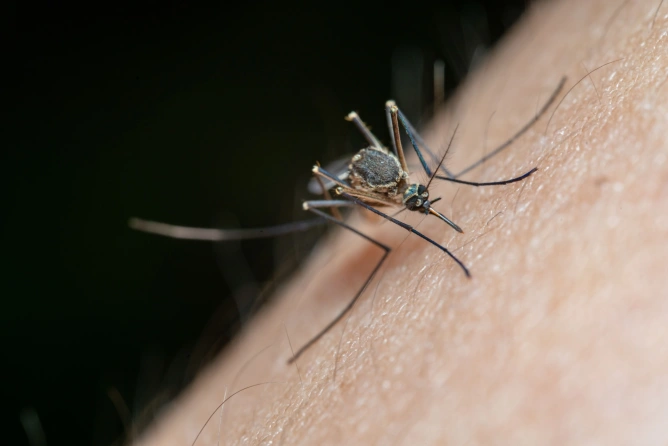
The opinion covers several diseases, including dengue, chikungunya, Zika, and West Nile. Situations differ: Culex mosquitoes that transmit West Nile are widespread in Europe, while the spread of invasive Aedes mosquitoes favors the emergence of local outbreaks of other infections after the introduction of viruses. An imported case does not automatically mean local transmission.
The HSC recommends strengthening laboratories and the capacity of medical services to diagnose and care for cases, as well as the rapid exchange of information among authorities. Mosquito monitoring and outbreak preparedness should continue outside peak periods as well, while vector surveillance and control should be strengthened at ports, airports, and land border crossing points.
Mosquito control must be adapted to local conditions and combined with the reduction of breeding sites, risk communication, and individual protection. The document calls for monitoring insecticide resistance and assessing the effects of interventions on health and the environment. It therefore does not recommend the indiscriminate use of insecticides.
For blood safety, the opinion mentions donor testing or temporarily postponing donations, depending on the assessment of epidemiological risk. These recommendations form part of precautionary measures for infections that can be transmitted through transfusion, including by people without symptoms. Their application must be coordinated with existing rules and relevant technical guidance.
Risks should be included in climate adaptation, urban planning, and water management plans, because temperature, precipitation, and habitats influence the distribution and activity of mosquitoes. The HSC also recommends training for health, veterinary, and laboratory personnel, coherent communication with the public, and research on vector prevention, diagnosis, and control.
The context is an intense West Nile season. The joint ECDC–EFSA report published on 15 October recorded, based on notifications available up to 7 October 2026, 1,715 locally acquired human cases in 13 EU/EEA countries and 130 deaths. Romania reported 117 cases and seven deaths. This is the report’s dated tally, not an updated total at the time the HSC opinion was adopted.
At that time, cases exceeded the average of 693 reported for the comparable period of the previous decade, and transmission had been identified in 187 NUTS 3 regions. Belgium reported its first locally acquired human cases. However, ECDC did not identify greater disease severity. Differences between diagnostic and reporting systems influence the data, which may be revised.
The Committee will monitor the implementation of the opinion through surveys and, when necessary, by examining national assessments and One Health missions carried out in countries that request or accept them. Common preparedness and response indicators are proposed where they can be developed, not presented as an already mandatory system.
The HSC, chaired by the European Commission, brings together representatives of EU and EEA countries to coordinate prevention, preparedness, and response to cross-border health threats. The new opinion concerns the organization of measures for several mosquito-borne diseases. The West Nile data explain the situation in which it is adopted, without representing results of the recommendations.
Latest News
11:47
11:46
11:37
11:30
11:21
See more news
NEWS ON THE SAME TOPICS


.webp)