EU enlargement could strengthen economic ties between Romania and Moldova



Always see our news on Google
Investments in production, transport, and energy could bring the economies of Romania and the Republic of Moldova into closer alignment during the European Union’s enlargement. A study published on October 13, 2026, by the Centre for European Policy Studies, CEPS, identifies opportunities for Moldova linked to its proximity to Romania and participation in European supplier networks. However, taking advantage of them requires reforms, infrastructure, and investments initiated before accession. The paper does not calculate a separate GDP gain or number of jobs for Romania.
In brief
The CEPS analysis identifies opportunities for production and suppliers in Moldova, including through its proximity to Romania.
Transport, energy, predictable rules, and the training of specialists are conditions for capitalizing on investments.
The historical 10% estimate concerns older EU members in 2019, not guaranteed gains for Romania or Moldova.
European support for Moldova combines grants and loans, with payments conditional on reforms, separately from the economic scenarios.
The authors see potential in electronic components, wiring harnesses, auto parts, the agri-food industry, and business services. These activities can benefit from bringing production closer to European markets, a process known as nearshoring. Moldova already has a Deep and Comprehensive Free Trade Area agreement with the EU, but administrative barriers, regulatory differences, and logistics costs may limit investment. The accession process can reduce these obstacles by applying more predictable rules for competition, procurement, customs, and investment protection.
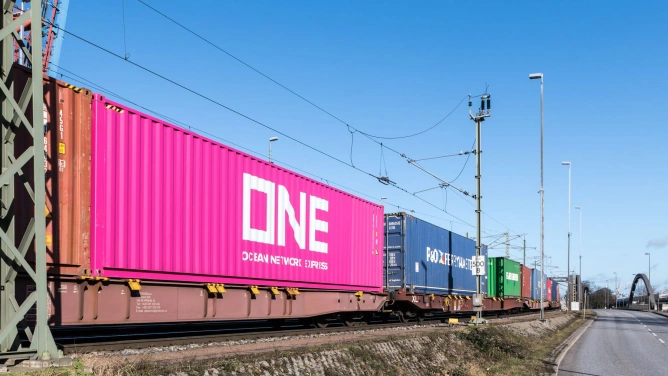
For companies in Romania, ties with Moldovan manufacturers and cross-border projects could open opportunities in supply, transport, and services. Rail, road, energy, and digital connections are important for the movement of goods and reducing costs. The European Commission already mentions support through the Connecting Europe Facility to improve transport links between Moldova and Romania. This is an example of cooperation before accession, which by itself does not determine the scale of future economic benefits.
CEPS warns that attracting production solely through low costs may keep candidate economies in low-value-added activities. Developing local suppliers, training employees, and transferring technology are necessary to increase productivity. Worker mobility also has different effects. EU companies may find specialists, while Moldova risks losing skilled personnel. The authors recommend the circulation of skills, including the return of specialists, diaspora investment, and knowledge transfer, accompanied by economic opportunities in the country of origin.
The experience of previous enlargements provides a reference point without guaranteeing the same results. IMF research estimates that, in 2019, per capita income in countries that had been EU members before 2004 was approximately 10% higher than in a scenario without the enlargement that year. The percentage describes an estimated aggregate level after 15 years, not an annual growth rate or the gain of each state. Romania joined in 2007, and this figure is not an estimate of its benefit from a future enlargement. The studies compiled by CEPS cover different periods and assumptions and do not provide an individual forecast for Romania or Moldova.
Existing financial support must be distinguished from these scenarios. The Reform and Growth Facility for Moldova covers the period 2025–2027, with an envelope presented as approximately 1.9 billion euros. According to the Council of the EU, this combines up to 385 million euros in grants and 1.5 billion euros in concessional loans, with favorable terms and interest rates. Payments are conditional on the reforms undertaken in the agenda agreed with the Union, and the envelope does not represent money already spent in the economy.
On October 5, 2026, the European Commission announced an additional payment of 157 million euros for Moldova, following a positive assessment of the fulfillment of 18 reforms. These concern, among other things, private-sector development, economic governance, the labor market, energy, and good governance. The payment is a stage in an already adopted mechanism, distinct from CEPS recommendations concerning faster economic integration.
The analysis is authored by Tinatin Akhvlediani, Pierre-Alexandre Balland, and Andrea Renda and is part of the “Enlargement without illusions” project, supported by the European Commission’s Directorate-General for Enlargement and Eastern Neighbourhood. The opinions belong to the authors and do not constitute the official position of the EU. They recommend accelerating investment in infrastructure, industry, and skills before accession, with progressive access to the single market linked to verifiable reforms. For companies and employees, the benefits will depend on the investments made, productivity, and the ability of local economies to retain activities with added value.

Latest News
07:33
07:32
07:19
22:52
22:48
See more news
NEWS ON THE SAME TOPICS