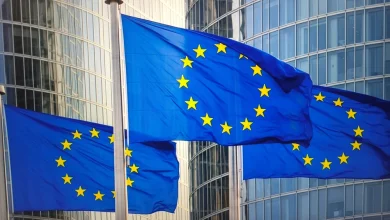
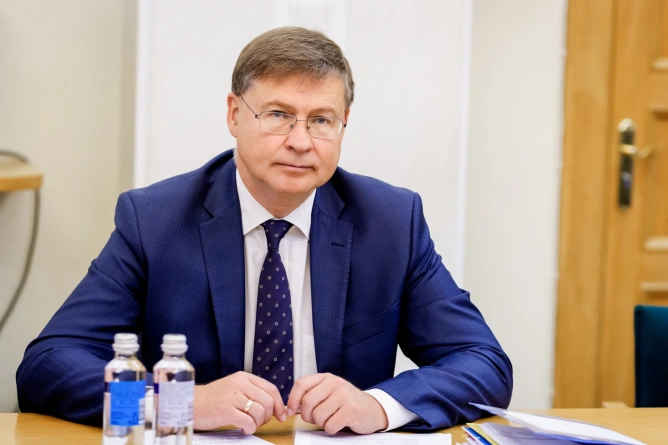
Commissioner Dombrovskis expects new EU members by 2030 and calls for treaty discussions not to delay enlargement



Always see our news on Google
The Commissioner supports preparing for a larger Union and preventing veto deadlocks, also using the possibilities offered by the existing treaties. He does not name future members or offer individual timelines, and accession remains conditional on reforms and the agreement of EU countries.
Valdis Dombrovskis expects the European Union to have new member states by 2030 and warns that prolonged discussions about changing the treaties must not become a reason to delay enlargement. At the Riga Conference, the Commissioner for Economy and Productivity declined to identify the countries that might join or provide individual timelines, but argued that the EU must prepare for the functioning of a larger Union.
In brief
1. Dombrovskis expressed the expectation that the EU will have new members by 2030, but declined to name countries or individual timelines. The statement does not constitute a promise of accession for any particular candidate.
2. The Commissioner warned that difficulties caused by vetoes would become more acute in a Union of 30 or more states. He calls for safeguards against deadlocks, without years of treaty negotiations delaying enlargement.
3. Dombrovskis argues that enlargement gives companies access to larger markets and strengthens the EU’s geopolitical position. These arguments represent his assessment of the process’s benefits, not guaranteed outcomes for each future accession.
Each candidate must meet the political, economic, and administrative requirements for accession. Concluding the negotiations and ratifying the accession treaty remain necessary, regardless of the political horizon referred to for 2030.
The Commissioner said that Russia’s invasion of Ukraine had changed the political perspective on enlargement. He presented Ukraine’s candidate-country status and the opening of accession negotiations as developments that would have been difficult to imagine a few years ago. In the same intervention, he said that negotiations with the Western Balkan countries had gained new momentum, following processes that had been underway for a long time.
For Dombrovskis, enlargement has both an economic and a geopolitical rationale. He argued that new members benefit from faster economic development, while companies in existing member states gain access to larger markets. Strategically, he advocated avoiding areas of uncertainty in the Union’s neighbourhood and strengthening Europe’s position in an international environment increasingly dominated by power relations.
The same process, however, raises the issue of decision-making in a Union of 30 or more states. Dombrovskis noted that individual veto rights already cause difficulties with 27 members and that the problem would become more acute after further accessions. He called for identifying safeguards against deadlocks, without this search opening a decade of treaty negotiations that would impede enlargement.
The Commissioner referred to the possibility of advancing in different areas by using the existing treaties or adjustments that do not require years of discussions. In his intervention, he presented neither a new legal proposal nor specified which decisions might be removed from the unanimity rule. His position concerns preparing the Union for enlargement, not an already agreed change to the voting rules.
For candidate countries, the political perspective remains conditional on meeting the accession criteria. These include stable institutions guaranteeing democracy and the rule of law, a functioning market economy, and the capacity to apply the obligations arising from EU membership. The Union must, in turn, be able to integrate the new members.
The negotiations establish the conditions under which each candidate adopts and applies European legislation, including any transitional periods. The pace depends on each country’s reforms, and starting negotiations at the same time does not guarantee simultaneous accession. Ultimately, the accession treaty must be approved and ratified by all parties according to their constitutional procedures.
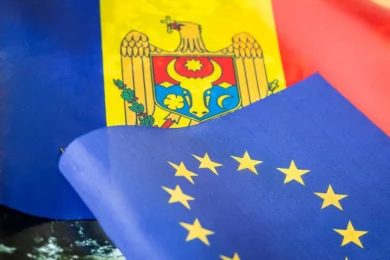
Dombrovskis’s statement thus offers a political expectation for the horizon of 2030, without establishing a binding timetable for Ukraine, the Republic of Moldova, or a Western Balkan state. The identity of the new members and the date of accession will depend on the conclusion of negotiations, the required reforms, and the agreements necessary for each country.
Latest News
16:41
16:16
15:55
15:38
15:21
See more news
NEWS ON THE SAME TOPICS