The EU and Bulgaria are preparing a summit in Sofia in spring 2027, focusing on the Middle Corridor and Black Sea security



Always see our news on Google
The ministerial meeting on 16 November outlined the transport, energy and digital infrastructure projects to be prepared for the summit. The Commission reconfirmed the announced support for the maritime security centre coordinated by Romania and Bulgaria and for search-and-rescue operations.
The European Union and Bulgaria are preparing a summit in Sofia for spring 2027, where the leaders of member states and partner countries will discuss transport, energy and communications links between Europe and Central Asia. At the ministerial meeting on 16 November, the European Commission placed the Middle Corridor—the trade route through the Caspian Sea and the South Caucasus—and the safety of navigation in the Black Sea at the centre of the preparations.
In brief
Bulgaria indicated spring 2027 for the Sofia summit. The exact date has not been announced.
The Commission is seeking to triple trade flows along the Middle Corridor by 2030 and reduce cargo transport times.
The Commission reconfirmed the announced EUR 50 million in funding for the maritime security centre coordinated by Romania and Bulgaria.
Romania and Bulgaria each have a separate EUR 10 million commitment for maritime search-and-rescue capabilities.
Connectivity priorities include modernising railways and ports, energy interconnections and fibre-optic links.
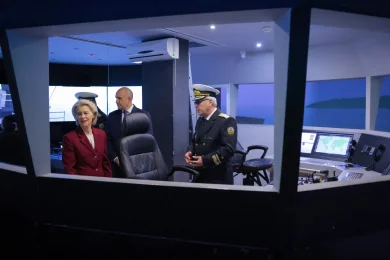
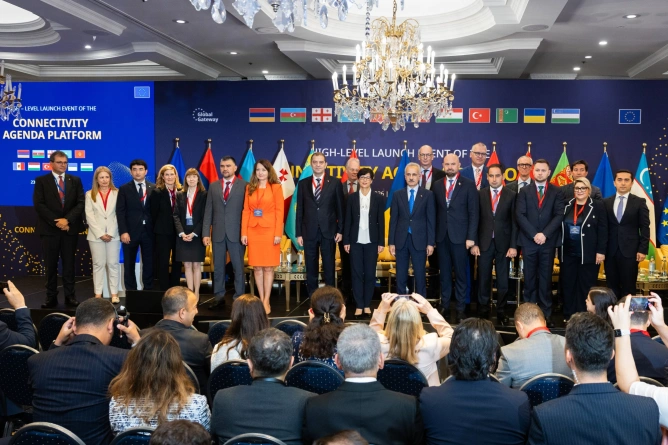
The Brussels meeting, hosted by Kaja Kallas, Marta Kos and Jozef Síkela, continued discussions that began in Luxembourg in October 2025. Armenia, Azerbaijan, the Republic of Moldova, Kazakhstan, Kyrgyzstan, Tajikistan, Türkiye, Turkmenistan, Ukraine and Uzbekistan participated alongside EU representatives. The Commission is preparing the summit together with Bulgaria, which presented its hosting plans and indicated spring 2027.
The Middle Corridor, also known as the Trans-Caspian Transport Corridor, is expected to provide more trade routes between Central Asia and European markets via the Caspian Sea and the South Caucasus, with links to Türkiye and the Black Sea. Tripling flows by 2030 is the Commission’s objective. Achieving it depends on rail, road and port connections, as well as simplifying border crossings and ensuring commercially viable transport services.
The Commission also listed investments in cross-border fibre optics, satellite communications and data centres. In energy, priorities include modernising networks, interconnecting them, and developing renewable energy generation and storage. Projects can be coordinated through the Connectivity Agenda Platform, launched in June as part of the Global Gateway strategy. At its launch, the Commission agreed with international financial institutions on memoranda of understanding to mobilise up to EUR 2 billion in transport investment and trade facilitation in the Black Sea region and the South Caucasus.
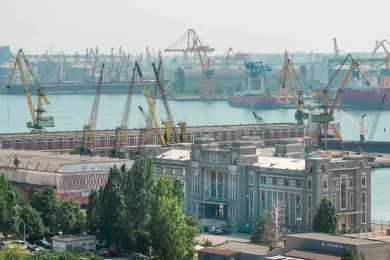
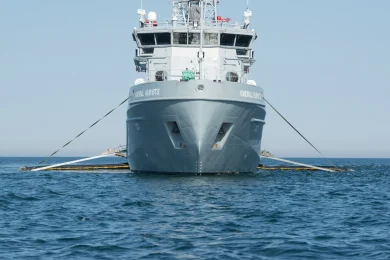
Drone attacks on civilian vessels have raised questions about infrastructure protection and navigation safety. Kallas linked maritime route security to Ukrainian grain exports. Bulgarian authorities describe the joint maritime security centre as a network with two complementary components in Constanța and Varna. The EUR 50 million is intended to develop the centre. The two separate EUR 10 million commitments are intended for maritime search-and-rescue capabilities.
The Sofia summit is expected to set the political direction of cooperation at leaders’ level. The programme and any potential investment list will show which projects can move forward and what funding is available to them.
ました,Latest News
13:26
13:22
13:18
13:18
13:17
See more news
NEWS ON THE SAME TOPICS