Commissioner Andrius Kubilius questions the capacity of EU treaties in the field of defense




Always see our news on Google
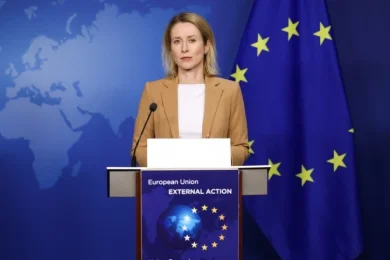
European Commissioner Andrius Kubilius warns that the current legal framework of the Union may not be adapted to the new security realities and opens the discussion regarding the necessity of institutional and legal reforms in defense policy.
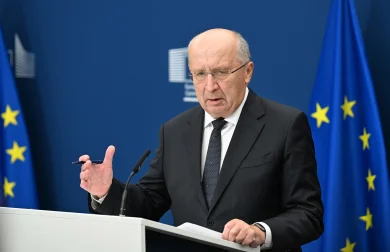
European Commissioner Andrius Kubilius stated that the current legal framework of the European Union is not sufficient to respond to the new security and defense requirements, in conditions where Europe may need to take on a more important role in its own defense. The statements were made during a conference dedicated to the legal service of the European Commission.
In short
Commissioner Kubilius asserts that EU treaties are not sufficient for the defense of Europe.
Changes in NATO and the role of the USA impose a greater responsibility on Europe.
The creation of a European Defense Union is being considered, including through a new treaty.
Options such as a European army and common command structures are being discussed.
Cooperation could include states outside the EU, such as the United Kingdom, Norway, and Ukraine.
Kubilius questioned the capacity of current treaties to support an effective European defense, in the context in which they were designed during a period characterized by stability and multilateral cooperation. He emphasized that new realities require a reevaluation of how institutions and decision-making mechanisms in the field of defense are organized.
In his intervention, the commissioner reiterated the idea that Europe must be prepared "to fight as Europe, not just as a combination of 27 states," emphasizing the need for clearer collective responsibility in the field of defense.
The context of these statements is linked to developments within NATO and changes in the positioning of the United States. American officials have indicated a shift from a defense model centered on the USA to one in which European states should take on a larger share of responsibility for the security of the continent.
Kubilius raised a series of questions regarding the future of European security architecture, including the role of current treaties, the relationship between EU obligations and those of NATO, and the Union's ability to develop its own defense structures. Among the mentioned options are the creation of a European rapid reaction force, a common military command, and the development of high-level political coordination mechanisms.
The commissioner also referred to the possibility of extended cooperation that would include states outside the European Union, such as the United Kingdom, Norway, and Ukraine, within a future European Defense Union.
In conclusion, Kubilius stated that "the current legal and constitutional structure of European defense is not sufficient for the security needs of the Union," suggesting the necessity of a new legal framework adapted to these requirements.
The security and defense policy of the European Union is currently regulated by the Treaty on European Union, which establishes that defense remains primarily the responsibility of member states, while the role of the EU is limited to cooperation and support.
In parallel, NATO remains the main framework for collective defense in Europe, however, recent developments indicate a possible increase in the role of the Union in this area, especially in the context of geopolitical tensions and the war in Ukraine.
Latest News
19:24
19:10
19:01
18:44
18:31
See more news
NEWS ON THE SAME TOPICS