



Commission Seeks New Eurojust Agreements with Eight Countries to Combat Cross-Border Organised Crime
Liviu Brăteanu


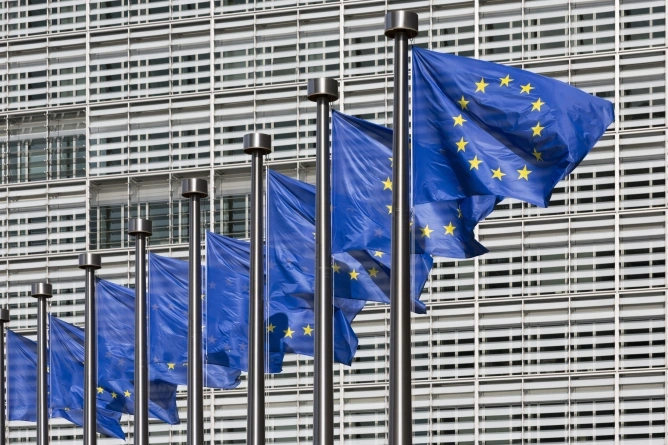
EU
Foto: Pixabay

Always see our news on Google
The European Commission is proposing to open negotiations on new cooperation agreements between Eurojust and eight non-EU countries, in an effort to strengthen investigations and prosecutions of organised crime operating across borders. The list includes Bolivia, Canada, Chile, Costa Rica, Ecuador, Panama, Peru and the United Arab Emirates, while any agreements would allow the exchange of operational information and more direct cooperation between prosecutors and judicial authorities.
In brief, the Commission is proposing negotiations on Eurojust agreements with eight countries: Bolivia, Canada, Chile, Costa Rica, Ecuador, Panama, Peru and the United Arab Emirates. The partnerships would allow the exchange of operational information and could support joint investigations with EU member states. Cooperation is focused in particular on combating drug trafficking, cybercrime and money laundering. Eurojust currently has cooperation agreements with 16 countries, including the United States, the United Kingdom, Ukraine and the Republic of Moldova. The Commission already has a mandate from the Council to negotiate with 10 other countries, including Brazil, Israel, Morocco, Tunisia and Türkiye.
The Commission’s proposal aims to expand Eurojust’s ability to work directly with judicial authorities in countries that play an important role in investigations into transnational criminal networks. If negotiations result in agreements, prosecutors and courts in member states could cooperate more quickly with authorities in the eight countries on cases involving multiple jurisdictions.
Cooperation could include the exchange of operational information, support for joint investigations and the coordination of day-to-day activities between judicial authorities. The Commission identifies drug trafficking, cybercrime and money laundering as priority areas—three types of crime that frequently cross borders and involve infrastructure, accounts, people or evidence located in several countries.
Executive Vice-President for Technological Sovereignty, Security and Democracy Henna Virkkunen linked the expansion of cooperation to criminal groups’ ability to exploit borders and new technologies to evade investigations and prosecution.
“Criminal groups excel at crossing borders and exploiting new technologies to escape justice. The more countries we cooperate with, the less room for manoeuvre we leave criminals to operate,” Virkkunen said.
In other words, she said that criminal groups are highly effective at crossing borders and using new technologies to evade justice, and that expanding international cooperation reduces the space in which they can operate.
Commissioner for Democracy, Justice, the Rule of Law and Consumer Protection Michael McGrath likewise highlighted the increasingly sophisticated and interconnected nature of organised crime.
“Serious organised crime is increasingly transnational, sophisticated and interconnected. Our response must be equally coordinated and interconnected,” McGrath said.
He added that only cross-border cooperation can enable the dismantling of criminal networks and the effective fight against drug trafficking, cybercrime and money laundering.
The initiative is also linked to the recently proposed revision of Eurojust’s mandate, through which the Commission wants to strengthen the agency’s cooperation with international partners. The argument is that criminal threats are increasingly difficult to investigate solely within EU borders, while rapid access to information and judicial authorities in non-EU countries is becoming ever more important for complex cases.
Eurojust currently has agreements with 16 countries: Armenia, Albania, Bosnia and Herzegovina, Georgia, Iceland, Lebanon, Liechtenstein, the Republic of Moldova, Montenegro, North Macedonia, Norway, Serbia, Switzerland, Ukraine, the United Kingdom and the United States.
These agreements enable more structured cooperation and are accompanied by safeguards concerning the protection of personal data, privacy and fundamental rights, in accordance with EU law. The Commission stresses that the same types of safeguards would also be required in future agreements.
The list of the eight countries now proposed adds to a separate group of 10 states for which the Commission already has a mandate from the Council to negotiate cooperation agreements with Eurojust. They are Algeria, Argentina, Brazil, Colombia, Egypt, Israel, Jordan, Morocco, Tunisia and Türkiye.
Therefore, the proposed expansion does not mean that Eurojust will immediately have new operational powers in the eight countries. Negotiations must first be opened and concluded, and future agreements must establish the specific way in which information can be exchanged and judicial cooperation organised.
Eurojust is the EU agency that supports coordination between prosecutors and judicial authorities in cross-border criminal cases. Its role is particularly important when the same criminal networks operate in several states and when evidence, money or suspects are located in different jurisdictions.
The Commission’s proposal aims to expand this international cooperation network, but agreements with the eight countries do not yet exist and cannot take effect until negotiations are completed and the agreements are approved in accordance with the applicable procedures.For the slug: eurojust-agreements-eight-countries
In brief, the Commission is proposing negotiations on Eurojust agreements with eight countries: Bolivia, Canada, Chile, Costa Rica, Ecuador, Panama, Peru and the United Arab Emirates. The partnerships would allow the exchange of operational information and could support joint investigations with EU member states. Cooperation is focused in particular on combating drug trafficking, cybercrime and money laundering. Eurojust currently has cooperation agreements with 16 countries, including the United States, the United Kingdom, Ukraine and the Republic of Moldova. The Commission already has a mandate from the Council to negotiate with 10 other countries, including Brazil, Israel, Morocco, Tunisia and Türkiye.
The Commission’s proposal aims to expand Eurojust’s ability to work directly with judicial authorities in countries that play an important role in investigations into transnational criminal networks. If negotiations result in agreements, prosecutors and courts in member states could cooperate more quickly with authorities in the eight countries on cases involving multiple jurisdictions.
Cooperation could include the exchange of operational information, support for joint investigations and the coordination of day-to-day activities between judicial authorities. The Commission identifies drug trafficking, cybercrime and money laundering as priority areas—three types of crime that frequently cross borders and involve infrastructure, accounts, people or evidence located in several countries.
Executive Vice-President for Technological Sovereignty, Security and Democracy Henna Virkkunen linked the expansion of cooperation to criminal groups’ ability to exploit borders and new technologies to evade investigations and prosecution.
“Criminal groups excel at crossing borders and exploiting new technologies to escape justice. The more countries we cooperate with, the less room for manoeuvre we leave criminals to operate,” Virkkunen said.
In other words, she said that criminal groups are highly effective at crossing borders and using new technologies to evade justice, and that expanding international cooperation reduces the space in which they can operate.
Commissioner for Democracy, Justice, the Rule of Law and Consumer Protection Michael McGrath likewise highlighted the increasingly sophisticated and interconnected nature of organised crime.
“Serious organised crime is increasingly transnational, sophisticated and interconnected. Our response must be equally coordinated and interconnected,” McGrath said.
He added that only cross-border cooperation can enable the dismantling of criminal networks and the effective fight against drug trafficking, cybercrime and money laundering.
The initiative is also linked to the recently proposed revision of Eurojust’s mandate, through which the Commission wants to strengthen the agency’s cooperation with international partners. The argument is that criminal threats are increasingly difficult to investigate solely within EU borders, while rapid access to information and judicial authorities in non-EU countries is becoming ever more important for complex cases.
Eurojust currently has agreements with 16 countries: Armenia, Albania, Bosnia and Herzegovina, Georgia, Iceland, Lebanon, Liechtenstein, the Republic of Moldova, Montenegro, North Macedonia, Norway, Serbia, Switzerland, Ukraine, the United Kingdom and the United States.
These agreements enable more structured cooperation and are accompanied by safeguards concerning the protection of personal data, privacy and fundamental rights, in accordance with EU law. The Commission stresses that the same types of safeguards would also be required in future agreements.
The list of the eight countries now proposed adds to a separate group of 10 states for which the Commission already has a mandate from the Council to negotiate cooperation agreements with Eurojust. They are Algeria, Argentina, Brazil, Colombia, Egypt, Israel, Jordan, Morocco, Tunisia and Türkiye.
Therefore, the proposed expansion does not mean that Eurojust will immediately have new operational powers in the eight countries. Negotiations must first be opened and concluded, and future agreements must establish the specific way in which information can be exchanged and judicial cooperation organised.
Eurojust is the EU agency that supports coordination between prosecutors and judicial authorities in cross-border criminal cases. Its role is particularly important when the same criminal networks operate in several states and when evidence, money or suspects are located in different jurisdictions.
The Commission’s proposal aims to expand this international cooperation network, but agreements with the eight countries do not yet exist and cannot take effect until negotiations are completed and the agreements are approved in accordance with the applicable procedures.For the slug: eurojust-agreements-eight-countries

Latest News
13:33
CCR rejects Ilie Bolojan’s referral concerning the legal conflict between the Government and the High Court of Cassation and Justice / The proceedings regarding magistrates’ outstanding salary payments continue
13:18
Kelemen Hunor: UDMR will meet with Luca Niculescu on Thursday / “Whether UDMR will be part of the government or not is, at this moment, a secondary matter”
13:17
Researchers Henri Kagan and Kenso Soai have won the 2026 Nobel Prize in Chemistry / They have solved a mystery more than a century old
13:15
Environmentalists discover new islands in the Caspian Sea amid falling water levels caused by climate change
13:13
The US is asking Russia for information about the death of an employee of the plague-fighting institute in the Irkutsk region
See more news
NEWS ON THE SAME TOPICS



Personalized news feed, AI-powered search, and notifications in a more interactive experience.









.webp)


