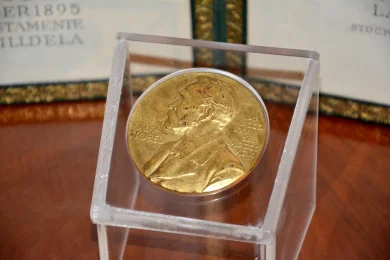
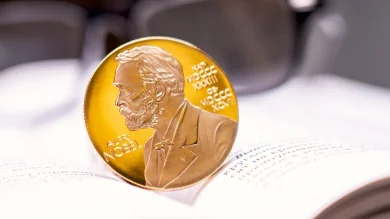
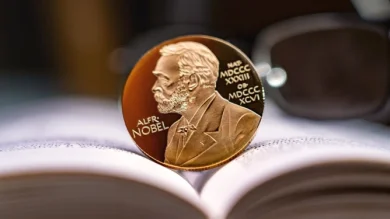
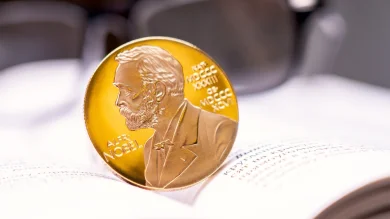
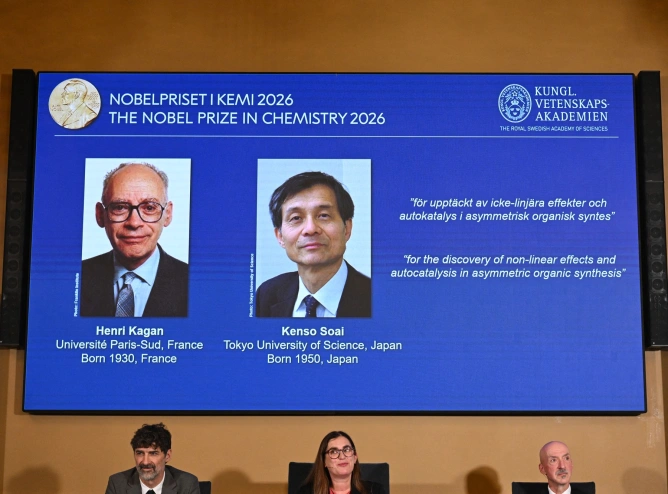
Researchers Henri Kagan and Kenso Soai have won the 2026 Nobel Prize in Chemistry / They have solved a mystery more than a century old



Always see our news on Google
Henri B. Kagan and Kenso Soai were awarded the 2026 Nobel Prize in Chemistry for discovering nonlinear effects and autocatalysis in asymmetric organic synthesis—research that explained how homochirality can emerge spontaneously, a mystery that has preoccupied chemists for more than a century.
Homochirality describes a situation in which living organisms use only one version of molecules that can exist in two mirror-image forms, like the left and right hands. The two versions can have different biological effects, which is why controlling the form produced is essential in drug development.
Henri Kagan made the first decisive breakthrough in 1986, when he identified a method for obtaining an excess of one of the molecular forms. Kenso Soai continued the research: in 1995, he described a reaction with homochiral potential, and in 2003, he demonstrated a reaction in which only one version was formed—a first outside biological processes.
The two scientists will share the prize of 12 million Swedish kronor. The Royal Swedish Academy of Sciences emphasizes that their discoveries have provided important tools for designing chemical reactions used in the pharmaceutical industry.
Sources




Latest News
07:24
07:18
07:15
07:14
07:10
See more news
NEWS ON THE SAME TOPICS