The European Parliament calls for the rapid opening of accession negotiations with the Republic of Moldova


Always see our news on Google
The European Parliament's Committee on Foreign Affairs has adopted a report that welcomes the progress of the Republic of Moldova on the path to joining the European Union and calls on member states to open the negotiation clusters without delay. The MEPs state that reforms in justice and the fight against corruption are on the right track, but warn that Russian interference, disinformation, illicit financial flows, and pressures on democratic processes remain major threats.
The European Parliament's Committee on Foreign Affairs has adopted a report that welcomes the progress of the Republic of Moldova on the path to joining the European Union and calls on member states to open the negotiation clusters without delay.
The text, adopted on Wednesday with 58 votes in favor, 16 against, and 3 abstentions, praises the commitment of the authorities in Chișinău to the accession-related reforms, despite internal and external pressures and persistent Russian interference in the country's internal affairs.
In short
The European Parliament's Committee on Foreign Affairs has adopted a report on the European path of the Republic of Moldova.
The MEPs welcome the completion of the bilateral screening process and call on the Council to open the negotiation clusters without delay.
The report appreciates the progress in justice reform and the fight against corruption but calls for the implementation of the recommendations of the Venice Commission.
Parliamentarians warn that Russian interference remains a serious threat to democracy and the European path of the Republic of Moldova.
The report will be put to a vote in the European Parliament as a whole.
The MEPs believe that the progress of the Republic of Moldova in the accession process must be recognized through concrete steps in negotiations with the European Union. The report welcomes the successful completion of the bilateral screening process, a technical stage through which the legislation of a candidate country is compared with the European acquis.
The MEPs call on member states gathered in the Council to open the negotiation clusters "without delay," based on the principle of merit. They emphasize that the opening of formal negotiations would send a clear political signal: the European Union recognizes and rewards the concrete achievements of the Republic of Moldova.
The report also states that the negotiation process should not be blocked or delayed due to bilateral issues. This wording is important in a context where EU enlargement depends on the unanimity of member states, and candidate files can be affected by political or bilateral disputes that do not directly relate to the accession criteria.
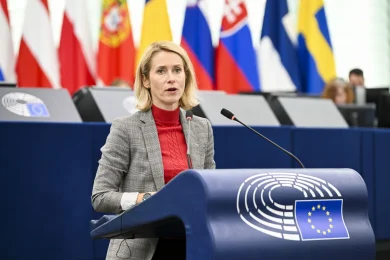
The rapporteur Sven Mikser, S&D MEP from Estonia, said that the Republic of Moldova deserves strong support to continue the pace of reforms.
"We welcome the solid progress of the Republic of Moldova on the path of reforms, despite difficult circumstances. Achieving the ambitious goal of concluding accession negotiations by 2028 will mean accelerating and strengthening this reform momentum, and the EU must provide unwavering support to help Moldova succeed," said Mikser.
Justice reform is one of the central themes of the report. The MEPs note the assessment of the European Commission according to which the Republic of Moldova has made good progress in reforming the judiciary sector.
At the same time, the report reminds the Moldovan authorities of their commitment to follow the recommendations of the Venice Commission and to ensure a vetting process for judges and prosecutors that is inclusive, predictable, and legally sound.
Vetting is presented as a critical element for regaining public trust in justice, eliminating compromised judges, and strengthening the rule of law. For the accession process, this dimension is essential, as the rule of law remains one of the fundamental criteria assessed by the European Union.
The report also appreciates the ongoing progress of the Republic of Moldova in preventing and combating corruption. The MEPs insist, however, that anti-corruption efforts must continue in a consistent, depoliticized, and transparent manner.
Another mentioned priority is reducing the influence of oligarchic structures in political, economic, and media life. For the European Parliament, this issue remains directly linked to the Republic of Moldova's ability to strengthen its democratic institutions and advance on the European path.
The report contains a strong warning regarding Russian interference. The MEPs say that pressure and interventions from Moscow in the internal affairs of the Republic of Moldova and in its democratic processes remain a serious threat.
The text mentions attempts to divide Moldovan society regarding the country's European path. According to the report, malign Russian interference is an ongoing and evolving process that requires constant monitoring, responses based on a whole-of-society approach, and adequate institutional capacity.
The MEPs call on the European Union and member states to strengthen their support for the institutional resilience of the Republic of Moldova, strategic communication, cybersecurity, independent media, and democratic guarantees.
The report also calls for support in combating illicit financial flows, disinformation, and electoral interference. Among the mentioned tools are targeted sanctions and cyber monitoring measures.
This part of the report links the accession of the Republic of Moldova to democratic security. For the MEPs, technical progress in reforms is not sufficient if institutions, elections, the information space, and media remain vulnerable to external influence.
The report also welcomes the deepening of the economic integration of the Republic of Moldova into the European single market. The MEPs encourage additional steps towards gradual sectoral integration and ambitious, gradual, and sustainable trade liberalization.
Economic integration is presented as part of the accession process, not just as a separate benefit. For the Republic of Moldova, approaching the single market can mean better access for companies, economic stability, and reduced external dependencies.
In the energy sector, the report welcomes the Moldovan government's plan to eliminate dependence on Russian energy resources in the electricity, gas, and oil sectors. The MEPs present this direction as a tool to reduce the essential vulnerabilities of the country.
Energy remains one of the most sensitive issues for the Republic of Moldova. Dependence on Russian resources has been used in the past as a tool of political pressure, and reducing this dependence is directly linked to the economic security and decision-making autonomy of the country.
The report also addresses the separatist region of Transnistria. The MEPs reaffirm the European Parliament's commitment to the territorial integrity of the Republic of Moldova and to the peaceful resolution of the conflict.
The text calls on Russia to withdraw all military personnel, equipment, and ammunition from the region. This position reflects the European Parliament's consistent line regarding the Russian military presence in Transnistria and its impact on the security of the Republic of Moldova.
The MEPs also express their support for the efforts of the Moldovan authorities for the gradual reintegration of Transnistria and call on the European Union to actively contribute to the peaceful reintegration process, including through funding.
This wording indicates an approach in which the reintegration of Transnistria is not treated solely as a security issue but also as an economic, institutional, and social process that will require European resources and long-term support.
The report adopted in the Committee on Foreign Affairs will be put to a vote in the European Parliament as a whole. Only after the plenary vote will the text become the official position of the European Parliament.
For Chișinău, the report is a favorable political signal. It combines recognition of progress in reforms with a direct request to member states to advance the negotiation process.
For the European Union, the Republic of Moldova file remains a test of the credibility of the enlargement policy. If technical and political progress is recognized only declaratively, without opening negotiations on clusters, the message sent to candidate countries may become ambiguous.
For the Republic of Moldova, the message is favorable but demanding. The European Parliament appreciates the reforms but links progress on the path to accession to the continuation of vetting, combating corruption, reducing oligarchic influence, strengthening democratic resilience, and managing Russian pressure.
Latest News
22:51
22:34
22:19
22:02
21:45
See more news
NEWS ON THE SAME TOPICS